


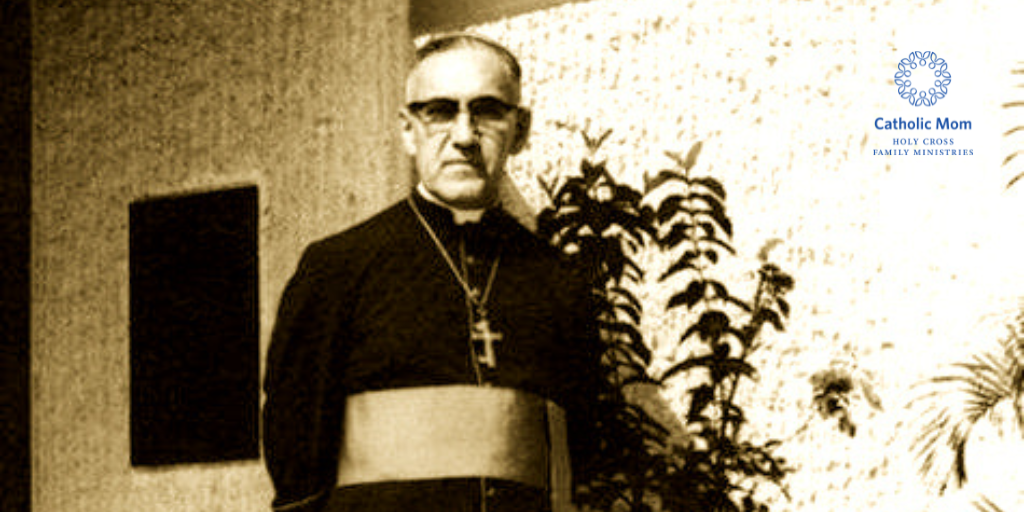
Janelle Peregoy offers a framework for celebrating feast days with your family, and shares ideas for observing the feast of Saint Oscar Romero (March 24).
The Saints
A “secret sauce” of Catholic tradition may be learning from the lives of the saints.
We’ve got early Christian martyrs who proclaimed Christ upon the pain of death. We’ve got the saints born into wealth, power and privilege who left it all behind to follow Christ. We’ve got saints who were drawn to God at young and tender ages. We’ve got saints who had dramatic conversions. We have saints inspired to do great things and were followed by hundreds, or even thousands. We’ve got quiet saints who lived prayerful and reclusive lives. We have saints for every historical time and for every circumstance.
However, they all shared a simple commonality. Each saint knew how to love God and by extension, they knew how to love their neighbors.
How to Share the Stories of the Saints with Kids
Over the years, I have developed my own method for exposing kids to the lives of the saints. These ideas will work for sharing with your own children or grandchildren or with children in a classroom or catechism setting.
Regularly check a saint-of-the-day calendar.
I like Franciscan Media’s version because the whole month can be referenced at a glance.
Decide which saint you will highlight.
My recommendation would be to choose a saint whom you are already drawn to or about whom you want to know more. Your enthusiasm will elevate the conversation.
Share a bit about the saint’s biography.
This could be through your own storytelling or from a Catholic media source. I have become a big fan of graphic novels about the saints. Here are some examples from Pauline Media: St. Nicholas – God’s Gift Giver, St. Bernadette of Lourdes – the Girl who Saw Mary, or St. Theresa of Avila – God’s Troublemaker. Engage the kids with some follow-up questions. The hope is that they will be able to identify what made the saint unique.
Make it concrete.
Incorporate pictures, food, clothing or anything tangible that will help engage the children’s senses. A great example of this is a Catholic preschool teacher who brings in knights’ costumes and gives each child an opportunity to dress as St. Joan of Arc.
Reflect.
What can each child learn from this saint? How can they emulate this person in their own lives? With age-appropriate guidance, encourage the kids to consider virtues associated with the saint. What does courage look like? What does it mean to serve the poor?

Saint Oscar Romero
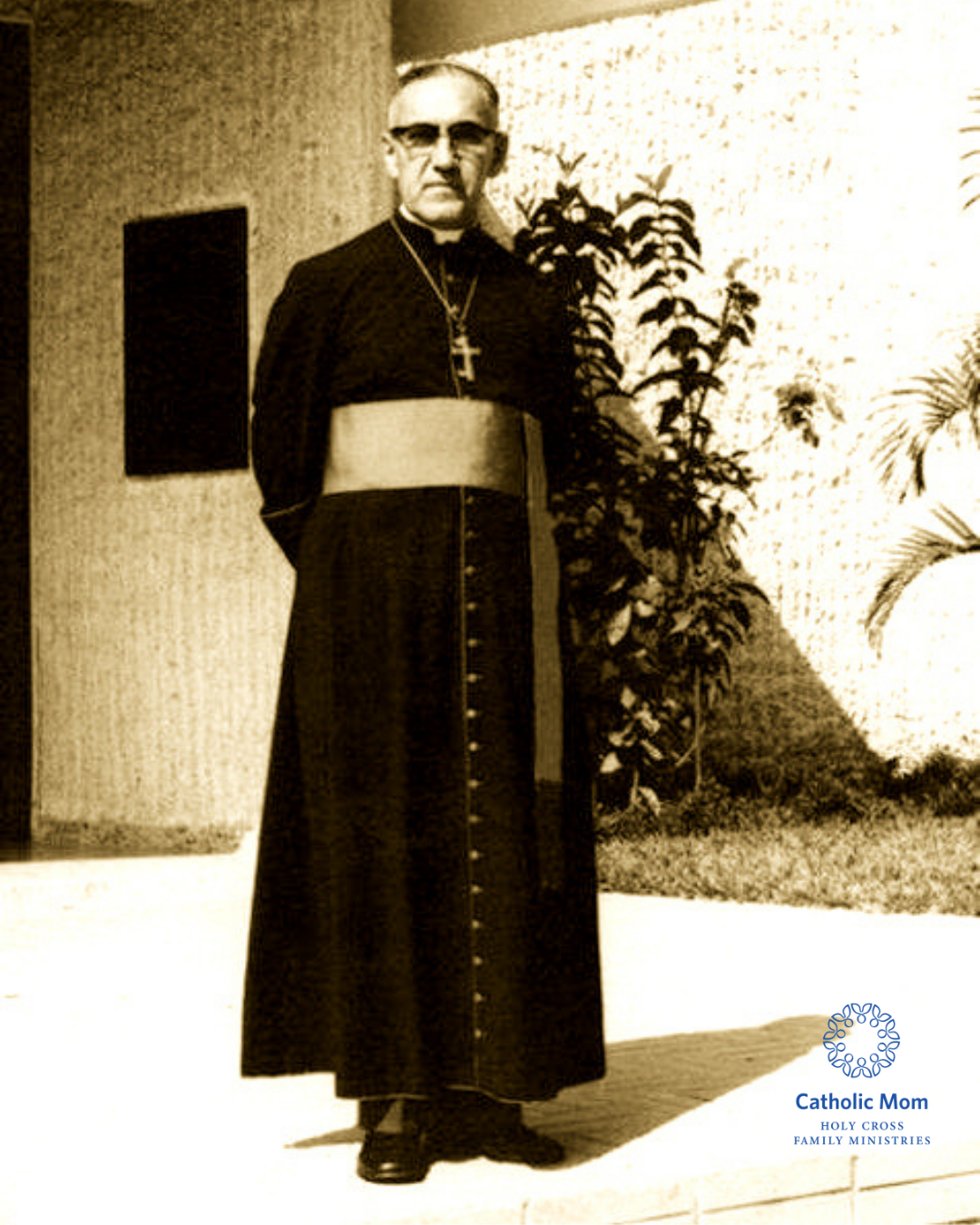
Since today is the feast day that marks forty-six years since Saint Oscar Romero was martyred while celebrating Mass, I will use his remarkable story as an example.
- My sons are currently 9 years old and 6 years old — they are not going to be able to comprehend the nuances of economic oppression during the Salvadoran civil war. Yet, I have been pleasantly surprised by how much children understand and interpret about the lives of the saints. In a discussion about Saint Maximilian Kolbe earlier this year, my older son likened the Nazi regime to bullies who terrorized the people around them. Let’s not underestimate our children’s ability to make valuable connections.
- I found this wonderful video from Ascension Presents, Saint Oscar Romero and the Cost of Loving Jesus. The producers explain Romero’s biography with the framing that following Jesus “costs” each of us something. For most of us, those are things like money, time or popularity. Romero’s martyrdom should invoke a critical question: What are you willing to sacrifice for Jesus? These kinds of reflections are particularly meaningful with adolescents and teenagers.
- Saint Oscar Romero’s legacy cannot be separated from his love of the Salvadoran people. So, we will take our handy children’s encyclopedia and learn a bit about the country of El Salvador. We are also fortunate enough to live near a local Salvadoran restaurant, so I will order pupusas for dinner. (Pupusas are a traditional Salvadoran dish akin to a stuffed quesadilla but usually made with masa/cornmeal. They have savory fillings like cheese, beans or pork. Delicious!)
In thinking about how to present the stories of the saints to children, I have often found that my own understanding and reflection deepen in through this process. Enjoy the opportunity to reawaken your own appreciation of our saintly models of faith and love.
Share your thoughts with the Catholic Mom community! You'll find the comment box below the author's bio and list of recommended articles.
Copyright 2026 Janelle Peregoy
Images: Arzobispado de San Salvador, Public domain, via Wikimedia Commons


About the Author


.png?width=1806&height=731&name=CatholicMom_hcfm_logo1_pos_871c_2728c%20(002).png "CatholicMom_hcfm_logo1_pos_871c_2728c (002)")



Comments