


As she tries to adopt a grace-filled approach to Lent, Lisa Hess considers what grace looks like.
Lately, I've been thinking a lot about grace. Part of that has to do with Lent and the spiritual definition of grace, but some of it is a lot closer to home. I've been thinking about what grace looks like in a more secular sense, as in doing things graciously, or giving each other grace.
It's that last part I've been trying to zoom in on. I even jotted down a few thoughts a couple of weeks ago as I was going about my daily business. And then, over that weekend, I discovered that the homily for the Second Sunday of Lent from Father Justin Lopina, a priest I follow on YouTube, was called "Saved by Grace."
Hmm. Divine intervention, perhaps?
I follow Father Justin because he's down-to-earth, clearly passionate about what he does, and very relatable, and this week's homily didn't disappoint. In fact, it pulled together the miasma of thoughts I've been trying to sort through in one simple sentence: Salvation is grace, which results in faith, which leads to works.
What I Think Grace Is
When we think of giving one another grace, part of it ties back to forgiveness. It's through God's grace, after all, that our sins are forgiven — and we're promised that this earthly life is just the beginning. When we extend forgiveness to others, that's grace, too, albeit a less divine version. There is something kind of nice about imitating the divine, though, especially given the fact that it can be a major challenge for us mere mortals.
But what about grace in the secular sense? What else does that look like?
Grace is a smile. An offer. Picking up the slack without complaint or snark. To go back to Father Justin's terminology, it's reflected in our "works." When we pay forward the spirit of the grace we've been given because we have faith in humanity, or because we see someone else as a child of God, or just because, that's grace.
What I Think Grace Isn’t
I've also been thinking about what grace isn't. It isn't overstepping, doing things the way we think they should be done, or always putting ourselves last. That last one, in fact, sounds a lot more like martyrdom than grace.
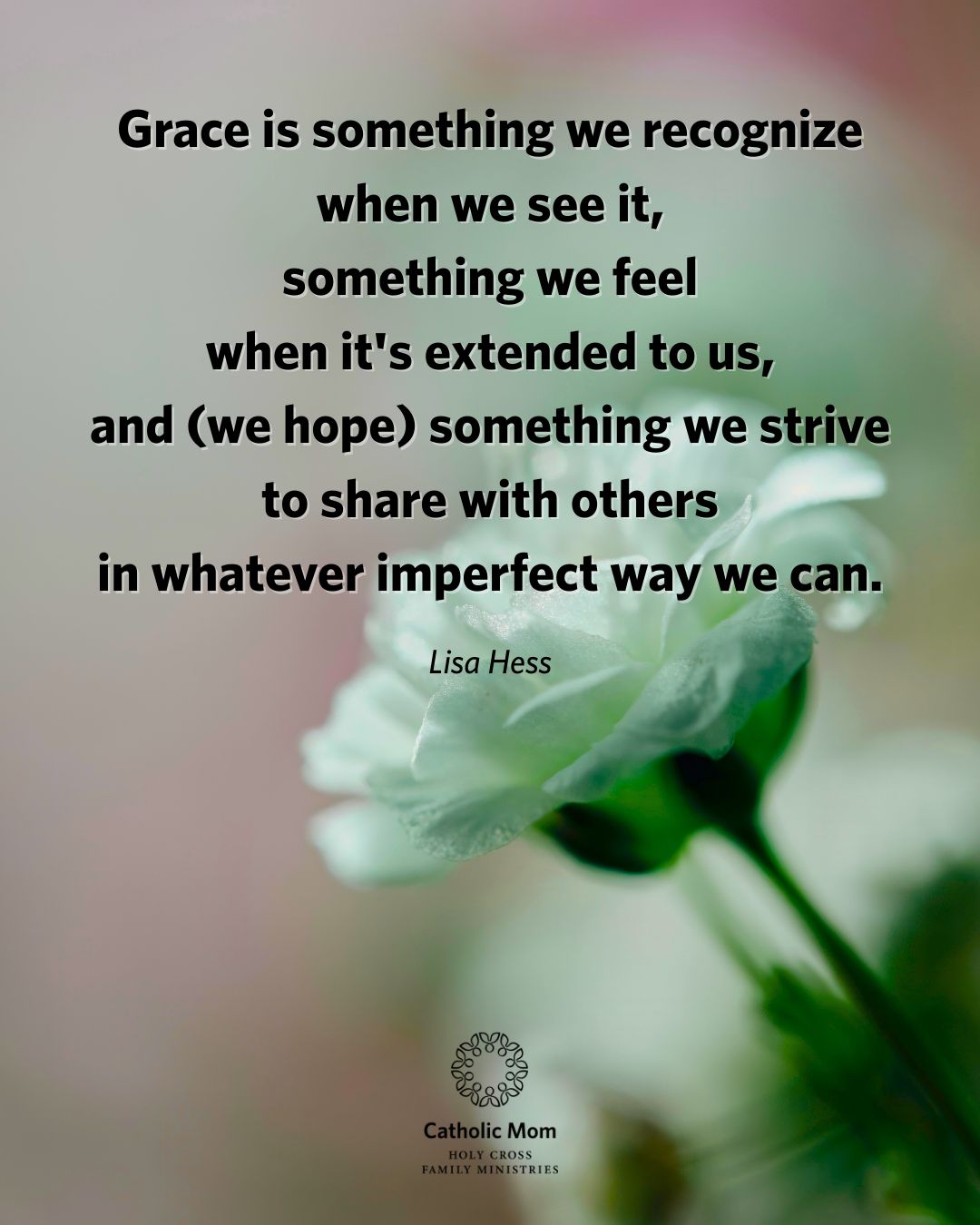
Grace, like so many other things, is one of those words that transcends its own definitions on the page. God's grace is very different from carrying oneself with grace or treating others with grace. Grace is something we recognize when we see it, something we feel when it's extended to us, and (we hope) something we strive to share with others in whatever imperfect way we can.
I'm intrigued by this seemingly simple word (in case you couldn't tell), and it's something I want to keep thinking about. I'm hardly an authority on the subject, but it's something I want to keep contemplating and learning about, especially in this season of Lent.
What do you think?
What is grace to you?
Share your thoughts with the Catholic Mom community! You'll find the comment box below the author's bio and list of recommended articles.
Copyright 2026 Lisa Hess
Images: Canva


About the Author


.png?width=1806&height=731&name=CatholicMom_hcfm_logo1_pos_871c_2728c%20(002).png "CatholicMom_hcfm_logo1_pos_871c_2728c (002)")


Comments