


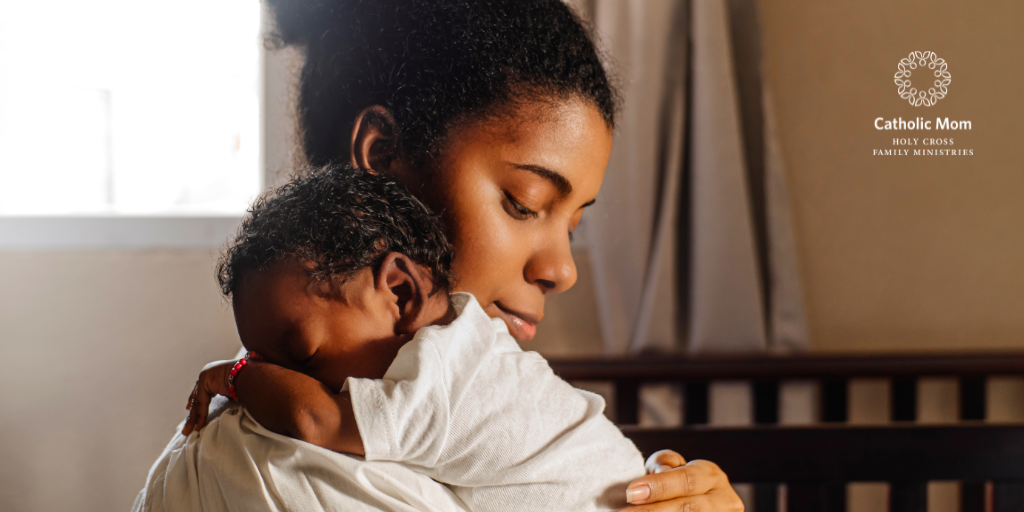
Helen Syski sees that being feminine is not only found in caring for others, but in being cared for.
"What does it mean to be feminine anyway?" I thought in frustration. In the turmoil of day-to-day life, a numbness was settling in. I did not feel like a wife or mother but rather an androgynous automaton, churning through the chores and logistics but struggling to be present. I began to realize that the androgynous part was the part that needed to change. I could only be truly present if I was living as an integrated whole, one united body and soul. Connecting with my husband required our complementary souls, male and female; connecting with my kids required me to nurture, nourish, and rebirth them again and again.
When Have You Felt Most Feminine?
This is the question my husband asked me as I struggled to make meaning of these whirling thoughts. I paused and closed my eyes, moments flashing through my memory.
Feeling alive and beautiful, soaking up the sun on a spring day.
Snuggling my newborn.
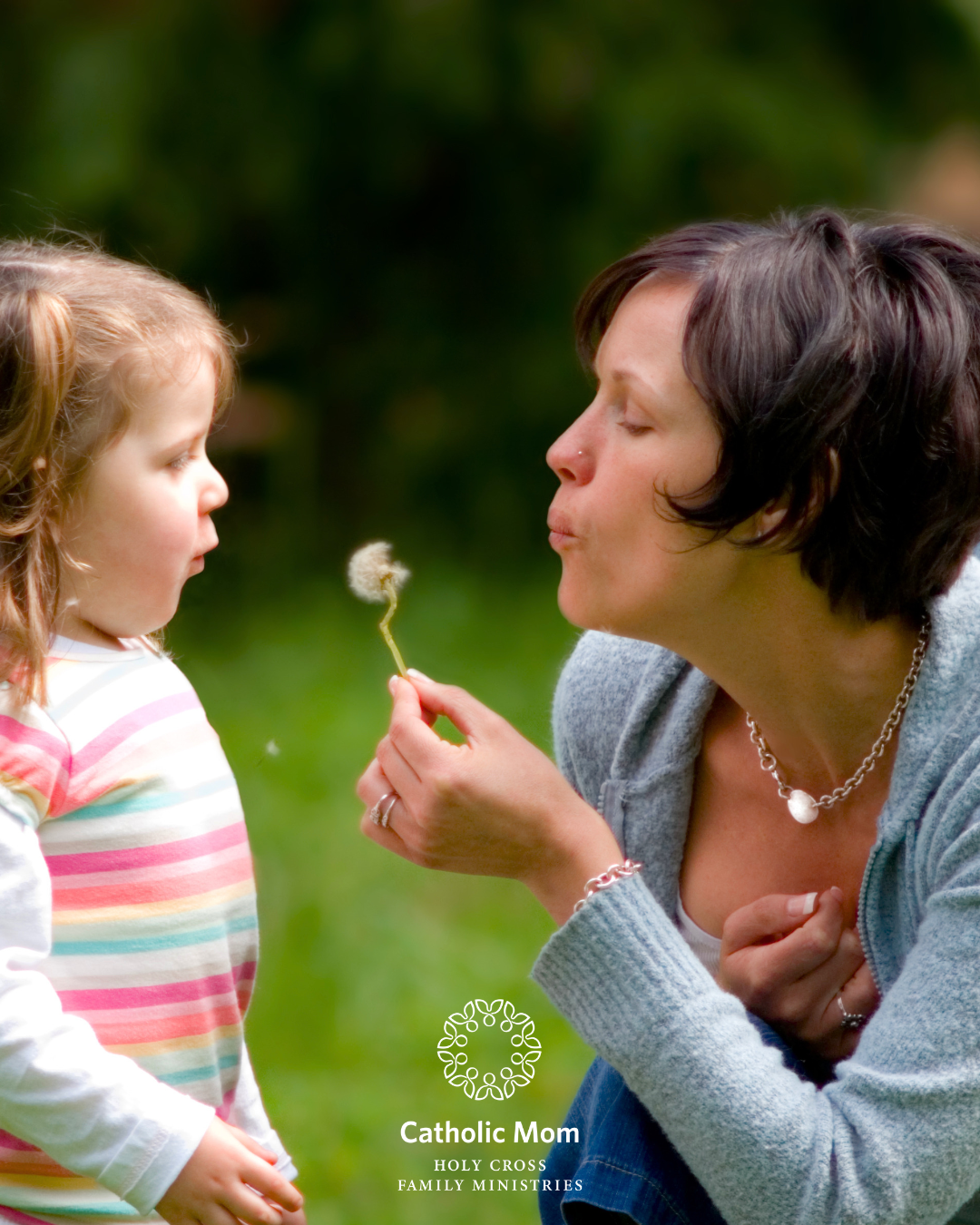
Stepping outside of time to show my toddler a dandelion.
Cooking dinner with love (rather than the more common desperation).
An unknown gentleman offering me an umbrella in the rain.
My husband opening the car door for me on a date.
My friend bringing a meal and talking a moment before leaving.
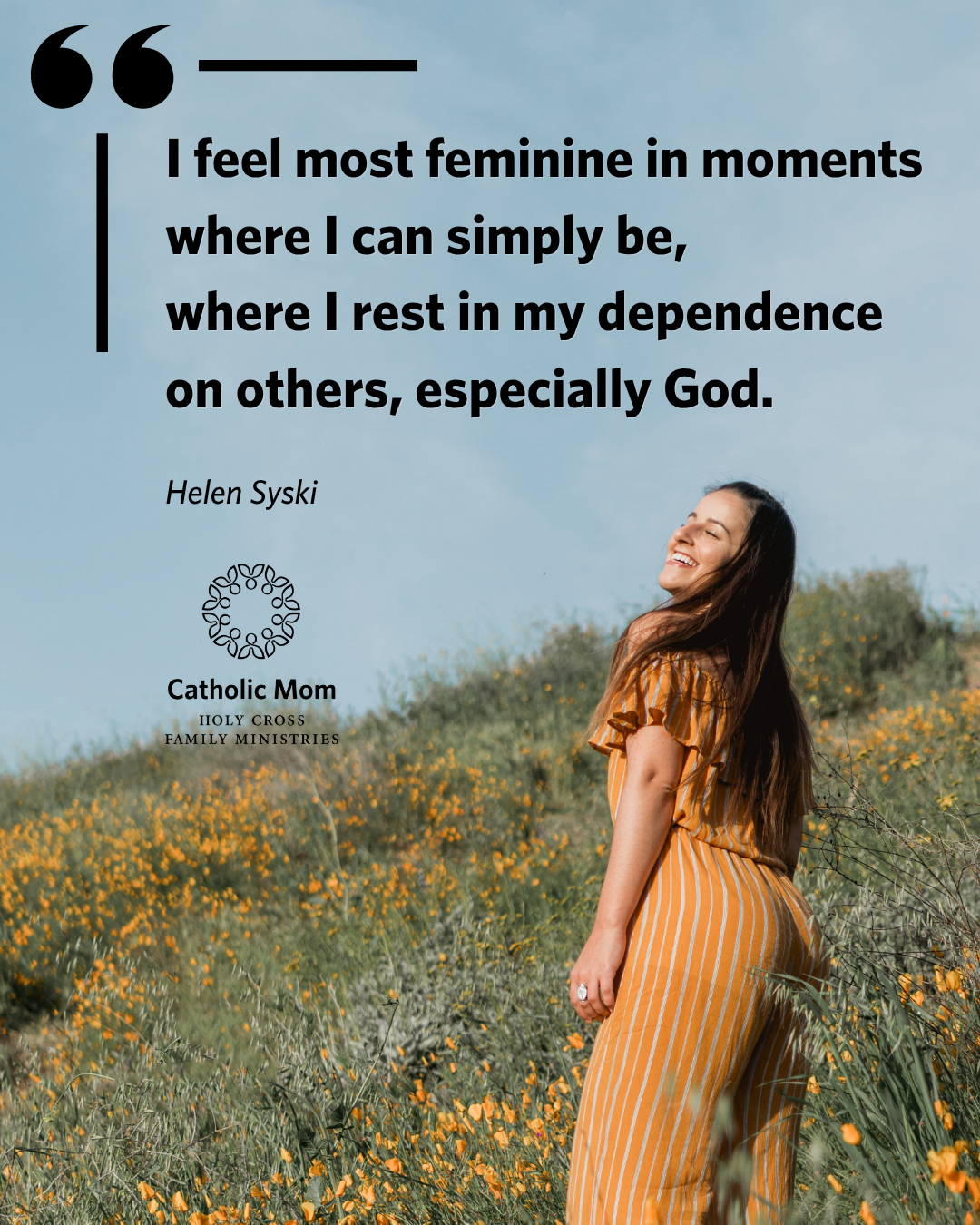
I realized that all of these moments were not based in doing, but in being. They were moments of rest. Most of my womanly experiences were caring for others, but if I were honest, I feel most feminine in the moments where I am cared for by others. I feel most feminine in moments where I can simply be, where I rest in my dependence on others, especially God.
Anthropology of Dependence
When I heard about Leah Libresco Sargeant’s new book The Dignity of Dependence, I leapt to read it. Apparently I wasn’t the only one wondering about this connection between femininity and dependence! Her book is worth a read, as she invites us to wrestle with many important questions. We women have been given so much freedom in these past decades, but it is up to us to discover what it means to be female and to craft lives that allow our femininity to flourish.
Neediness is one of the hallmarks of humanity. As Saint John Paul II reminded us in his Theology of the Body, our bodies show us that we are made for relationship. We are made to love and be loved, to give and to receive … and women in particular are made to receive. This is not our weakness, but actually our strength, in the supernatural realm. We are being fooled into covering it up or shoving it away. We are told independence is the pinnacle experience, the hallmark of adulthood, which is not the Catholic understanding of personhood.
Sargeant summarized:
We cannot build a just society on a false anthropology of independence. We cannot have a feminism that does not begin with recognizing and rejoicing in the embodied difference between men and women, and women’s greater exposure to dependence. A baby is not a failed person for being so obviously human, and a woman is similarly most herself and most human when her life is shaped by the gift of need and vulnerability. (184)
The Curse of the Capable
Women are capable of so much, and these opportunities before us are glorious. The question is not whether we should “go back” or lose any of these gains, but rather how to pursue them in a way that brings our femininity fully forward as a gift to the world.
The curse of the capable is that you are asked to do everything and you are “able” to do everything. It is so important to reclaim discernment: what it is it that God is calling me to do, and how does He want me to do it?
I have no conclusion or resolution to offer. My own journey with these questions feels to still be just beginning. How do I live the life before me fully feminine? Where doing looks like resting in God, where caring for others looks like receiving care? Through prayer, may I see my dependence and that of those around me as a gift that should be reverenced and receive the needs of others as their love for me.
Share your thoughts with the Catholic Mom community! You'll find the comment box below the author's bio and list of recommended articles.
Copyright 2026 Helen Syski
Images: Canva


About the Author

.png?width=1806&height=731&name=CatholicMom_hcfm_logo1_pos_871c_2728c%20(002).png "CatholicMom_hcfm_logo1_pos_871c_2728c (002)")


Comments