


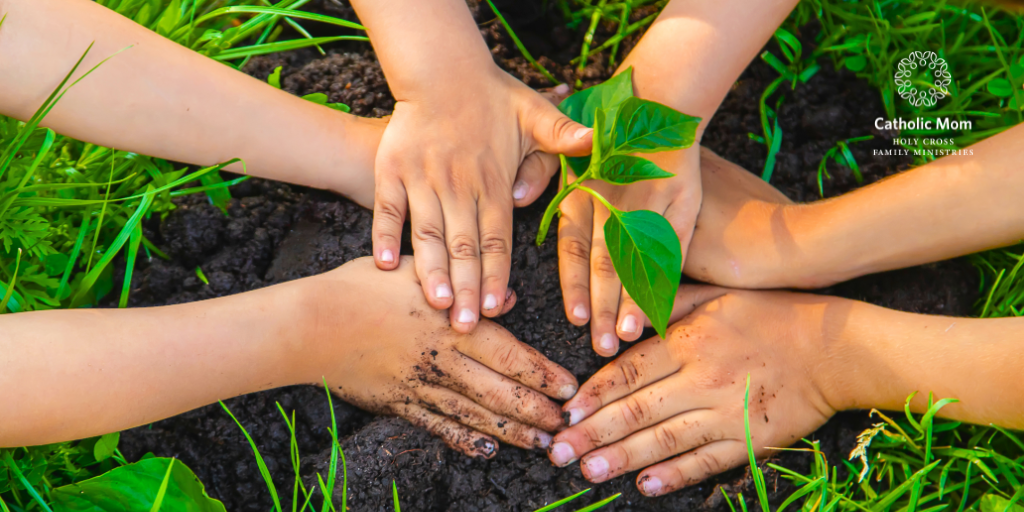
Marge Steinhage Fenelon details five simple ways to use examples from nature to help children grow in their understanding of God and His love for them.
One of the quiet gifts of parenthood is discovering that God is already teaching our children — long before we sit down with a catechism or open a Bible. When we were homeschooling our children, we took the classroom outdoors with us as often as possible. We are blessed to have a lakeshore parkway just six blocks from our house, so we’d fill our backpacks and spread our work out on a picnic table by the shore. I always marveled at the way God’s lessons were everywhere.
Creation Speaks of Its Creator
From the tiniest seed to the widest sky, creation speaks of its Creator. When we help our children notice these signs, we invite them into a relationship with God that feels natural, joyful, and deeply personal. Nature has a way of giving us pause, opening our eyes, and softening our hearts. It offers us a gentle, living classroom where faith can be caught as much as it is taught. Based on our family’s experiences, here are five simple ways to use examples from nature to help children grow in their understanding of God and His love for them.
Seeds and Growth: Trusting God’s Timing
Few things delight children more than planting seeds and waiting for them to sprout. As you dig in the soil together, talk about how something so small can hold so much promise. Jesus Himself used this image when He spoke of faith the size of a mustard seed. Alternatively, find young plant sprouts around you and point them out to your children.
Seeds teach children that growth often happens quietly and slowly. We don’t see roots forming underground, but we trust they are there. In the same way, God is always at work in our hearts, even when we can’t see immediate results. This is a beautiful way to talk about prayer, patience, and trusting God’s timing—especially when children are waiting for answers or struggling with something new.
The Changing Seasons: God’s Faithfulness
The rhythm of the seasons offers a powerful lesson in God’s constancy. Spring follows winter. Light returns after darkness. Take time to notice these changes with your children: buds forming on trees, grass turning green, the smell of freshness in the air.
Seasons remind us that change is part of life, but God remains faithful through it all. When children experience transitions — starting school, welcoming a new sibling, or facing loss — the seasons reassure them that God brings renewal and hope, even after difficult times. Spring shows us that what was once dead can come to life with God’s grace, just as our bodies will rise at the Resurrection.
Animals and Care: God’s Loving Providence
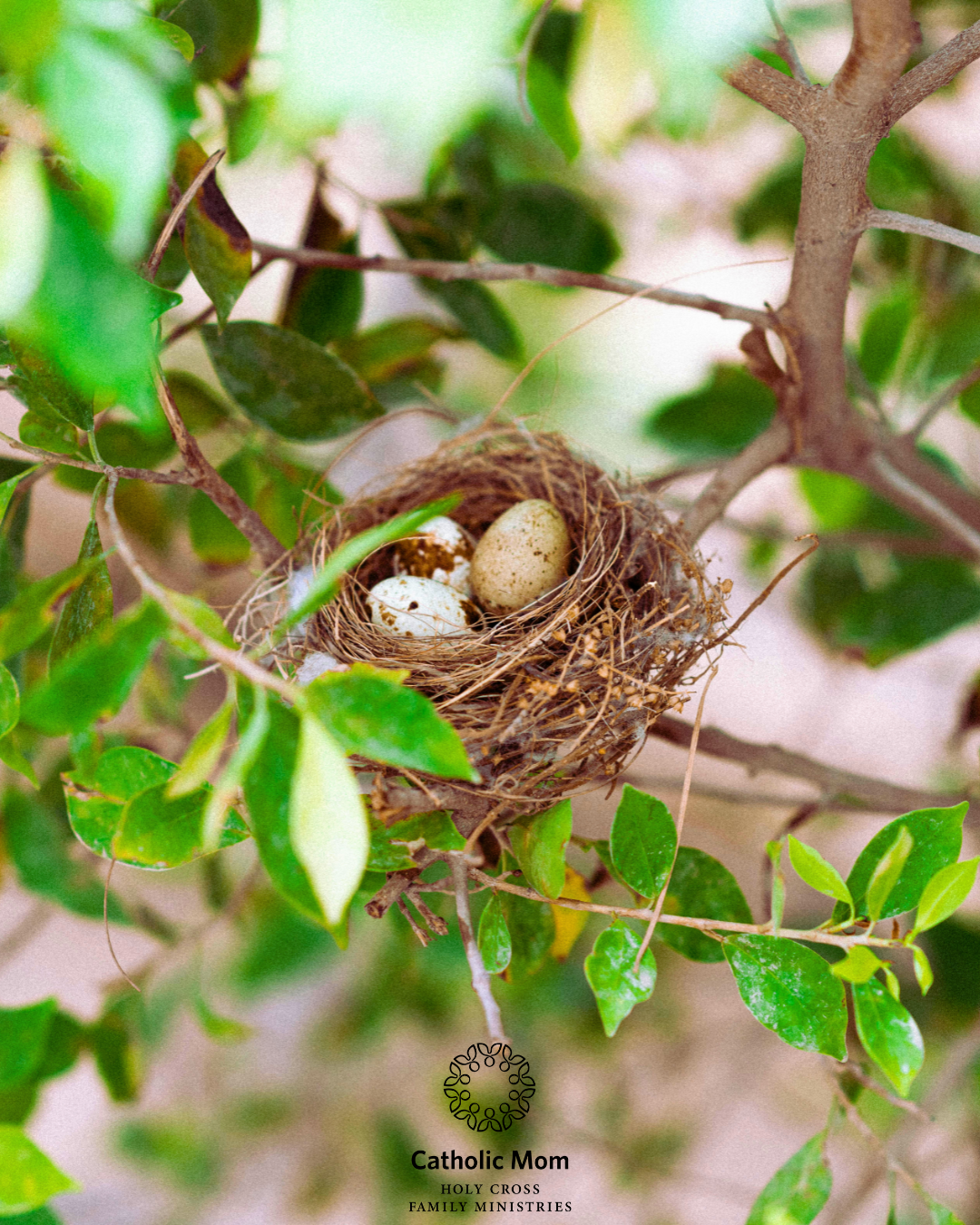
Children are naturally drawn to animals, and with good reason. Watching birds build nests or squirrels gather food opens the door to Jesus’ teaching that our Heavenly Father cares for all His creatures.
This is a gentle way to help children understand God’s providence. If God feeds the birds and clothes the flowers, how much more does He care for us? These conversations can calm anxious hearts and encourage children to bring their worries to God in prayer. They also help foster gratitude and compassion for all living things.
Light and Darkness: Jesus, the Light of the World
Whether it’s a sunrise, a candle flame, or stars shining in the night sky, light naturally draws our attention. Use these moments to talk about Jesus as the Light of the World — present even when things feel dark or uncertain.
Children understand darkness instinctively. They know fear, sadness, and confusion. Nature reminds them that light always returns. This makes it easier to talk about hope, Resurrection, and Christ’s presence with us in every situation. Even a simple evening walk can become a moment of prayer and reassurance.
Storms and Calm: God’s Presence in Every Moment
Storms can be frightening, but they also pass. Afterward, the air feels fresh, the sky clearer. When thunder rumbles or rain pours, remind children that God is with us in both the storm and the calm that follows.
This is a natural way to introduce trust and surrender. Life will have hard moments, but God never abandons us. Talking about storms can help children name their fears and learn to lean on God, who brings peace in His time.
Nature Supports Faith Formation
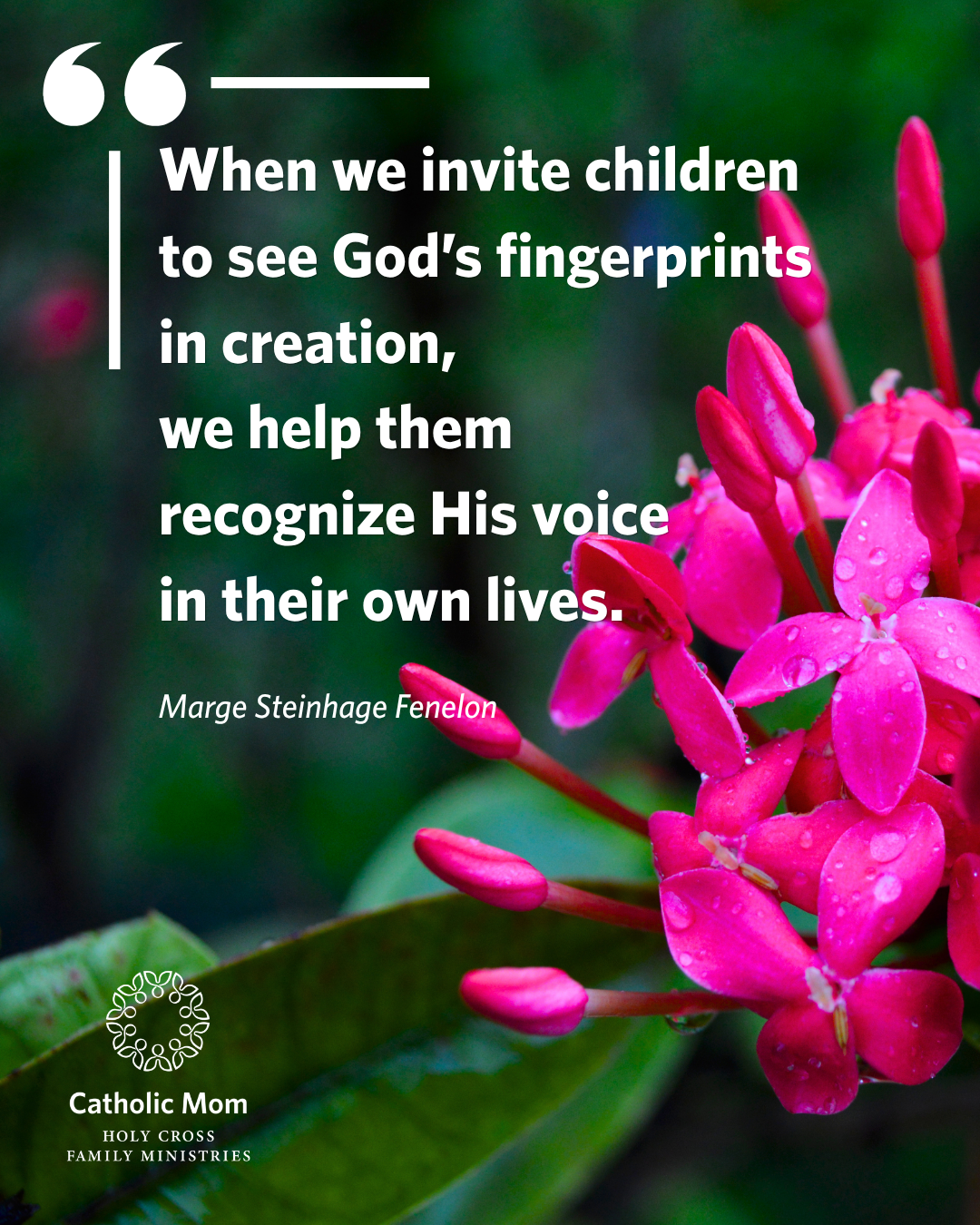
Nature doesn’t replace formal faith formation — but it beautifully supports it. When we invite children to see God’s fingerprints in creation, we help them recognize His voice in their own lives. These simple, everyday lessons plant seeds of faith that God will nurture, often in ways we may never fully see.
Share your thoughts with the Catholic Mom community! You'll find the comment box below the author's bio and list of recommended articles.
Copyright 2026 Marge Steinhage Fenelon
Images: Canva


About the Author


.png?width=1806&height=731&name=CatholicMom_hcfm_logo1_pos_871c_2728c%20(002).png "CatholicMom_hcfm_logo1_pos_871c_2728c (002)")


Comments