


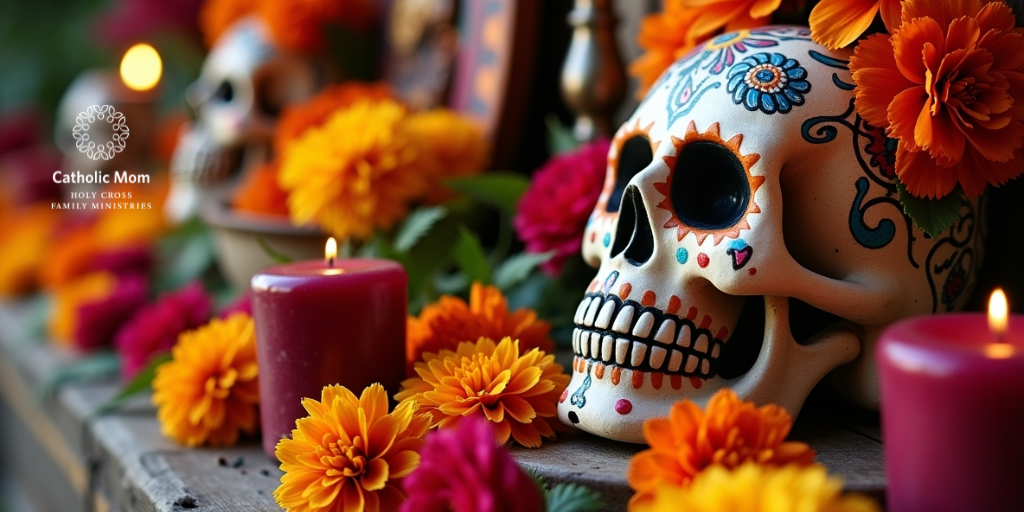
Vicky Prosser shares how she celebrates the Catholic tradition of ‘Day of the Dead’ with her family and students.
In 2021, I came across Janelle Peregoy’s article on Día de los Muertos, and it completely changed how I celebrate this Catholic tradition with my family and students. Peregoy highlighted the deep connection between this feast and the Church’s teaching on the Communion of Saints, offering a beautiful way to remember our deceased loved ones. Over the past few years, I’ve incorporated these lessons into my parenting and teaching at a parochial school, and they’ve enriched both aspects of my life.
A Family Tradition of Faith
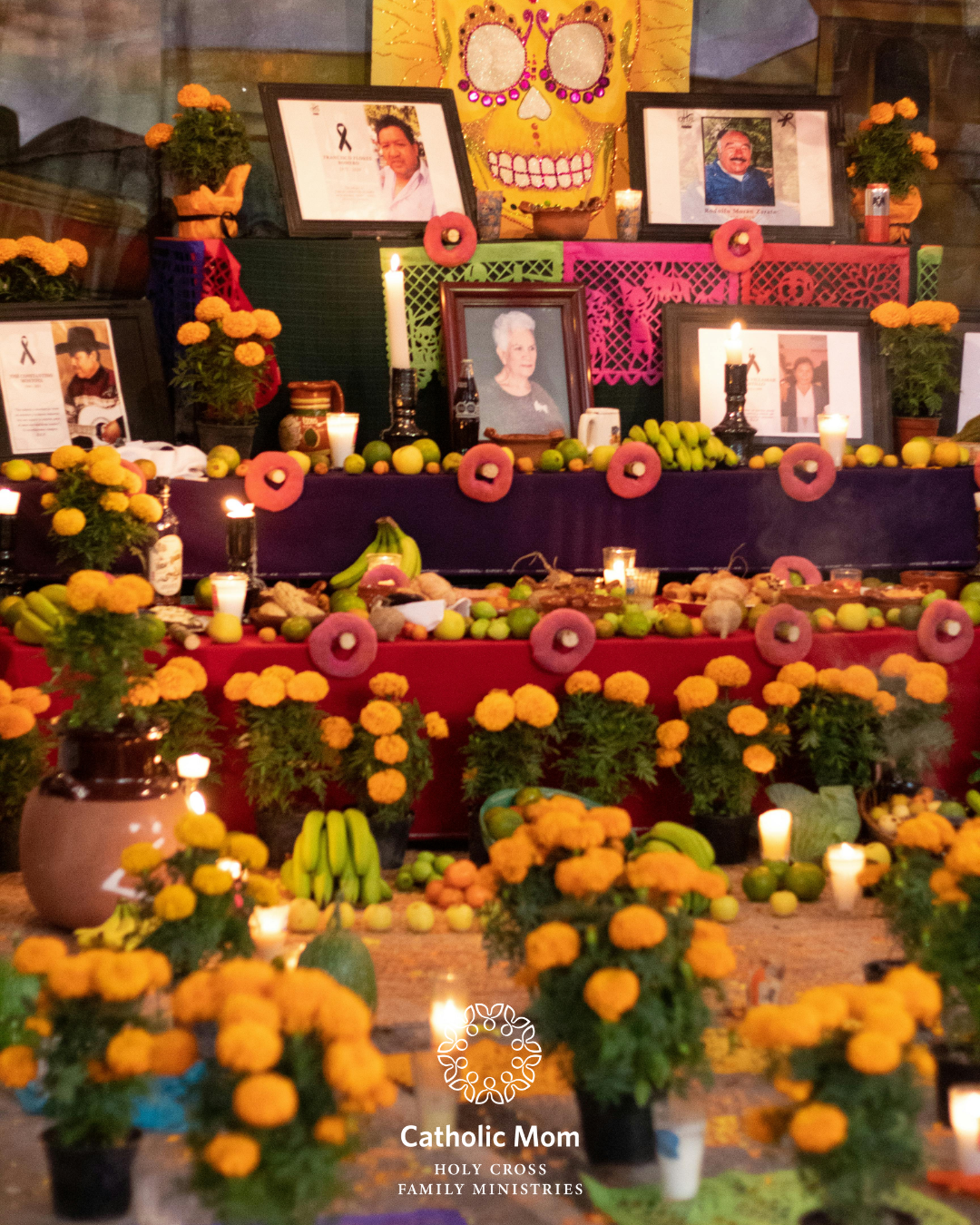
At home, Día de los Muertos has become a special opportunity to teach my children that death is not the end but a continuation of life with God. Following Peregoy’s advice, we set up an ofrenda (altar) each year, where we place photos of our loved ones, candles to symbolize Christ’s light, and marigolds, representing life and hope. By including my children in building the ofrenda, they learn the importance of praying for the souls in Purgatory and staying connected with family members who have passed away.
What’s especially powerful is how this celebration has helped ease their fear of death. They now see it as a natural part of life that leads to eternal union with God. We pray together, thanking God for our family’s blessings and asking for the souls of our loved ones to be brought to Heaven. As a Catholic mother, it’s been a gift to witness their growing understanding of our faith through this tradition.
We’ve moved beyond thinking of death as something sad or frightening. Instead, we focus on the joy of knowing that our loved ones are in God’s care and that we are still united with them through the Communion of Saints.
Bringing Día de los Muertos to the Classroom
Día de los Muertos has become a unique teaching tool to help my Catholic-school students understand the connection between faith and culture. Peregoy’s article guided me in realizing that this isn’t just a Mexican tradition — it’s deeply rooted in our Catholic faith. By presenting Día de los Muertos through the lens of the Communion of Saints, I’ve been able to connect language lessons with spirituality in a way that resonates with my students.
Each year, I involve my students in hands-on activities, like creating their own ofrendas with photos of loved ones or saints. We also explore the meaning of traditional symbols, such as the calaveras (sugar skulls), which remind us that death is part of life and should not be feared if we are in the right relationship with God. These activities make learning both fun and meaningful, and they help students connect with the deeper spiritual significance behind the celebration. This shift in perspective is something I strive for in all my lessons, blending language learning with faith formation.
A School-Wide Celebration of Faith
Our school has embraced Día de los Muertos as an annual event, where students and teachers create a communal ofrenda and spend time reflecting on the Communion of Saints. We also hold a special prayer service on November 2nd, where students can pray for their deceased loved ones and the souls in purgatory. By making Día de los Muertos part of the school’s spiritual life, we’re teaching students that faith is lived not only in Mass or prayer, but also in how we celebrate and remember our loved ones.
Passing on the Faith
Ultimately, Día de los Muertos has transformed how I teach my students and raise my children. It’s more than a cultural event—it’s a powerful way to pass along on our Catholic faith. I’ve watched my children and students grow in understanding that death isn’t something to fear when we trust in Christ’s promise of eternal life. They are learning to live their faith by remembering their loved ones in prayer, knowing they are still united with them through the Communion of Saints.
This year, I encourage Catholic mothers to involve their children in this beautiful tradition. Set up an ofrenda, share memories of loved ones, and pray together for their souls. Let this feast be a joyful reminder that we are all connected in Christ, whether on Earth, in Purgatory, or in Heaven.
Share your thoughts with the Catholic Mom community! You'll find the comment box below the author's bio and list of recommended articles.
Copyright 2026 Vicky Prosser
Images: Canva
About the author:
Vicky Prosser is a retired U.S. Army veteran and high school Spanish teacher who embraces leadership roles in education and advocates for the cultural and educational needs of Spanish-language heritage speakers. She writes and speaks about Spanish language education, cultural integration, and the evolving influence of heritage speakers on today’s classrooms and broader culture. A proud Cuban American and mother of three, she enjoys sharing the traditions of her Hispanic heritage with her children and students. She often speaks at conferences and shares insights on the challenges and opportunities educators face in creating inclusive, culturally responsive learning environments.


About the Author



Comments