


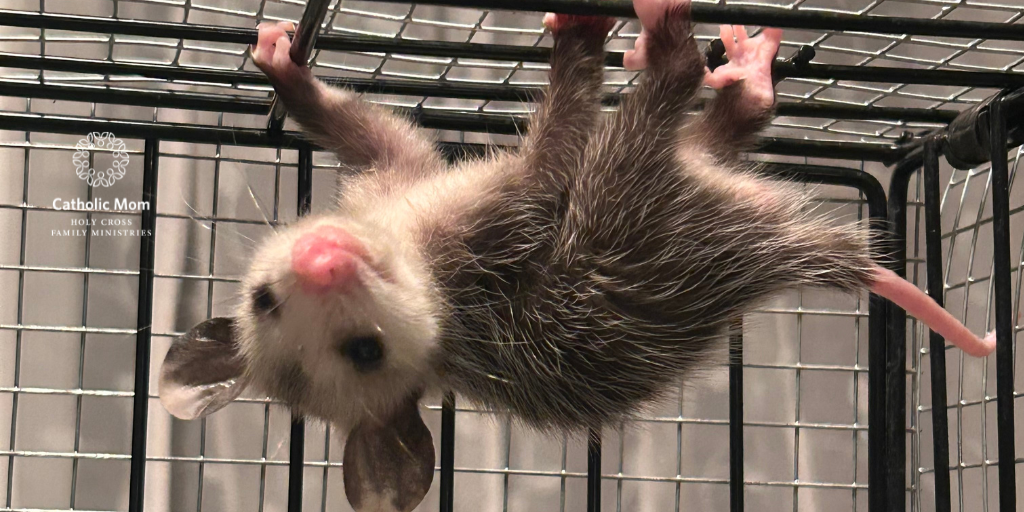
Sarah Torbeck discovers the lessons of family legacy, through the life of a tiny woodland creature.
My mother was/is … let’s just use the word “eccentric.”
In my youth, my mother was the consultant for the wild animal rehabilitation division of the Humane Society in Montgomery County, Maryland, which means that we rescued and cared for a large percentage of orphaned and injured wild animals during my tenure as a young girl.
My sisters and I spent our formative years using pet nursers (very tiny baby bottles) with specialized formulas to care for baby squirrels, bunnies, raccoons, opossums and chipmunks.
There was also an assortment of reptiles, birds, and the occasional exotic rescue (think animals illegally smuggled into the United States).
Of course, all of these animals needed cages and habitats, and my mother was only too happy to oblige. Our family room, kitchen, screened-in porch and occasionally even the living and dining rooms were festooned with a labyrinth of kennels, cages, and all the accoutrements that might imply.
Our refrigerator was regularly stocked with animal formulas, wild-animal formulas, pabulums, mealworms, fruits, and vegetables, all in various stages of slush, mash, and glop.
Did I mention that my mom was eccentric?
It didn’t occur to me to think of my youth as a standout, but by the time I was in my early 20s, I was ready to walk away from the madness. I had seen the inside of too many other homes — and I began to realize that my home looked more like the side show at a petting zoo.
At some point in my life, I made the decision to never be like my mother. There are limits to the idea of raising one’s children inside a zoo; and even though I loved animals, I refused to believe that I would ever create a home like the one I had been raised in.
And I never wanted to be like my mother.
Lessons Learned
That was 40 years ago.
A few months ago, I was walking in the woods by my house, trying to dig up some large rocks to use for a small fire pit. The skies had turned dark, and I knew that rain was imminent. I had just finished digging up a particularly challenging rock, when I heard a small rustle in the leaves. I ignored the sound at first — after all, squirrels and rabbits dart through the woods on a regular basis.
Then I heard the sound again, so I stopped digging and casually looked in the direction of the rustling noise. This noise was surprisingly subtle, so I walked over to look for its source.
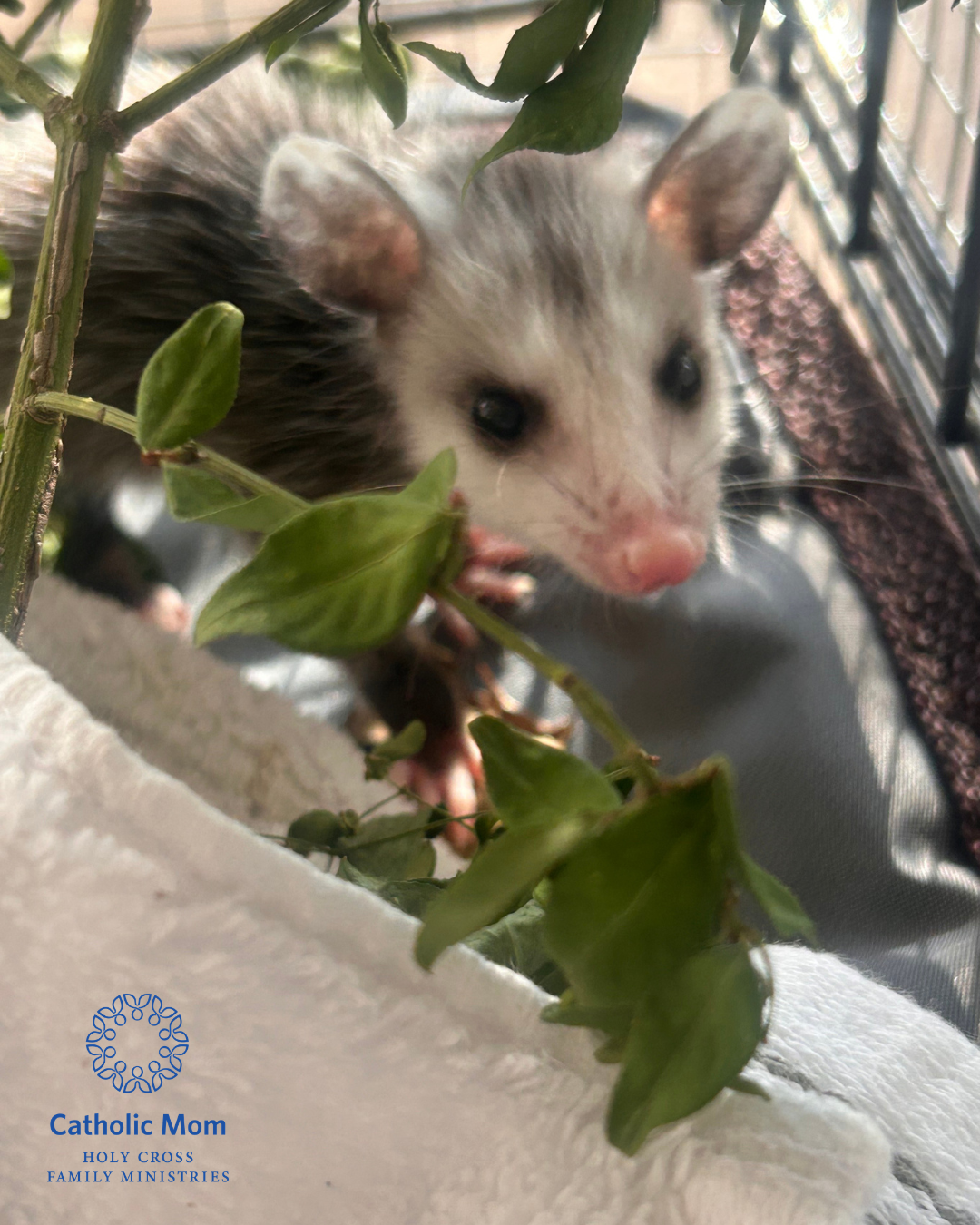
At first, I saw nothing except a few quivering leaves, but I quickly realized I was staring into the face of a tiny opossum, trying to make his way through the thick underbrush. He was perhaps four inches long, with a white triangular face, and round ears. He was so small that I thought he might be a mouse at first — their facial structures are similar — but I quickly dismissed the idea. This was an opossum (referred to as ‘possum from now on).
I walked over to him — but he did not pause. He just continued to move slowly, carefully over the leaves and moss of the forest floor.
I stared at the tiny creature for a few minutes longer, wondering what to do. It was daytime, and I knew that ‘possums were nocturnal. His size also indicated that he was too small to be away from his mother.
I was flummoxed.
I stood lost in thought as the sounds of the forest pulsated around me. I shifted my weight and finally stepped toward the ‘possum. I bent down and carefully picked it up. It sat very still in my gloved hands and simply looked up at me.
And in that instant I realized that I knew exactly what to do.
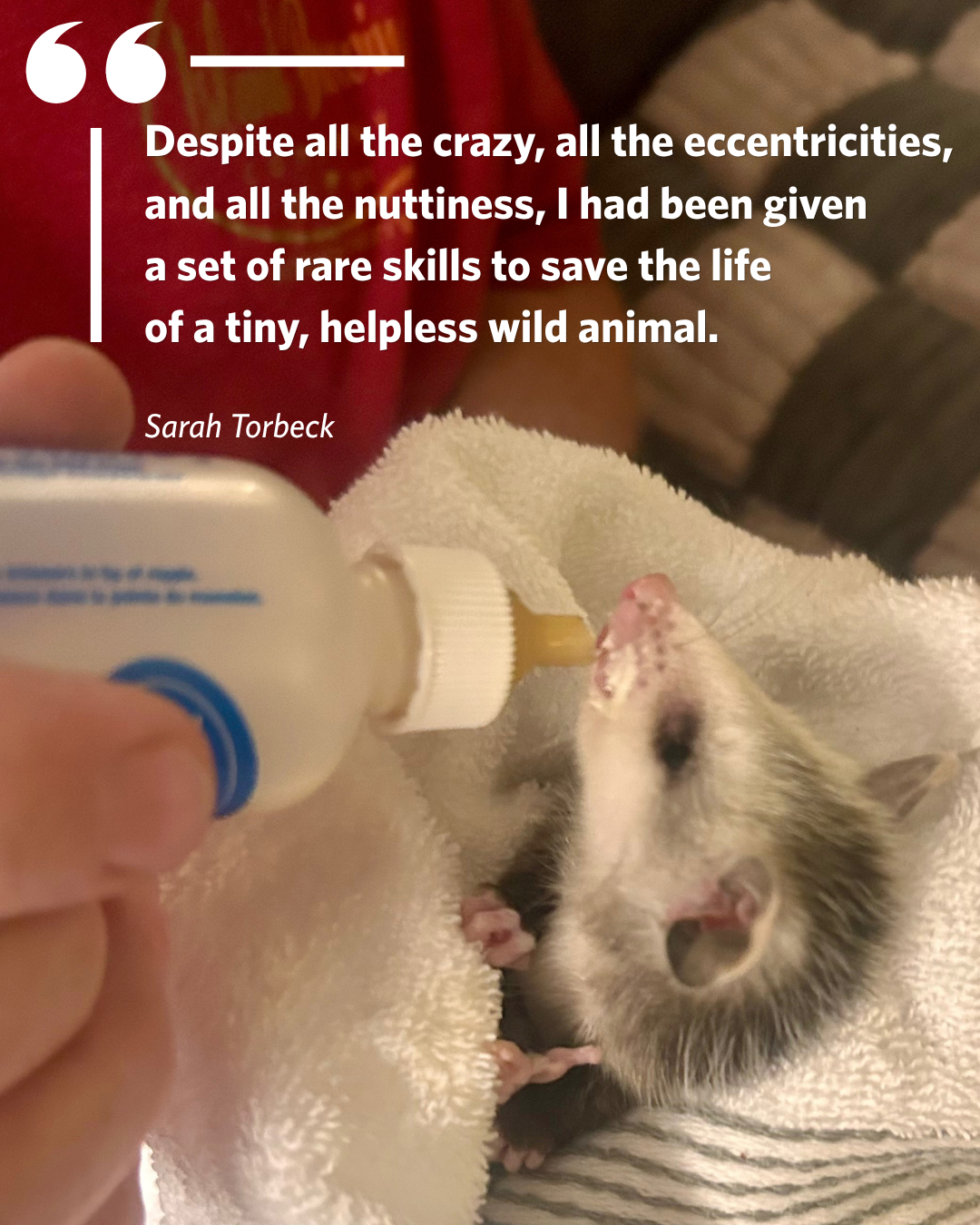
Baby ‘possums this small are too young to eat solid food, or forage for food in the wild. I also realized that I was his last, best hope for survival. I was, after all, in possession of a sizable knowledge base regarding the care and feeding of wild baby animals.
So, I gingerly carried the ‘possum into my house and wrapped a towel around his tiny body. I used an eye dropper to give him some water and prepared a kennel with a heating pad, towels and various branches and leaves.
Then I raced to the farm store for milk replacement formula (MRF) and a pet nurser.
Oh, and I named him “Pip.”
‘Possum Mama
I settled into a natural feeding schedule of four-hour intervals and gave him water and an appropriate atmosphere that matched his mother’s body temperature.
And slowly, oh so slowly … Pip began to thrive.
I started Pip on solid food a few days ago — small chunks of apple and slivers of green grapes. I cheered as I watched him nibble voraciously on the apple wedges, and smiled as he instinctively peeled the skins off the grapes before eating them. (He’s a picky ‘possum.)
But in that moment, I knew that Pip was going to survive.
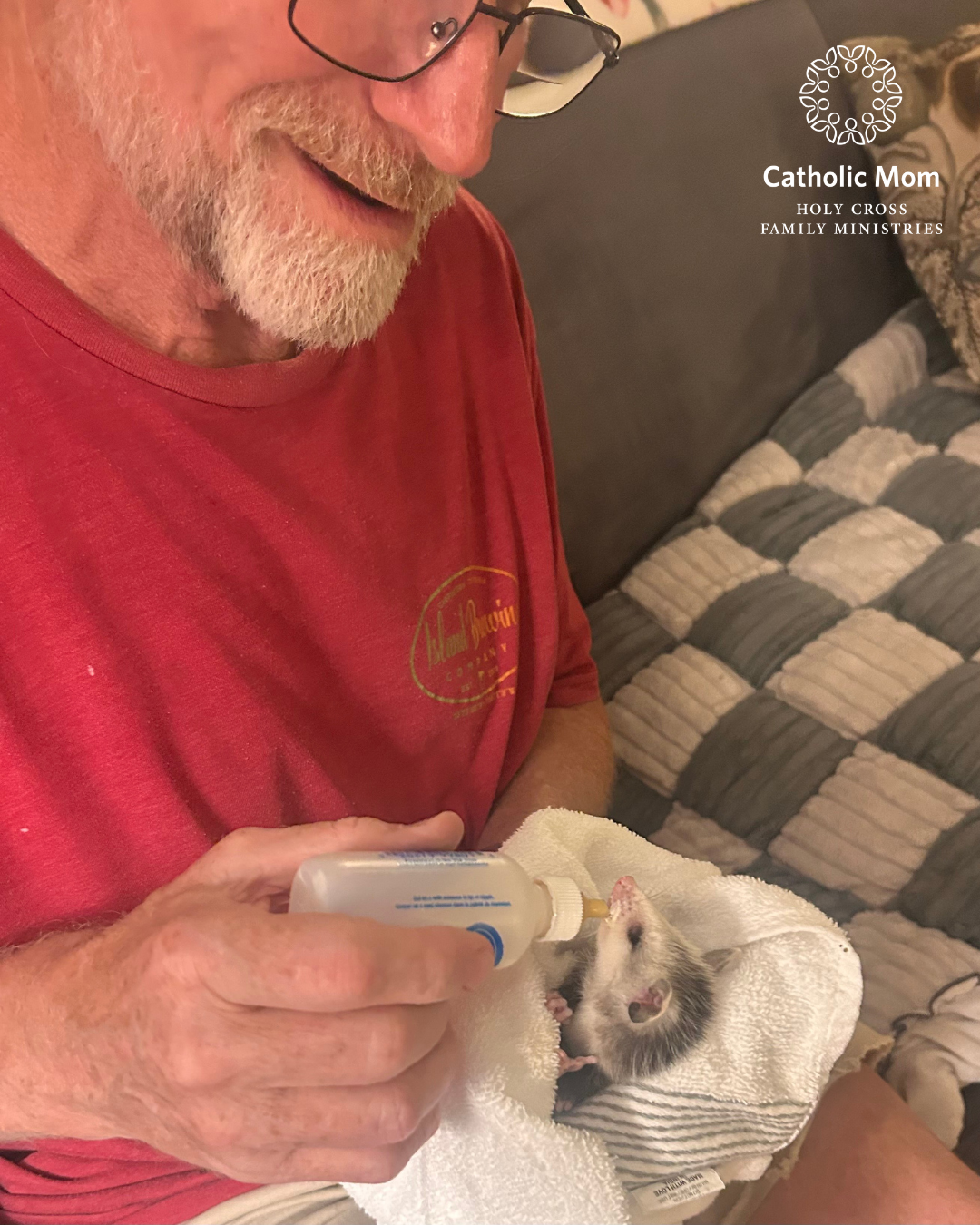
And, if I’m being honest … Pip is going to survive because of my mom. Despite all the crazy, all the eccentricities, and all the nuttiness, I had been given a set of rare skills to save the life of a tiny, helpless wild animal.
And that matters in the grand scheme of things.
Thanks, Mom.
Have you ever experienced this kind of epiphany? Can I get an “Amen"?
Share your thoughts with the Catholic Mom community! You'll find the comment box below the author's bio and list of recommended articles.
Copyright 2026 Sarah Torbeck
Images: copyright 2026 Sarah Torbeck, all rights reserved.


About the Author

.png?width=1806&height=731&name=CatholicMom_hcfm_logo1_pos_871c_2728c%20(002).png "CatholicMom_hcfm_logo1_pos_871c_2728c (002)")


Comments