


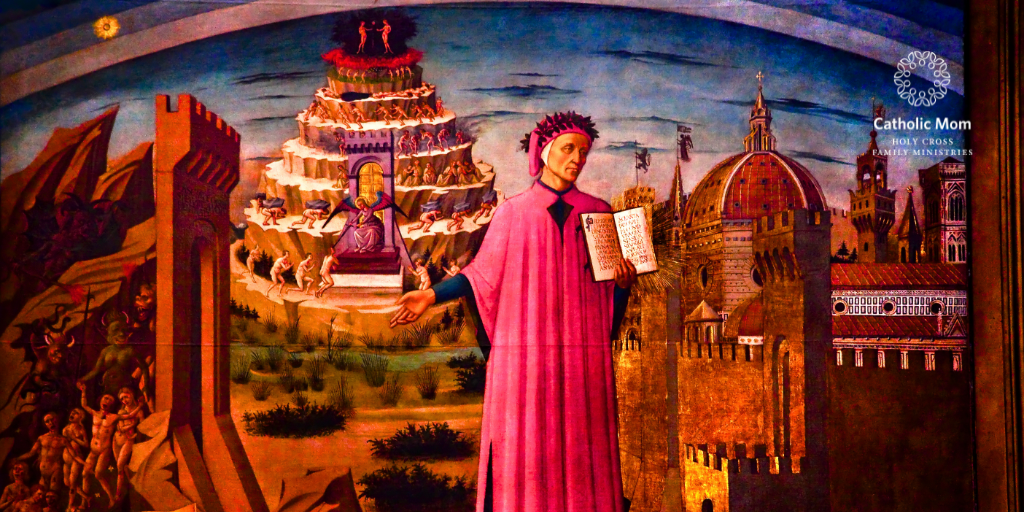
Monica Portogallo found a new way to approach suffering in Dante’s Divine Comedy.
Back in February, I was (half) joking with a friend that a situation in my life was like the fourth circle of Hell in The Divine Comedy: I was going around in circles with no end in sight, carrying a heavy weight and getting irritable with those around me. It seemed to describe to a T my level of frustration in the situation.
That offhand comment reminded me about something my former pastor had said about The Divine Comedy. I had read The Inferno in Italian class in high school, and he suggested that I read the Purgatorio and Paradiso parts as well, since they had good spiritual insights. I had even downloaded a dramatized audiobook version but never listened to it. So, since Lent was starting the next week, I figured listening to the whole thing might be a good Lenten practice for me.
Is it Hell …
I started with The Inferno again, because, well, high school was longer ago than I care to mention, and I was sure there were many insights I missed as a teenager. It was challenging emotionally, but definitely worth it. My biggest overall takeaway was the reminder that the human condition was not much different in the fourteenth century. I find that encouraging, because I have a tendency to catastrophize and imagine the world and human nature was so much better before the modern era.
I listened intently in particular to the part describing the fourth circle. While it confirmed the similarity to my situation, I had forgotten the fourth circle describes greed. I considered how frustration and having heavy burdens was a fitting punishment for greed. After all, greed often leads to others having frustration and heavy burdens.
Or Purgatory?
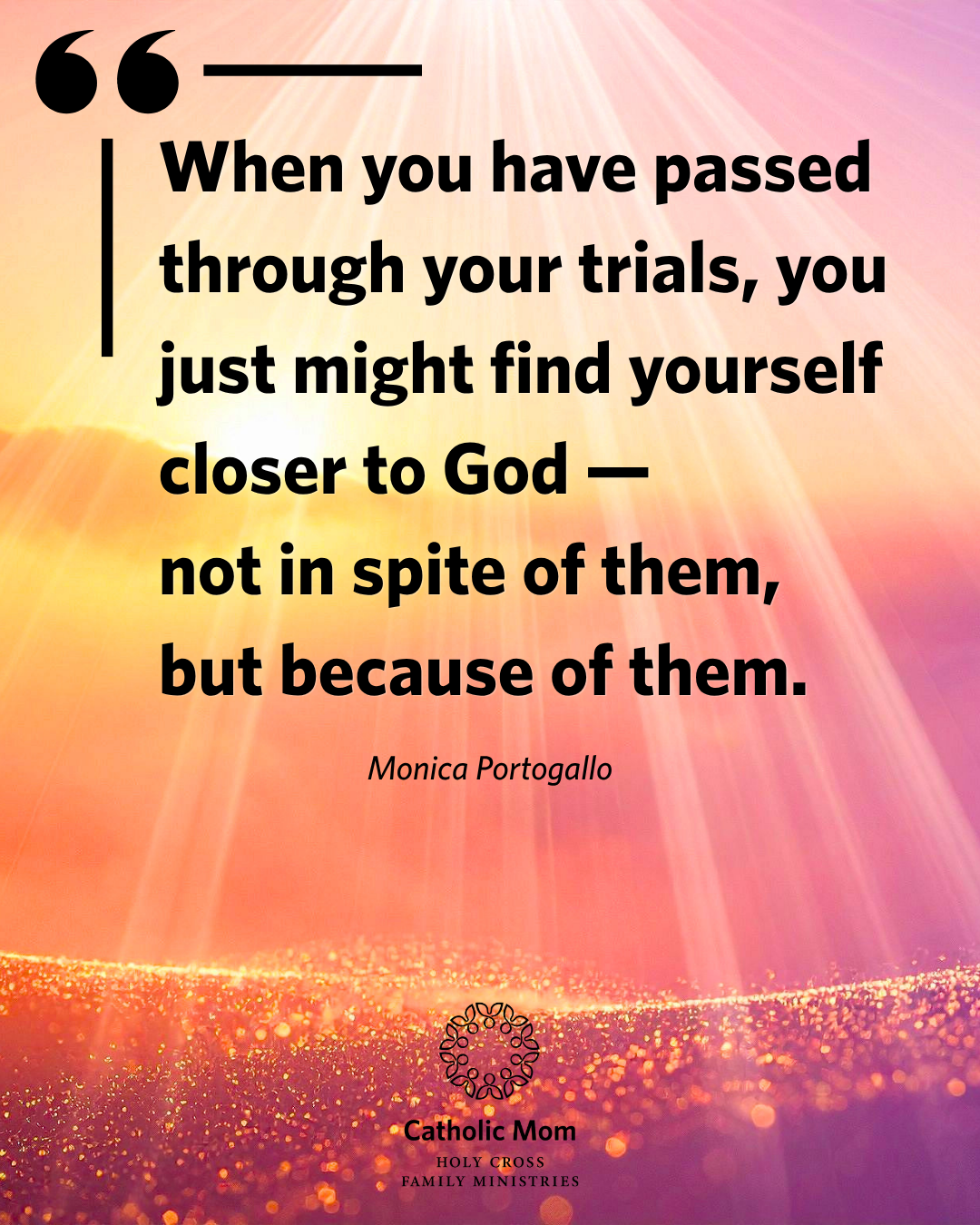
When I got to Purgatorio, I was struck by how skillfully Dante establishes a different tone in this part, conveying pain interlaced with the hope that is missing in Hell. In the first level of Purgatory, there is a situation similar to the fourth circle of Hell: people struggling to carry heavy burdens toward the gate of the next level. This time, they are there due to attachment to pride. And, as if it were meant to be a lesson specifically for me, Dante explicitly highlights the contrast between this level of Purgatory and the similar situation I had identified with in Hell.
In Purgatory, the people carry heavy burdens, but instead of going in a circle, they are slowly moving forward. They are struggling under the weight of their task, and yet they are slowly making progress to get to a better place. They are learning not to lash out at those around them and focus on the task at hand. In short, their situation is challenging, but they are making forward progress and improving themselves in the meantime.
Meaning in Suffering
I love that God sent me an unexpected message of hope through a 700-year-old literary work. My situation is hard, and I am struggling, but it is not pointless. I am not going in circles; I am slowly making progress toward my goal. I am becoming a better person as I learn how to move forward with my burdens, ultimately getting closer to God in the end. My suffering has a purpose.
We all have our burdens in this life, and how we think about them can be the deciding factor in whether they make us or break us. If we wallow in self-pity, it can feel like Hell on Earth. We can choose to see our struggles as a God-given opportunity to slowly get to a better place. Suffering can be a school for the soul if we remember there is an end in sight, and there are lessons to be learned along the way.
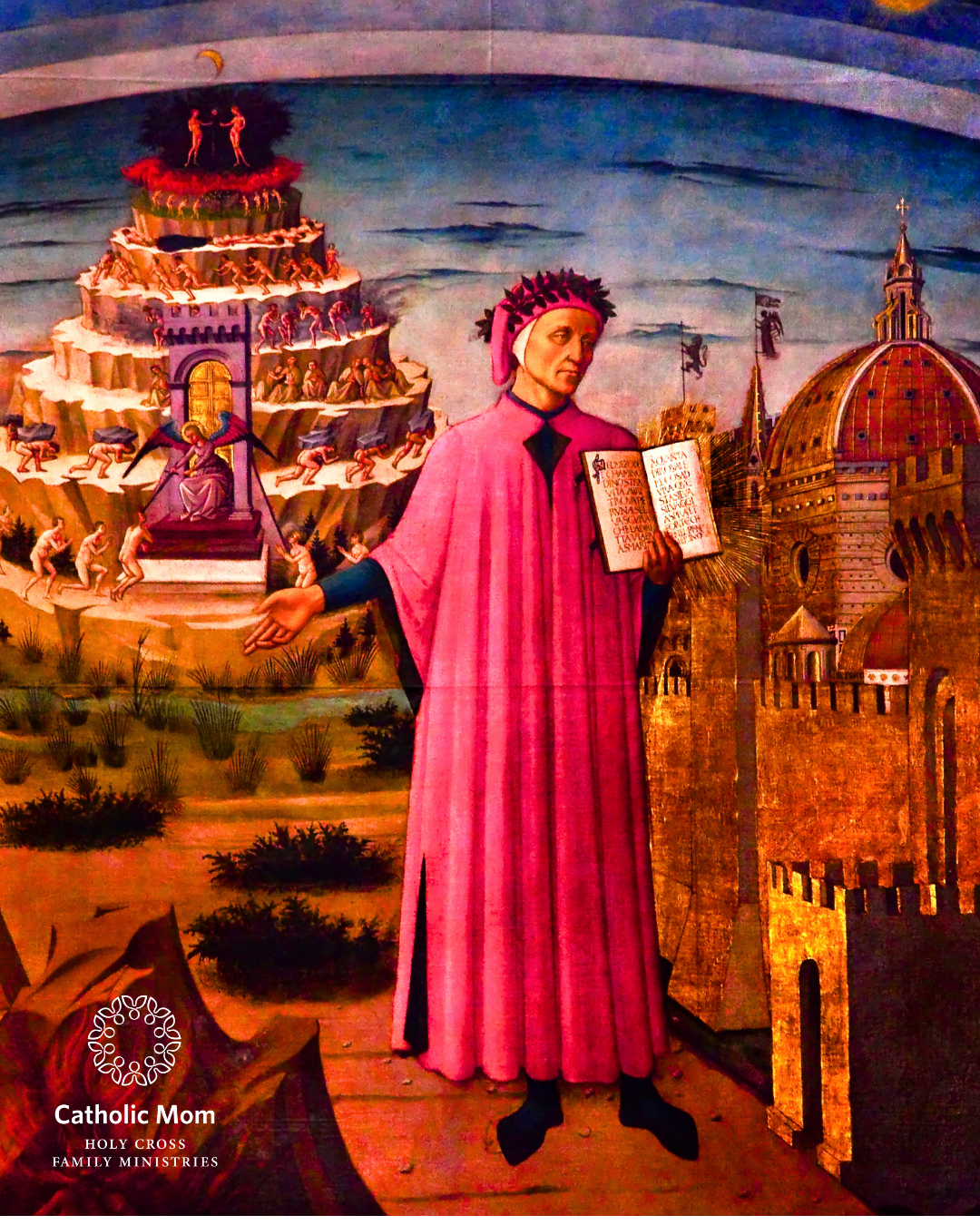
Whatever suffering you are going through, it will come to an end. Turn to God and hold on to hope. When you have passed through your trials, you just might find yourself closer to God — not in spite of them, but because of them.
Share your thoughts with the Catholic Mom community! You'll find the comment box below the author's bio and list of recommended articles.
Copyright 2026 Monica Portogallo
Images: Canva


About the Author


.png?width=1806&height=731&name=CatholicMom_hcfm_logo1_pos_871c_2728c%20(002).png "CatholicMom_hcfm_logo1_pos_871c_2728c (002)")


Comments