



Kevin Tondra explores how even when we feel our connection to our teens slipping, God is already reaching them in the places we cannot.
“How was dance?”
“Fine.”
“How’s Emma doing?”
“Good.”
“Did you get your math test back?”
“Yeah.”
As my daughter stared out the car window, clutching her dance bag, I felt a sudden sharp ache. I missed the little girl who used to tell me everything about her day from the backseat.
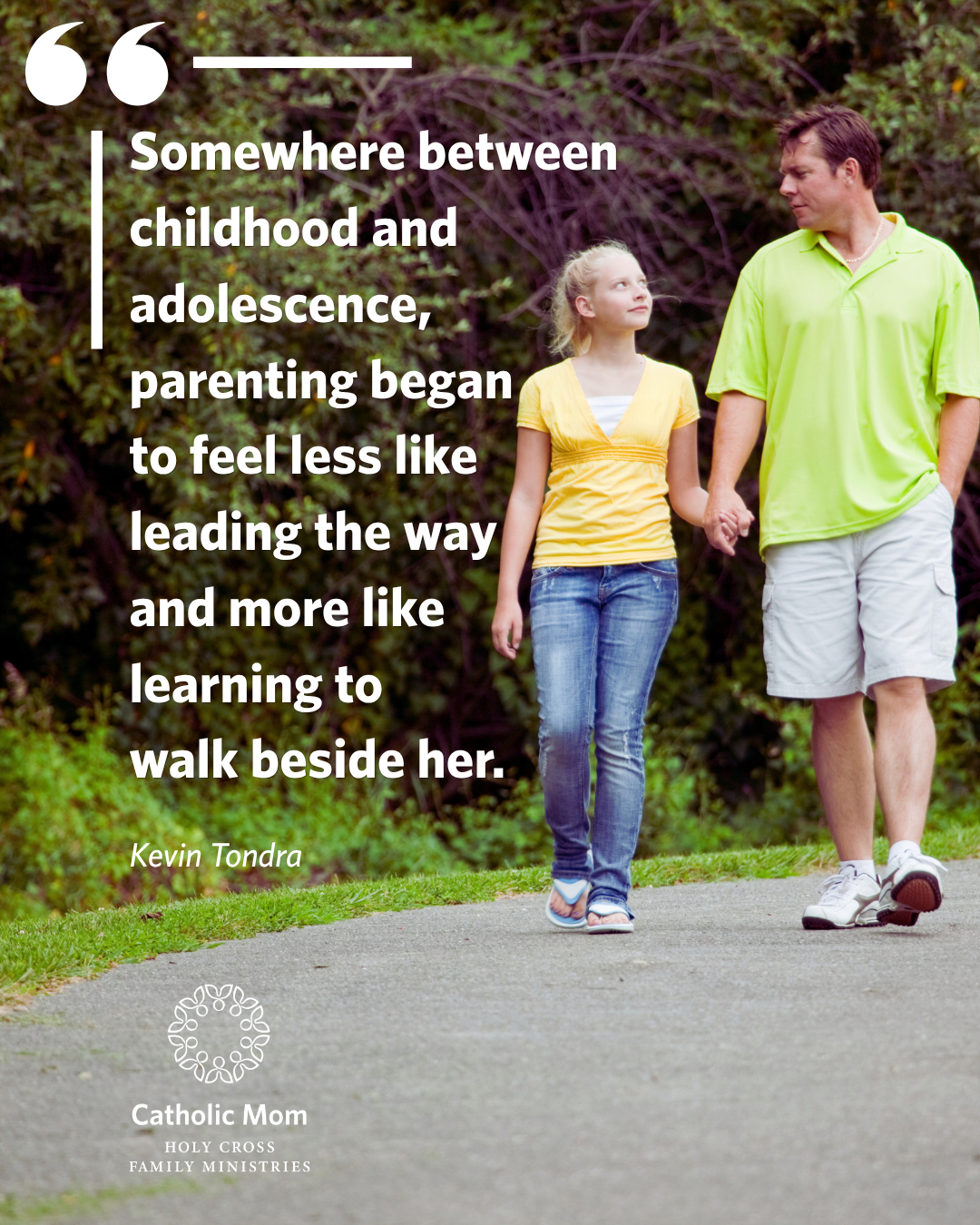
Somewhere between childhood and adolescence, parenting began to feel less like leading the way and more like learning to walk beside her. Like many parents, I found myself pacing in the hallway of my own mind, wondering: How do I stay connected? How do I keep reaching her when my words no longer seem to carry the same weight?
When Connection Begins to Change
There comes a moment in parenting — often during the teenage years — when we realize something unsettling. We cannot reach our children in the same way we once could. Conversations grow shorter, advice is less welcome, and the influence we once carried so naturally begins to feel uncertain. It is a disorienting season. And yet, within that realization lies an invitation — to trust that God is already closer to our children than we are.
It's easy to think of God as Someone who feels far away, watching from a distance. But when we look at the life of Jesus, we find something far more intimate. He tells us, “The Kingdom of God is among you” (Luke 17:21).
That changes everything for a parent. It means that through the gift of grace, God already dwells within our children — in their hearts and every part of who they are. This truth doesn’t depend on their mood, their behavior, or even whether they’re paying attention. It is a constant. Even when we feel like we’ve lost our own way to them, God never has.
Teenagers are searching for who they are, where they belong, and what gives their lives meaning. When they drift or push back, they are often searching for answers to these big questions. If they do not discover those answers in God, they will look for them elsewhere: in accomplishments, approval, possessions, or distractions that can pull them away from their true dignity.
But when a young person begins to realize that God isn't out of reach — that He has made His home in them — faith begins to change. It stops being something they have to follow and becomes a relationship they want to enter into.
When Faith Becomes Their Own
The challenge is often knowing how to begin: how to pray, how to listen, and how to enter into a relationship with God in the midst of everyday life. Many young people learn the words to prayers, but not how to truly pray. They learn about faith, but not always how to listen. This is where silence becomes essential. It creates the space where we learn to recognize God's presence.
Maybe it starts with just a couple of quiet minutes before bed. No speeches. No pressure. Just a simple prayer like, "Jesus, I trust in You," and a chance to sit in silence with Him. At first, it may feel awkward — for them and maybe for us — but that's okay.
Prayer isn't about saying the perfect words. It's about learning to recognize Someone who has been there all along. If thoughts come — and they will — that's normal. Gently noticing them and returning to God is part of the prayer itself.
Nothing dramatic needs to happen for grace to be at work. Most of the time, nothing noticeable happens at all. Yet over time, something subtle begins to grow: a sense of calm, a little more interior space, and a deeper awareness that they are not alone.
These small beginnings bear fruit. A teenager who begins to recognize God's presence within them may become less dependent on the approval of others. The pressure to fit in loosens its grip, and they begin to discover a steadier sense of worth that the world did not give — and cannot take away.

What Parents Can Do
Our role as parents at this stage becomes less about directing and more about witnessing. We are invited to model the relationship we hope they discover, one that is real rather than rigid, peaceful rather than pressured, and alive rather than merely dutiful.
Our own willingness to enter silence and trust God’s presence speaks more loudly than any lecture. We can create small opportunities for shared stillness, such as lighting a candle and simply saying, “God is here, within us.” No correction, just presence.
In the end, the deepest truth remains that our children are never navigating their paths alone. It is natural to worry when their direction feels uncertain, but God is already at work in their lives, closer than we can see. Sometimes, the most faithful thing we can do is to step back and trust that He can reach them in the places we cannot.
“Be still and know that I am God” (Psalm 46:11). And in that stillness, we begin to recognize what was always true: that we are not the only ones holding our children, and never were.
Share your thoughts with the Catholic Mom community! You'll find the comment box below the author's bio and list of recommended articles.
Copyright 2026 Kevin Tondra
Images: Canva


About the Author



Comments