


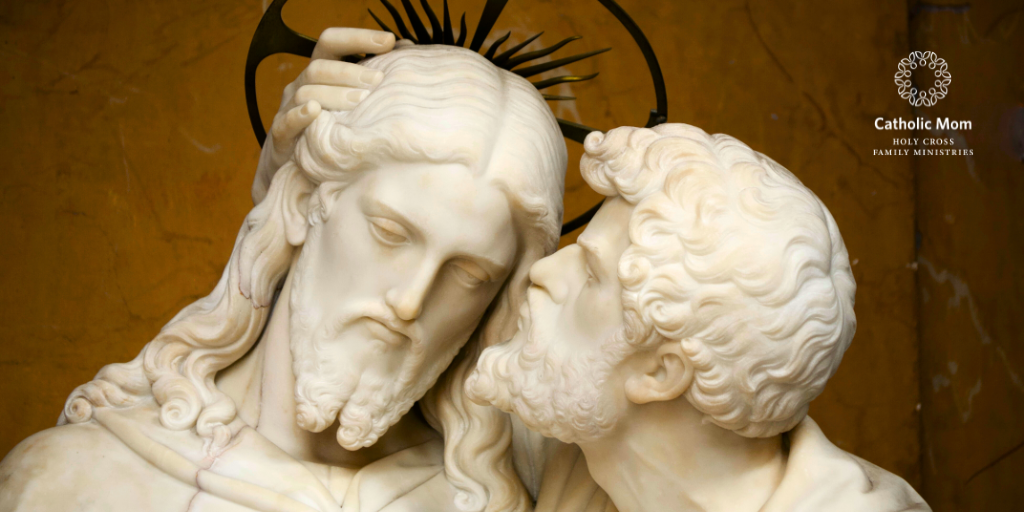
Nicole Berlucchi wrestles with the feeling of resentment and how it can sabotage our relationships with God and others.
Lord, if Your death promises me new life, then does living as You lived promise me death? And those lived deaths promise me a new life? Is that a circle of life I need to study more closely?
I have been wrestling with resentment these past weeks. I have been wrestling with my need to be right. I have been wrestling with what I know God calls me to be and not wanting to be it in particular situations. I have been wrestling with what I feel I deserve and knowing I deserve none of it. I have been wrestling with the realization that I want things to be a certain way, the “normal” way, and when they aren’t that way, I am shutting down or justifying my response.
As I wrestle with the idea that even though I think my resentment is directed at certain people, I wonder if it’s not subconsciously directed toward God. As if I am owed the kind of life He didn’t have. It’s been convicting. It’s been painful. And then in prayer God showed me living like Him will feel like death, because it’s only through dying that we gain His life. It’s so hard.
Resentment Weighs You Down and Obstructs Your View
Resentment is the worst. It can send me into a rabbit hole of “and that time they did this” and “another time they did that” and “they always…”. It leaves zero room for change. It enables me to neglect to see where someone has grown or even the possibility that they are capable of growth. I chain them there to all the things I do not like instead of trying to find the good things about them. I don’t want to see the gifts God gave them and tend to pass judgement all too quickly. I don’t look with love, but instead with loathing. I know this is disordered if I call myself a Christian.
I learned the idea of a “kingdom view” of people from a Discipleship DeliveranceTM course by Kingdom First Strategies. It takes a lot of work to get there with people you feel have let you down or have sinned against you, but it’s possible with intentional effort. It doesn’t mean that you can’t create boundaries, but it does mean you don’t allow anger and resentment dictate your general mood or life lived out in relationship with others. It roots you in hope and in the knowledge that anything is possible with God.
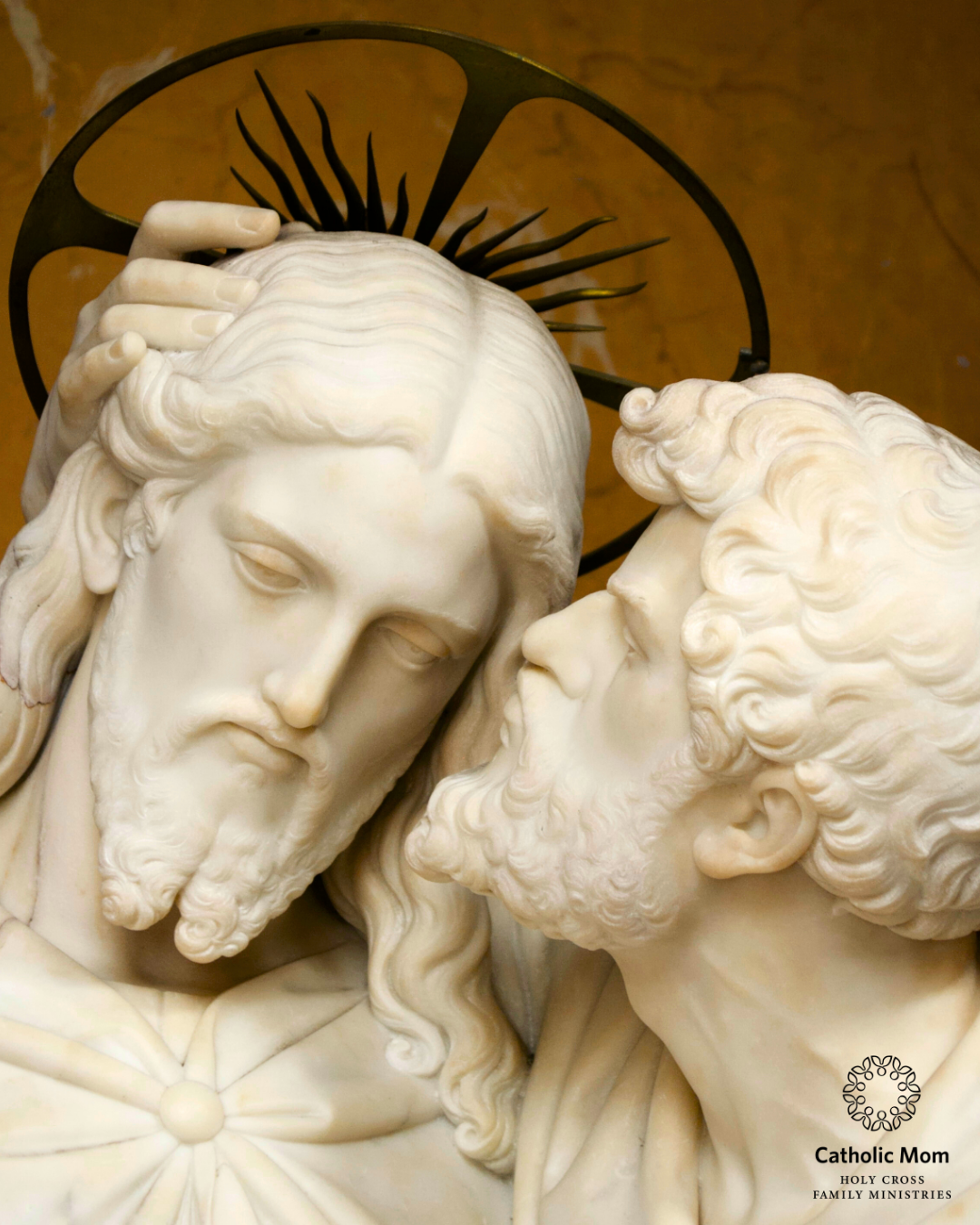
Jesus Called Judas
Jesus called His betrayer to join Him, knowing no matter the kindness He showed Judas, no matter the healings He would let Judas witness, no matter the wisdom He would impart to Judas, no matter the love He would show Judas, Judas would still betray Him. He still let Him be a part of His circle of friends. He did not let Judas be a bystander on the periphery, a random betrayer. Instead, He shows us that, even in the face of perfect love, humans will turn away, so how much more can we turn away from each other, imperfect human from imperfect human?
Jesus shows us that God can use someone’s negative actions to help you fulfill His purpose for your life, especially those closest to you. I have nothing even close to what Jesus offered others, so why do I think there won’t be people in my life who turn their back on me, who judge me, who let me down?
Should I not in some way be thankful for these people God is using? It feels ironic and yet is comforting. God uses everything: our imperfections and theirs.
If only I could be strong enough to be thankful before resentment sets in. I am so weak. It feels easier to be resentful, at least, in the moment. Until resentment is that thing that pulls at your mind day in and day out, and you have imaginary conversations in your head where you justify all your feelings and show them why all their feelings are unjustified. And, well, that chains up joy and peace and love for everyone (yourself, your family, your friends, the person in the grocery store), not just the person you are having those imaginary rehashed conversations with.
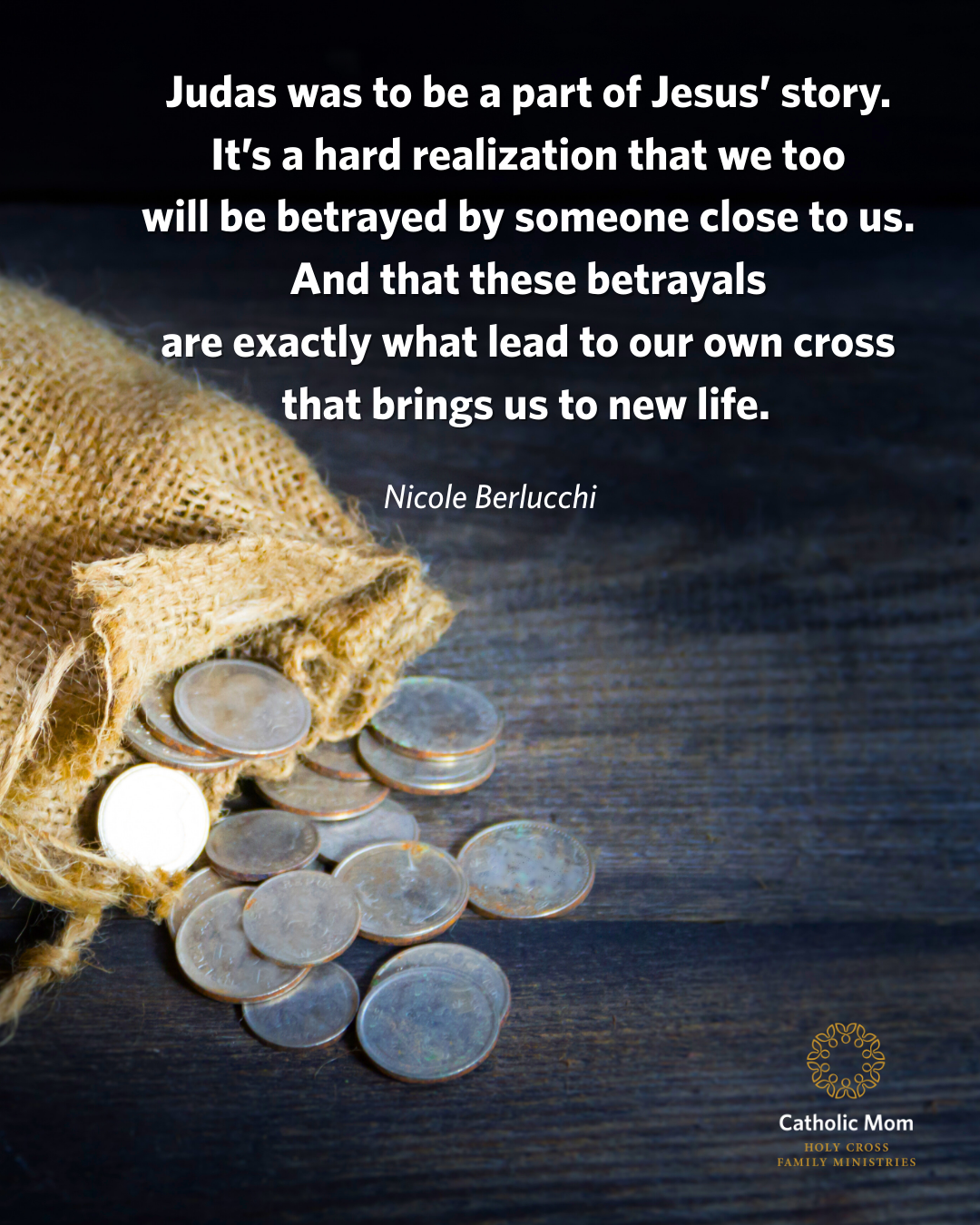
Judas was to be a part of Jesus’ story. It’s a hard realization that we too will be betrayed by someone close to us. That they will do it and might later (too late) regret having done the betrayal, flinging their silver pieces back into the Temple. And that these betrayals are exactly what leads to our own cross that brings us to new life.
When We Are Judas (Intentionally or Not)
I have to recognize that the same someone who causes my resentment is also likely resentful towards me. They also want things a certain way, want me to be a way I am not, to respond in a way that wasn’t in their plan. I have to ask myself, When have I been Judas? When am I the person who is letting someone down? When am I the betrayer? When have I gotten frustrated with Jesus’ plan and made a plan for my own gain?
I take comfort in knowing God uses my mistakes for the person’s good if they love Him. It doesn’t let me off the hook for my sins, but at least, my mistakes can be reordered for God’s purposes.
I think about the apostles who were likely so resentful of Judas turning Jesus over to the soldiers and who then went to hide during Jesus’ persecution and crucifixion. How easy it must’ve been for them to focus their need to hide out on Judas’ actions rather than recognizing in the moment that they too had turned away from Jesus. They made a choice to behave a certain way, different and yet the same as Judas, turning their backs on Jesus.
How many times does Satan want us to feel justified in our actions? Blame someone else for our sinful behavior, for our self-protection, for our weakness. It’s so much easier that way.
But for the apostles, Jesus conquered death, and so Jesus turned Judas’ betrayal into something the apostles couldn’t linger on. There was no more thinking: How can we punish (hold accountable/seek revenge for) Judas for this thing he did? There wasn’t a lingering on what they could’ve done or said to Judas if he hadn’t hanged himself. Instead, there was only Jesus and with that came rejoicing and prayer and peace and commissioning and the Holy Spirit.
Can you imagine if the apostles lingered on Judas’ betrayal? Can you imagine if the conversations with Jesus, resurrected, had been about how could Judas do such a thing and how they would never be as bad as Judas and even worse, try to blame Judas for their decisions to deny Jesus or hide during Jesus’ Passion?
How weak they would’ve seemed. How pathetic. Because Jesus was alive now. When they acted in fear and self-preservation, they could not have imagined that Judas’ betrayal was not the end of the story. But now they knew differently and, as a result, acted differently.
Their interactions with Jesus were about the promise of life after death, the promise of purpose regardless of mistakes, the promise of unconditional love regardless of doubts, and the promise of the strength of the Holy Spirit despite their human weakness. Because in the face of a once dead Jesus, now resurrected, they understood most clearly the power of the love of God the Father and their unworthiness of it, only made worthy by Jesus.
Maybe like me, the apostles knew the raw truth about their sinfulness. Maybe they recognized no matter how sinful someone else is, your sinfulness remains unique to you and how it’s impacting your relationship with God and your purpose here on earth. Maybe they understood the depth of God’s mercy and so were able to forgive themselves and be forgiving toward others.
All human nature vigorously resists grace because grace changes us and the change is painful. (Flannery O’Connor, The Habit of Being, 307)
Will You Accept the Grace?
There are times when my resentment runs so deep that I cannot see a future that is different from the one in front of me today. I cannot see a relationship. I cannot see a friendship. I cannot see a conflict-free future. I want to run from that discomfort.
But deep in my spirit, when resentment sneaks up, God challenges me to consider squashing the feeling. He convicts me that the feeling gets me nowhere or takes me far from Him. That’s why I am wrestling. Because He has given me more than I deserve, and at the end of the day, I need as much forgiveness as the person next to me. It might feel like more or it might feel like less, but at the end of the day, all of us received the same sacrifice: Jesus Christ on the cross. If the Lord is not resentful toward me, who am I to be resentful of others?
Help me change, Lord. Give me the grace.
Share your thoughts with the Catholic Mom community! You'll find the comment box below the author's bio and list of recommended articles.
Copyright 2026 Nicole Berlucchi
Images: Canva


About the Author


.png?width=1806&height=731&name=CatholicMom_hcfm_logo1_pos_871c_2728c%20(002).png "CatholicMom_hcfm_logo1_pos_871c_2728c (002)")


Comments