


Using tips from Saint Ignatius of Loyola, Debra Black shares ideas to order family Rosary time into a time of family embrace.
And people were bringing children to him that he might touch them, but the disciples rebuked them. When Jesus saw this he became indignant and said to them, “Let the children come to me; do not prevent them, for the kingdom of God belongs to such as these.” (Mark 10:13-14)
Like all faith traditions, the Catholic Church has been losing its children to the secular world for the past 60 years. How would the world be different today if children, and parents, learned simple ways to pray? Most of us ensure our children learn the Our Father, Hail Mary, and Glory Be, as well as to say Grace before meals. While these dispose us to God, we need more to build relationship with God. This is why our kids leave the faith: they think they’ve already experienced it and haven’t found what their soul is seeking. They haven’t yet learned relational prayer.
Calm the Chaos
In his Spiritual Exercises, Saint Ignatius of Loyola gives many suggestions for prayer that can be embraced by all ages. For example, typical in any house are kids running around and then being called into the room by parents to pray together. The first step to settling everyone down can be as simple as praying the name of Jesus (Saint Ignatius’ Spiritual Exercises 258). Together, breathe in the first syllable in His name, and breathe out the second syllable. It’s the most powerful name in Heaven, on earth, and under the earth (Philippians 2:10). Trust in the power of His Sacred Name to bring order to the chaos!
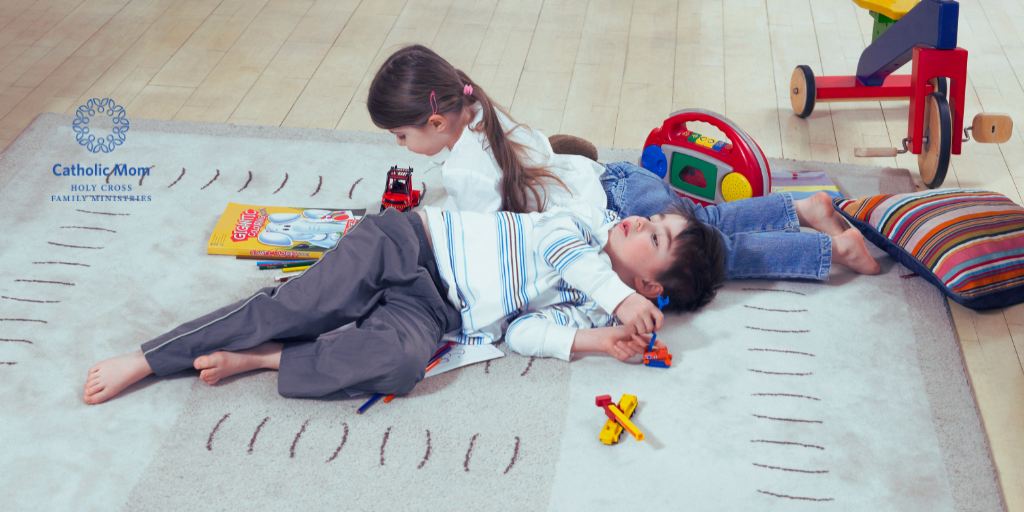
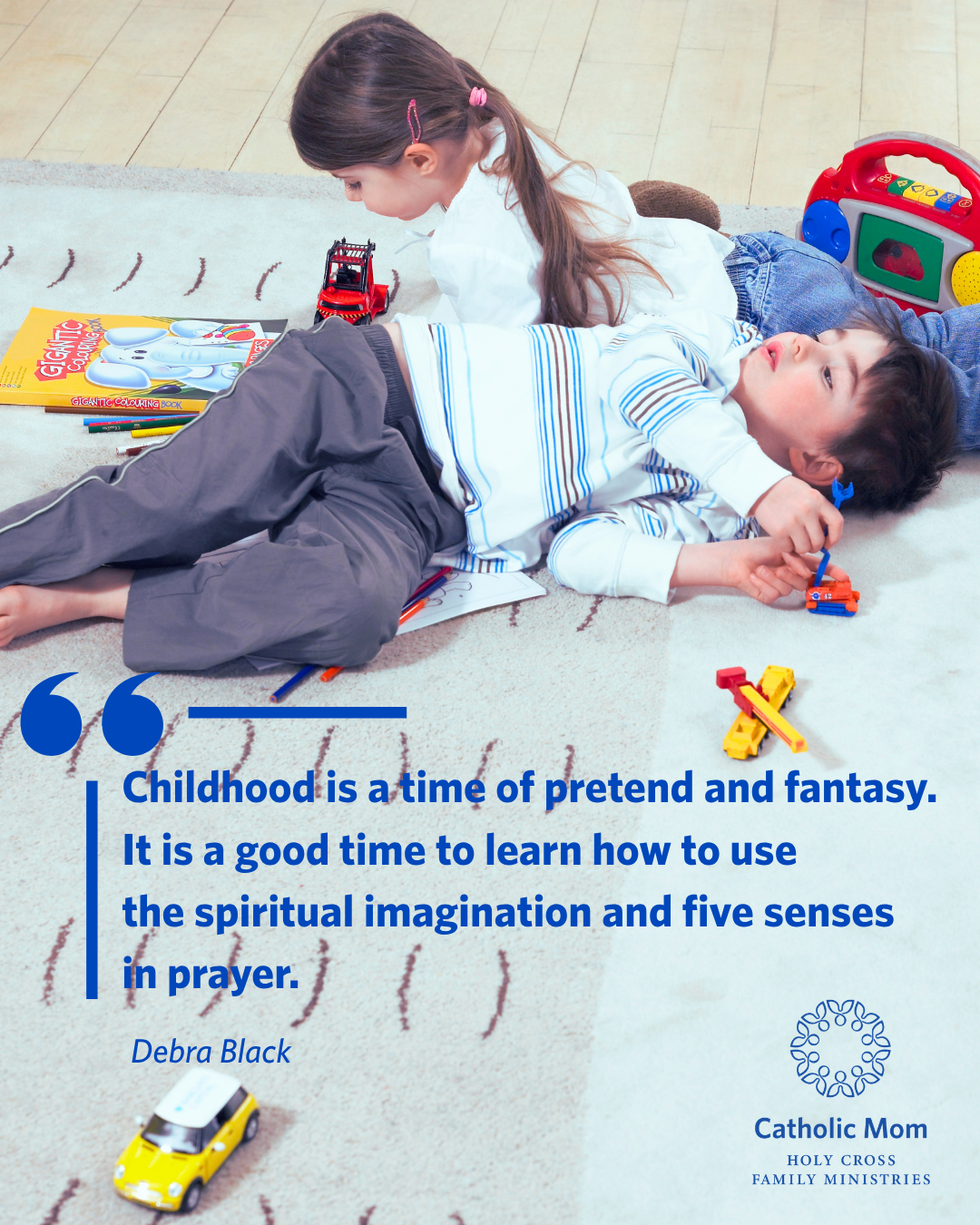
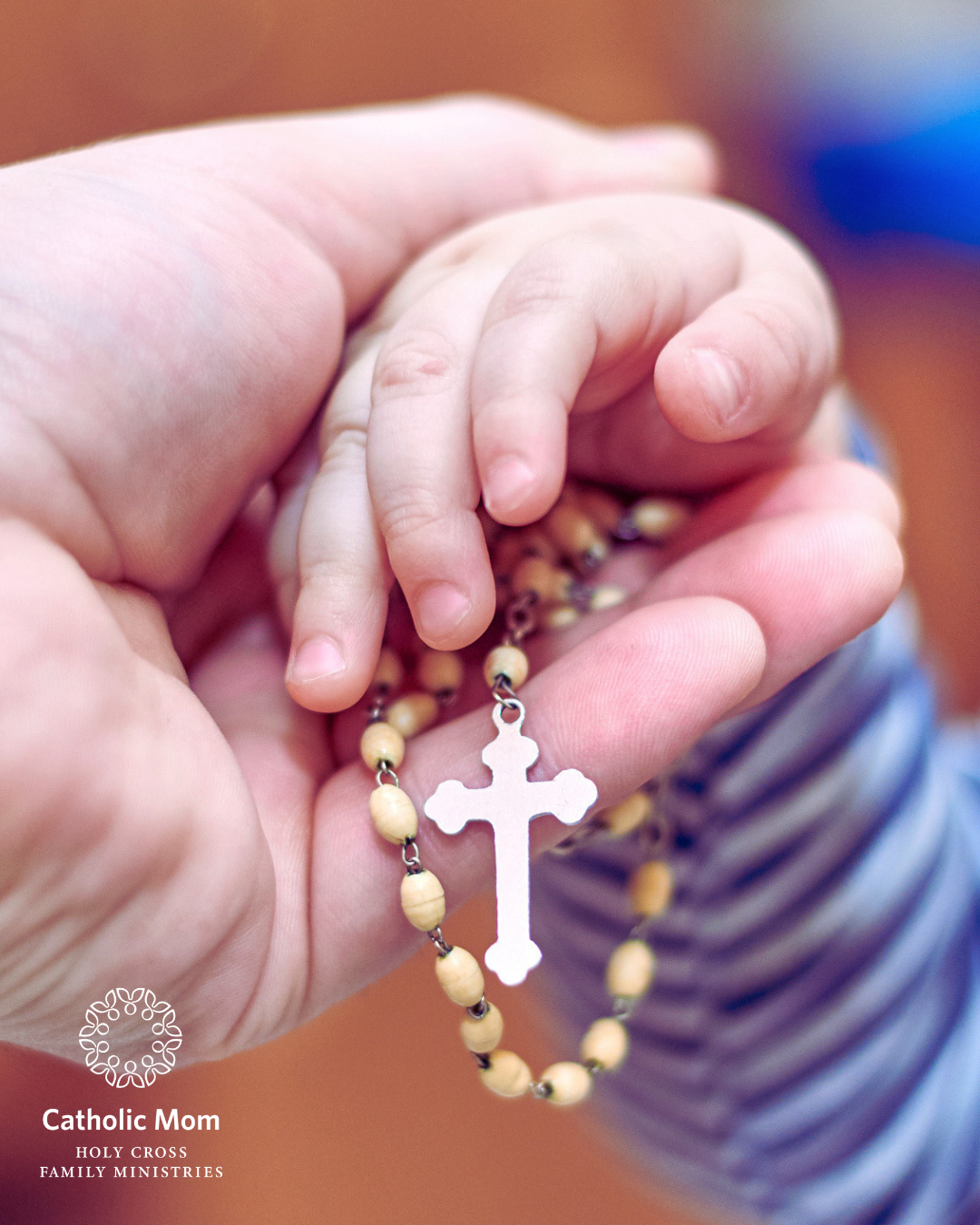
Posture in prayer is important too (Spiritual Exercises 76, 239, 252). Very small children scattered across the room, laying on the floor playing finger fantasies with dust bunnies in the air still hear the Sacred Mysteries being recited. If a child is old enough to sit in story time at the library or be still in a preschool class, then in family prayer time they can sit with a parent or older sibling sharing a rosary and be allowed to be in charge of holding it. Make it a time of family embrace, not frustration. And trust in God that it is making a difference — despite their wiggling!
Use Their Imagination!
Childhood is a time of pretend and fantasy. It is a good time to learn how to use the spiritual imagination and five senses in prayer. The Rosary makes this easy since almost every Mystery is a Gospel story. Here’s a suggested approach:
- Have the family choose just one Mystery, only one decade (10 beads), to pray following the usual Mysteries for that day of the week. (On Mondays and Saturdays we pray the Joyful Mysteries, Tuesdays and Fridays are the Sorrowful Mysteries, Thursdays are Luminous Mysteries, and Wednesdays and Sundays are the Glorious mysteries.)
- Decide who will lead the decade, taking turns each night. Make it fun and pair up.
- If time allows, let each person share a prayer intention, someone they would like to offer this Rosary for. Invite the spirit of generosity into your family. Be sure, however, to include a desire for the whole family to know God’s love for them personally. (Desire in prayer is extremely important.)
- Set the scene of the Gospel. Let’s say it’s Monday and the family chooses the Nativity of Jesus. The parents/older kids can lead in using the five senses:
What do you see? (think about small details in the manger scene, clothing, a starry sky)
What do you hear? (This can include silence)
What do you smell? (animals, firewood burning)
What do you taste? (If no meal is being eaten in the Gospel scene, what else might they taste? The taste of dust in the mouth, sweat from the brow)
What do you feel/touch? (don’t overlook the feeling of warmth or cold, stale air or fresh breeze, hard rock, scratchy hay, soft dirt) - Read the Gospel passage and pray the decade of Hail Marys, closing with the Glory Be. End by praying the Hail Holy Queen, if you wish.
Building Relationship with God
Now here’s the important part: after the Rosary, take just a few minutes of silence before disbanding. God will work miracles in those few minutes. These can be spent journaling or in stillness, as age appropriate. Here are some ideas for using prayer journals for children of all ages:
- Children ages 2-5 can color in their journals. Encourage them to draw what they just prayed.
- Once a child can write a sentence (ages 6 to 8), have them write one sentence to God of what comes to mind from the prayer. They can spend remaining time drawing their prayer or talking to God in their head.
- Children 9 and older can write words that stood out in the Scripture or Hail Marys, impressions they are left with after imagining the scene, or things that came to mind during or after prayer. They can spend their time journaling or talking to God silently about it.
Your kids will have joy in prayer if you do. So don’t let your own weariness lead to frustration over small imperfections. Take joy in the small moments, because in those you’ll find God. Keep your children bound to God by cords of love created through prayer.
Share your thoughts with the Catholic Mom community! You'll find the comment box below the author's bio and list of recommended articles.
Copyright 2026 Debra Black
Images: (top, center) Canva; bottom iStockPhoto.com, licensed for use by Holy Cross Family Ministries


About the Author


.png?width=1806&height=731&name=CatholicMom_hcfm_logo1_pos_871c_2728c%20(002).png "CatholicMom_hcfm_logo1_pos_871c_2728c (002)")


Comments