


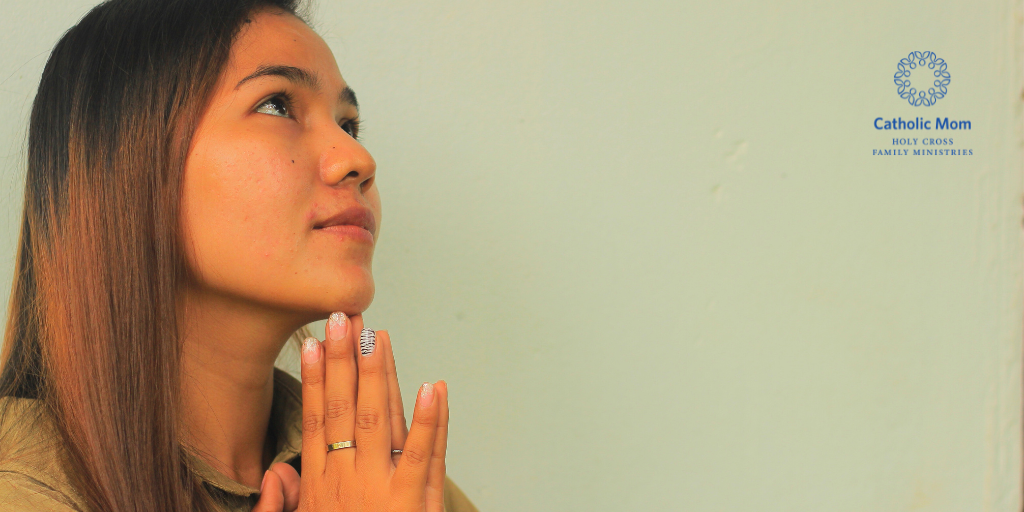
Sharon Wilson reflects on the quiet power of naming someone in prayer and how God slowly heals resentment through daily acts of forgiveness.
Forgiveness has never come easily for me.
I wish I could say that I hear Jesus’ words — “Love your enemies” — and immediately feel my heart soften. I wish I could say that when someone hurts me deeply, grace rushes in like a warm tide and washes resentment away.
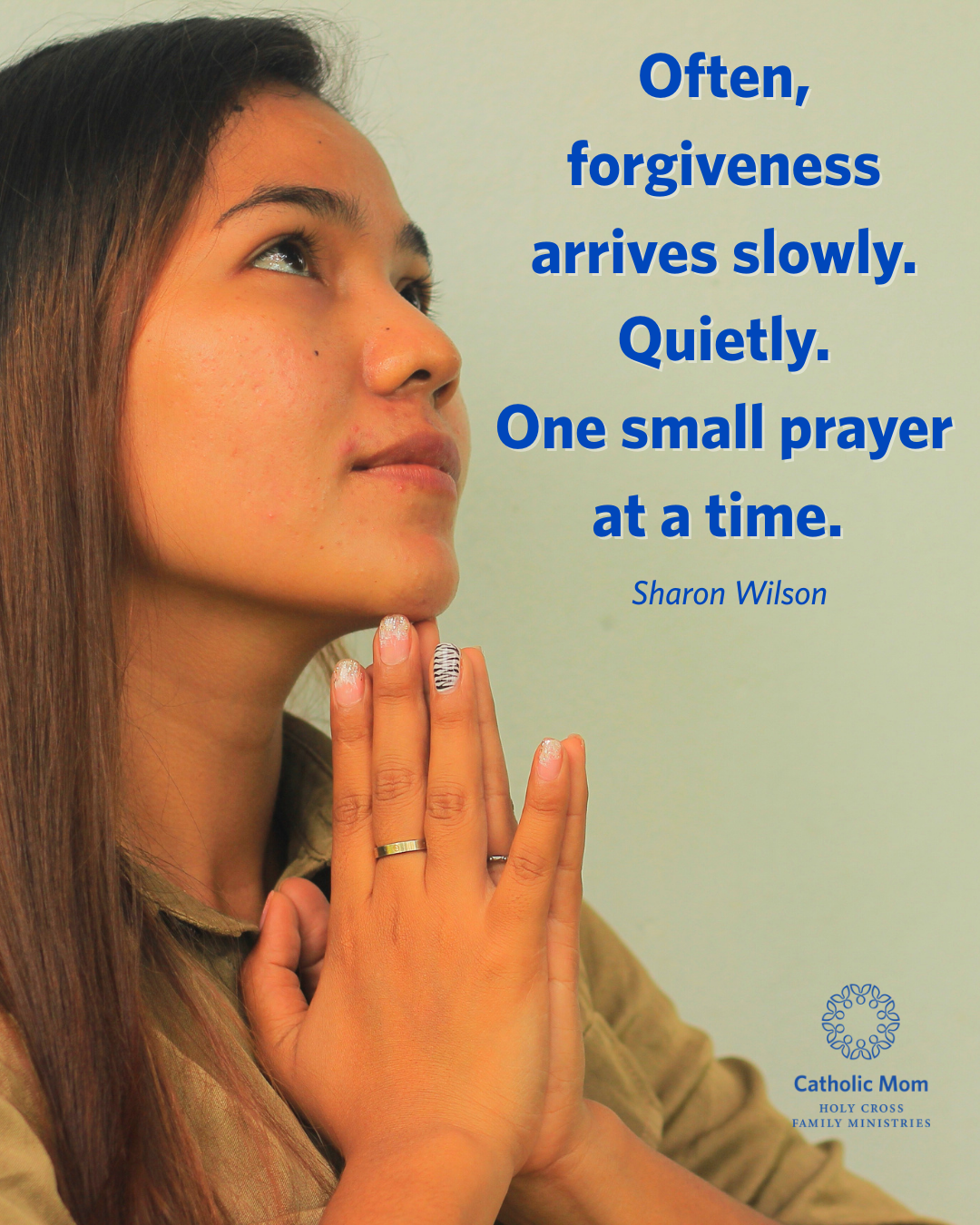
But more often, forgiveness arrives slowly. Quietly. One small prayer at a time.
Several years ago, I found myself carrying a resentment I could not shake. I knew, intellectually, that I was supposed to forgive. I even wanted to forgive. But wanting and being able are not always the same thing.
The wound felt personal. Ongoing. Raw.
And so I did the only thing I knew how to do.
I printed a simple prayer and taped it to my bathroom mirror.
A Prayer That Wouldn’t Let Me Look Away
The prayer was short. Direct. Uncomfortable.
Father, I acknowledge that I’ve held resentment and bitterness against (name). I confess this as sin and ask You to forgive me. I forgive (name). Remind me, Lord, to not hold any more resentments, but rather to love this person. Father, I ask You to also forgive (name). Thank You for hearing and answering my prayer. In Jesus’ Holy Name, Amen. (Catholic.org)
Every morning and every night, as I brushed my teeth, I saw that prayer staring back at me.
And every time I prayed it, I said the person’s name.
Out loud in my heart.
There is something powerful about naming the person you are trying to forgive. It strips away generalities. It removes loopholes. It prevents us from hiding behind vague intentions like, “I forgive everyone who has ever hurt me.”
Instead, it becomes:
I forgive this person.
With this history.
For this wound.
Some days, I whispered the prayer through clenched teeth. Some days, I prayed it without feeling a single ounce of sincerity. Some days, I simply offered the words like a dry sacrifice.
But I kept praying.
Not because I felt holy.
Not because I felt healed.
But because I knew Jesus was asking me to stay.

When Forgiveness Is a Practice, Not a Feeling
We often imagine forgiveness as a moment.
A decision.
A breakthrough.
A spiritual finish line.
But Scripture paints a more patient picture.
Peter once asked Jesus,
“Lord, if my brother sins against me, how often must I forgive? As many as seven times?”
Jesus answered, “I say to you, not seven times but seventy-seven times.” (Matthew 18:21–22)
Seventy-seven times is not about keeping score.
It is about returning — again and again — to the choice to release.
Forgiveness, I learned, is less like flipping a switch and more like building a muscle. It grows through repetition. Through showing up. Through surrendering the same hurt back to God more times than we can count.
Slowly — almost imperceptibly — something began to change.
Not in the other person.
In me.
About six months after I first taped that prayer to my mirror, I realized that the sting was gone. The memory still existed. The story had not been erased. But the sharp edge had softened.
I was no longer rehearsing imaginary conversations in my head. I was no longer carrying the same tightness in my chest.
The resentment had loosened its grip.
Not because I was strong.
But because God was faithful.
The Freedom on the Other Side of the Cross
Jesus understands slow forgiveness.
From the Cross, in unimaginable agony, He prayed, “Father, forgive them, they know not what they do.” (Luke 23:34)
He did not wait for apologies.
He did not wait for accountability.
He did not wait for understanding.
He chose mercy.
As we approach Holy Week, I am struck by how much of discipleship is about staying with Jesus in the uncomfortable middle — between hurt and healing, between betrayal and resurrection.
Holding onto anger is often compared to drinking poison and waiting for the other person to die.
But releasing forgiveness is not about excusing what happened.
It is about refusing to let the wound define who we become.
Forgiveness does not mean reconciliation is always possible.
Forgiveness does not mean trust is automatically restored.
Forgiveness does mean placing the person back into God’s hands instead of gripping them in our own.
It means saying their name in prayer.
And then saying it again.
And again.
Until love has a little more room to breathe.
If you are carrying someone in your heart today whom you cannot yet forgive, you are not broken.
You are human.
Tape a prayer to your mirror.
Whisper their name.
Let Jesus meet you in the ordinary.
Resurrection has a way of beginning quietly.
Share your thoughts with the Catholic Mom community! You'll find the comment box below the author's bio and list of recommended articles.
Copyright 2026 Sharon Wilson
Images: Canva


About the Author
.jpeg)

.png?width=1806&height=731&name=CatholicMom_hcfm_logo1_pos_871c_2728c%20(002).png "CatholicMom_hcfm_logo1_pos_871c_2728c (002)")


Comments