



Kevin Tondra shares how a chilling dating close call inspired him and his wife to build an intentional curriculum of safety and wisdom for their daughters.
For Marnie and me, parenting has always been an act of stewardship. God entrusted two precious souls to our care, and we've spent the last twenty-plus years trying to help them figure out what is worth holding onto — and what belongs back in the water.
At the top of the list, of course, is a non-negotiable expectation of respect and safety. If anyone they’re dating asks them to do something inappropriate or makes them feel unsafe, they're dropped immediately — no questions asked.
But our "catch and release" philosophy doesn't stop with the obvious red flags. Somewhere farther down the list, right next to "must have a driver's license," is one of our family's more lighthearted rules based on actual catches: a potential boyfriend shouldn't buy you a Diet Coke for Christmas — or worse, expect you to spend Friday evening watching Evil Dead Rise.
It usually gets a laugh, but behind the humor is a lesson we've tried to teach from the beginning. We want our daughters to know their own worth. They deserve a love that is patient, thoughtful, and respectful — not one that settles for convenience or the bare minimum. Every relationship teaches us something, and we want them to recognize the difference between someone who truly values them and someone who only wants to use them for selfish purposes.
When Dating Is No Longer Just at the Doorstep
When Marnie and I were dating, the biggest challenges were making it home before curfew or finding some time alone to sneak a kiss.
Today's teenagers face an entirely different world.
Dating no longer begins when someone knocks on the front door. Instead, it begins with a notification that invites someone into your pocket — and, in many ways, into your home.
The date may end, but the conversation doesn't. The phone follows them everywhere, constantly demanding attention at all hours of the day. What once required face-to-face courage can now happen anonymously through a screen. The barriers that once protected our kids have largely disappeared, and with them has come an entirely new set of dangers.
Years ago, if someone had told me we'd be sitting in our living room at two o'clock in the morning talking with the police because a young man who had seemed caring and charming for only two weeks was threatening to harm our family — and yes, even Cuddles our cat — unless our youngest daughter complied with his demands, I would have said they were crazy.
Yet that's exactly what happened.
What began as innocent texting quickly became manipulation. When our daughter didn't respond the way he wanted, the kindness disappeared. In its place came threats, intimidation, and attempts to frighten her into doing what he demanded. Thankfully, she trusted us enough to tell us what was happening before she ever met him alone, and law enforcement became involved.
That night changed the way we thought about dating.
Our daughters needed more than just rules. They needed discernment. They needed practical tools to spot unhealthy relationships before those relationships had a chance to take root.
That's when our dating curriculum became much more intentional.
The Tools in Our Tackle Box
Over the years, Marnie and I have assembled what we jokingly call a "dating tackle box" — simple habits designed to keep the lines of communication open and help our daughters navigate waters that can sometimes be far more dangerous than they first appear.
The first tool in our tackle box is treating the phone as a shared responsibility. It’s not that we know our daughters' passwords because we don't trust them. We know them because, while they were growing up, we were their co-captains, helping them steer an increasingly connected world.
If we ever asked to see their phones, they knew we'd look together. As they've become young women, that practice has naturally faded into mutual trust. But during those formative years, it proved invaluable. In fact, it helped us uncover the situation I described earlier before our daughter was lured into meeting someone who had no good intentions.
We also make room for what we've come to call "decompression zones." Whether it's leaving phones out of the bedroom at night, at dinner, playing cards, or watching a ball game together, we've tried to create spaces where screens are set aside and conversations happen naturally. Some of our most meaningful discussions haven't happened because we planned them. They happened because there was finally enough quiet for someone to say, "Can I tell you something?"
Another part of our dating curriculum is what we call low-pressure vetting. We encourage our daughters to introduce potential boyfriends to our family early — not because we're conducting an interrogation, but because healthy relationships have nothing to hide.
Then we watch.
How does he treat other people? Is he respectful? Can he laugh at himself? Does he engage with our family, or does he spend the evening trying to isolate our daughter?
And yes, we even pay attention to Cuddles.
It may sound silly, but over the years we've learned that animals often sense what we overlook. If Cuddles is unusually uneasy around someone, we don't ignore it. We may not let the cat make the final decision, but we've learned there's no harm in paying attention.
Perhaps the most important lesson we've given our daughters is that they always have an exit strategy.
They've always known that if a date or situation ever feels "off" — even if they can't explain why — they can send a quick text, and one of us will immediately become the "bad guy." We'll call. We'll show up. We'll invent an emergency if necessary. Whatever it takes, they never have to choose between protecting themselves and worrying about hurting someone's feelings.
Too often, young people feel trapped by the pressure to be polite. We've tried to teach our daughters that kindness is a virtue, but personal safety is not something to negotiate away in order to avoid appearing rude.
These practices remind them that they never have to navigate relationships alone.

Stewardship, Not Control
This has never been about control. It's about formation.
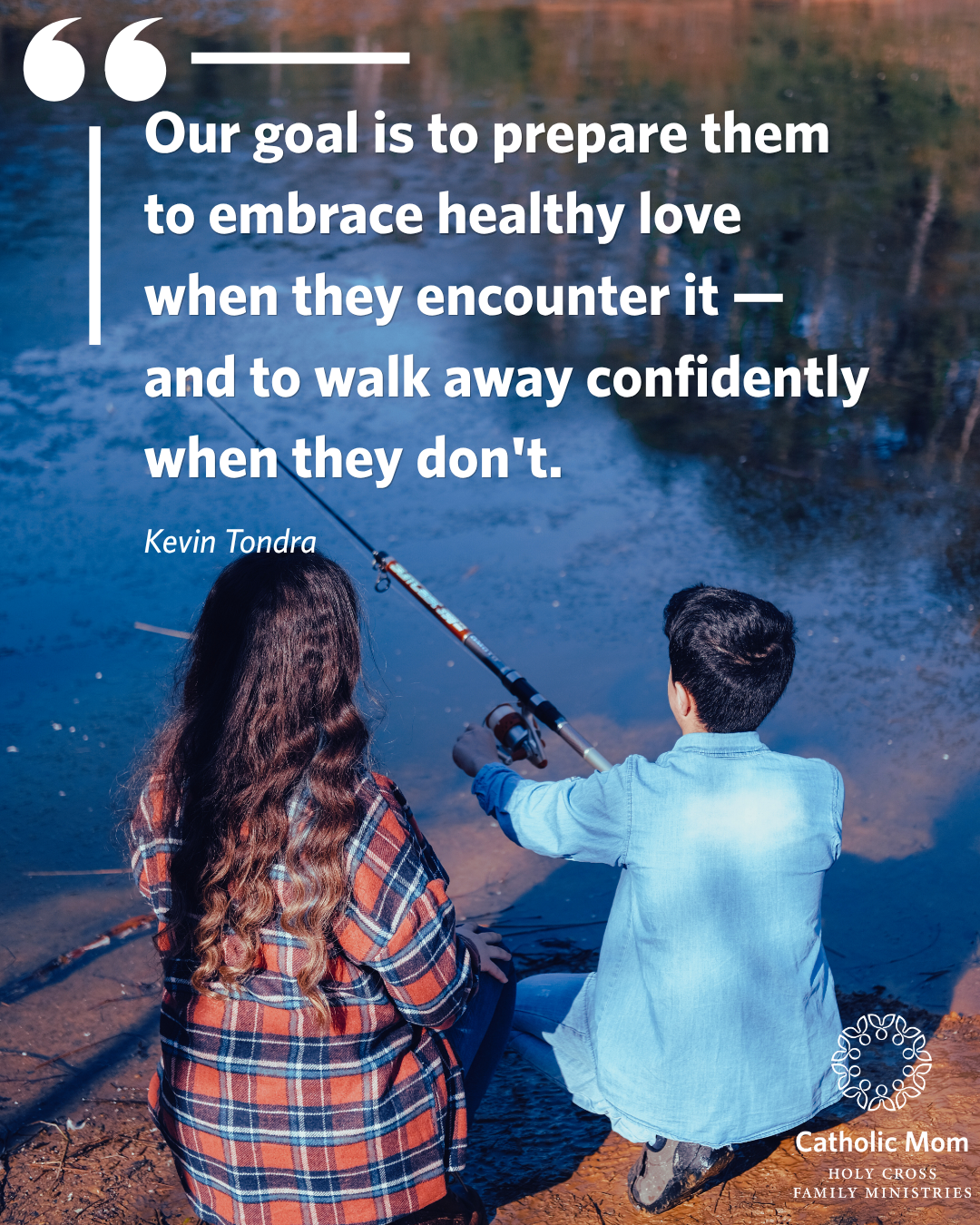
As parents, we know we can't shield our children from every disappointment, every manipulative person, or every poor decision someone else might make. Our goal is to prepare them to embrace healthy love when they encounter it — and to walk away confidently when they don't.
Marnie and I aren't merely trying to help our daughters find the right person. We're trying to help them remember who they are.
They are beloved daughters of God, created with immeasurable dignity and worthy of a love that reflects His own patient, faithful, and selfless heart.
Someday we'll release them into the lives God has prepared for them. Until then, we'll keep teaching the art of catch and release, praying God will give them the wisdom to recognize which catches are worth keeping and which belong back in the water.
Share your thoughts with the Catholic Mom community! You'll find the comment box below the author's bio and list of recommended articles.
Copyright 2026 Kevin Tondra
Images: Canva


About the Author


.png?width=1806&height=731&name=CatholicMom_hcfm_logo1_pos_871c_2728c%20(002).png "CatholicMom_hcfm_logo1_pos_871c_2728c (002)")


Comments