


Kate Taliaferro shares some experiences of living within her seasons and why naming our seasons helps us find clarity and peace.
Regardless of where you live in the world, you experience seasons. For some, the seasons are more clearly defined as described in many a children’s picture book: spring, summer, fall, and winter. For others, spring and fall are a fleeting few days before the burning heat of summer or the cold of winter sets in. For others, winter is feels more like a mild version of summer. Perhaps your seasons are defined by precipitation levels, and you experience wet and dry seasons.
We experience many kinds of seasons beyond what God has given us in the weather. We have liturgical seasons, periods-of-life seasons, and baseball seasons, to name a few. There are seasons of grief and seasons of joy. The well-known passage from the Book of Ecclesiastes speaks to this universal reality of our human experience: “There is an appointed time for everything, and a time for every affair under the heavens” (Ecclesiastes 3:1, NABRE). Or in other translations, “To everything there is a season, and a time for every purpose under heaven.”
To fully appreciate the seasons of our life, we have to slow down and actually identify the season or series of seasons we are living in. I have recently started doing this after reading Kendra Adachi’s book, The Lazy Genius Way. Adachi encourages us to take the time to name our seasons with specificity. This was the first time I had considered how many seasons I live in at a given time.
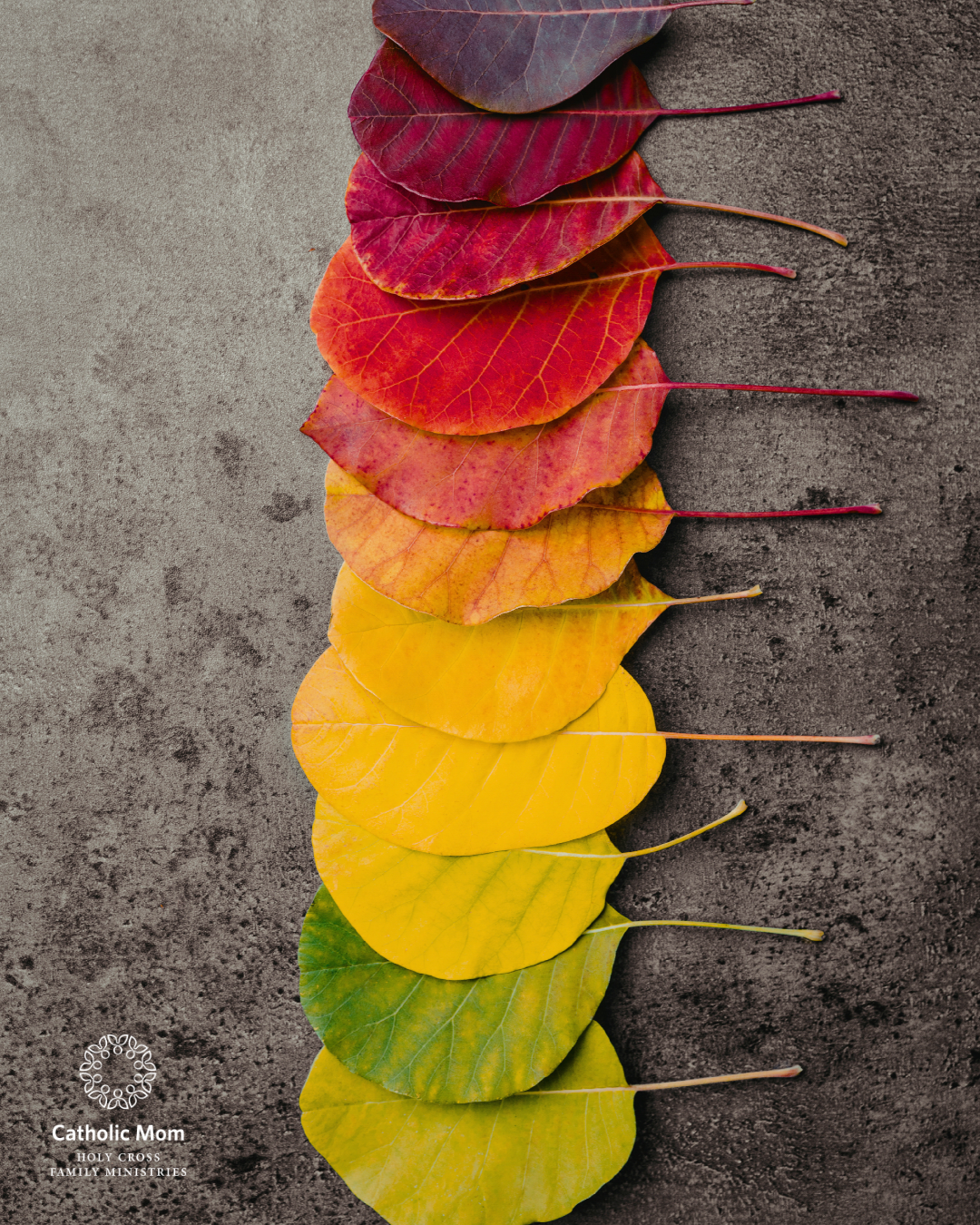
Calendar Seasons
It’s easiest for me to start with the weather and liturgical seasons because those are tied to the calendar and not subjective. Right now, as I type this, it’s still technically winter, and we are in the season of Lent. These two seasons alone tell me a great deal about how I am going to prioritize my time. It’s winter, and where I live there is still the possibility of snow, but also likely rain and mud. So, it’s time to make sure we have our raincoats and rain boots in all the right sizes. But, I’m not going to reorganize the garage where we keep our winter things because we could still need them.
Even though the garage is driving me crazy, a few more weeks of disorganization is worth it if it means I don’t have to unpack all the winter gear when a surprise snowstorm pops up. Remembering that it is still winter gives me the freedom to let go of a task that I could fixate on (the messy garage). The season is helping me decide what gets my attention and what doesn’t need it at this time.
Lent helps me put together my meal plan. Once a week, plus the bonus one of Ash Wednesday, I know we are having a meatless meal for dinner. I still need to decide what to serve on Fridays, but a whole chunk of recipes I could choose from are immediately eliminated because they are meat-based.
Lent, then, also helps me to make my grocery list because I need to ensure I have options for these meatless days. Lent typically also includes more options for Confession, perhaps a parish retreat, as well as Stations of the Cross and soup suppers. Taking a few minutes each week of Lent with the parish bulletin will help keep my schedule oriented toward the liturgical season.
Life Cycle Seasons
We experience other seasons as well. Maybe you have a new baby. The season of overnight feedings, diaper blowouts, post-pregnancy hormones and cuteness overload lead to a specific kind of season. It’s a beautiful season, but maybe not the season that you also need to clean out the attic (it wasn’t for me at least, you could be different). It might feel good to clean out the attic, but more than likely you don’t have the time, energy, or brain space to actually tackle that job well. Instead, name your season and give yourself permission to clean out the attic another time. This isn’t the season for it. The attic isn’t going anywhere.
Small but Big Seasons
Seasons can be even shorter, like an intense baseball season. Your kid’s team made the playoffs, and for the next two weeks their game schedule is increasing and they are adding a few practices that are going to impact dinner almost every night.
But family dinner is important to you. What do you do? Do you moan and complain your way through these two weeks because you can’t have family dinner and end up missing out on the joy your child is experiencing with their team? You could, or you could name the season for what it is and make conscious, specific choices that help you honor what matters to your family while also enjoying these crazy two weeks.
Maybe, just for these two weeks, you eat dinner a few times at the baseball fields so the majority of your family can be together, even on the bleachers. Maybe you snack the other kids up well in the afternoon and plan one meal each week that is later than your usual dinnertime, but you all will be at the table, at home, together. Or, you flip it and have your big family meal at lunch and then let dinner happen where/when it falls.
Spiritual Seasons
We also experience spiritual seasons. The saints provide excellent examples of walking through seasons of dryness and seasons of consolation. They experienced seasons of great closeness to God and others where God seemed distant and hard to reach. Naming these seasons is a little trickier because unlike winter, Lent, and baseball, we don’t know the end date.
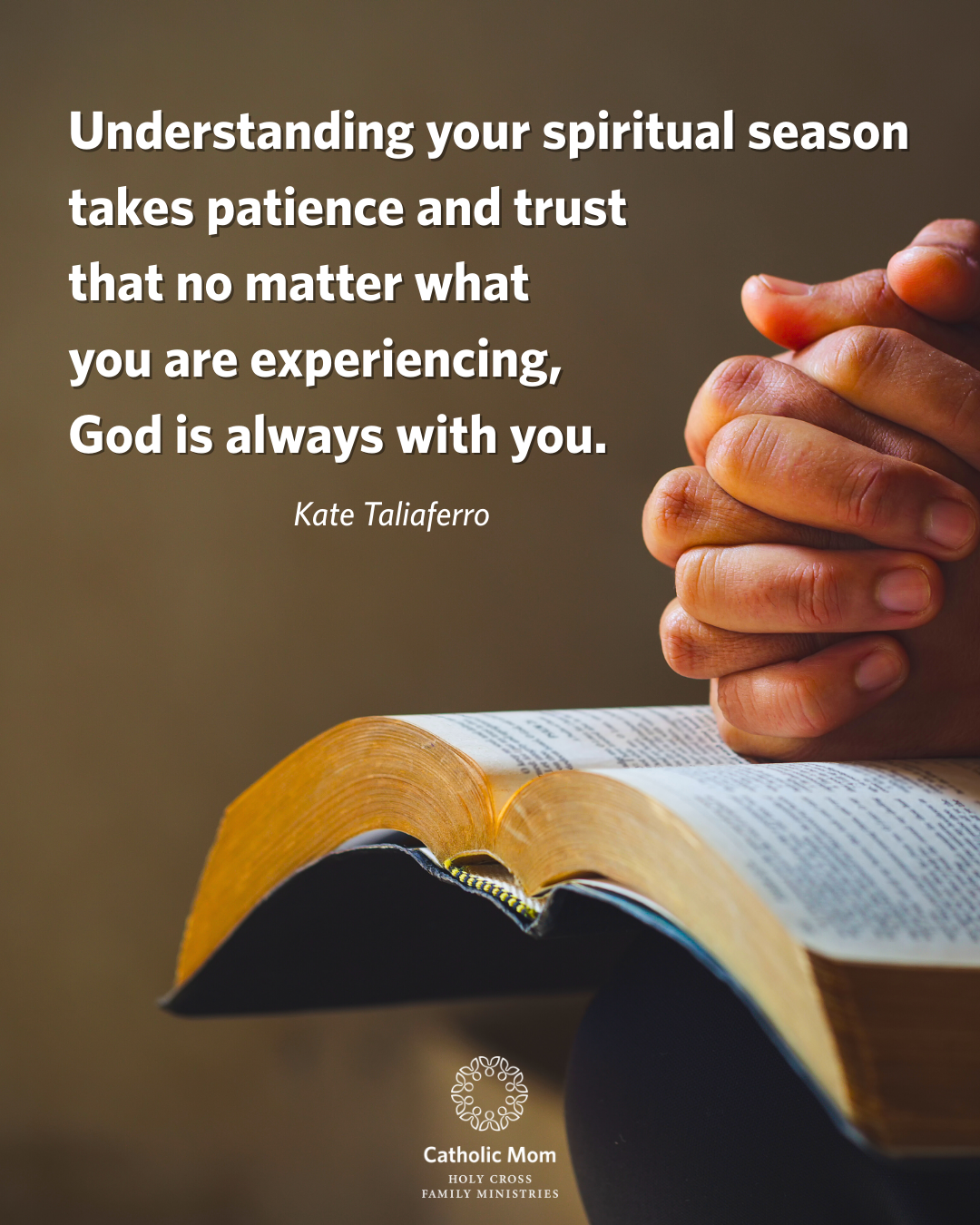
Understanding your spiritual season takes patience and trust that no matter what you are experiencing, God is always with you. In a way, it’s the most consistent season because God never does leave us or forsake us, even if it feels as if He is distant. Life and weather seasons come and go, but God never does.
Once we take the time to name the season, we shrink it down to its proper size. It’s no longer looming over us, endless and without form. Winter is 3 to 4 months, not 3 to 4 years. Lent is 40 days, not 400. Baseball playoffs are 2 weeks, not for the rest of your lifetime. The only season that does last a lifetime is God’s love and presence in our life.
Naming our seasons gives us some parameters for structuring our time and deciding what matters most for this particular period of time. It can help us decide where to put our energy, what projects need to be tackled now, and which ones would be better to wait until a more appropriate season.
We are approaching some new seasons on the calendar. Spring is nearly here, and Easter is around the corner. Spring sports are probably in full swing, and the end of the school year is its own breed of season. Taking some time to name your seasons and what matters most for you and your family within them can help you experience them with greater peace and clarity.
Share your thoughts with the Catholic Mom community! You'll find the comment box below the author's bio and list of recommended articles.
Copyright 2026 Kate Taliaferro
Images: Canva


About the Author


.png?width=1806&height=731&name=CatholicMom_hcfm_logo1_pos_871c_2728c%20(002).png "CatholicMom_hcfm_logo1_pos_871c_2728c (002)")


Comments