


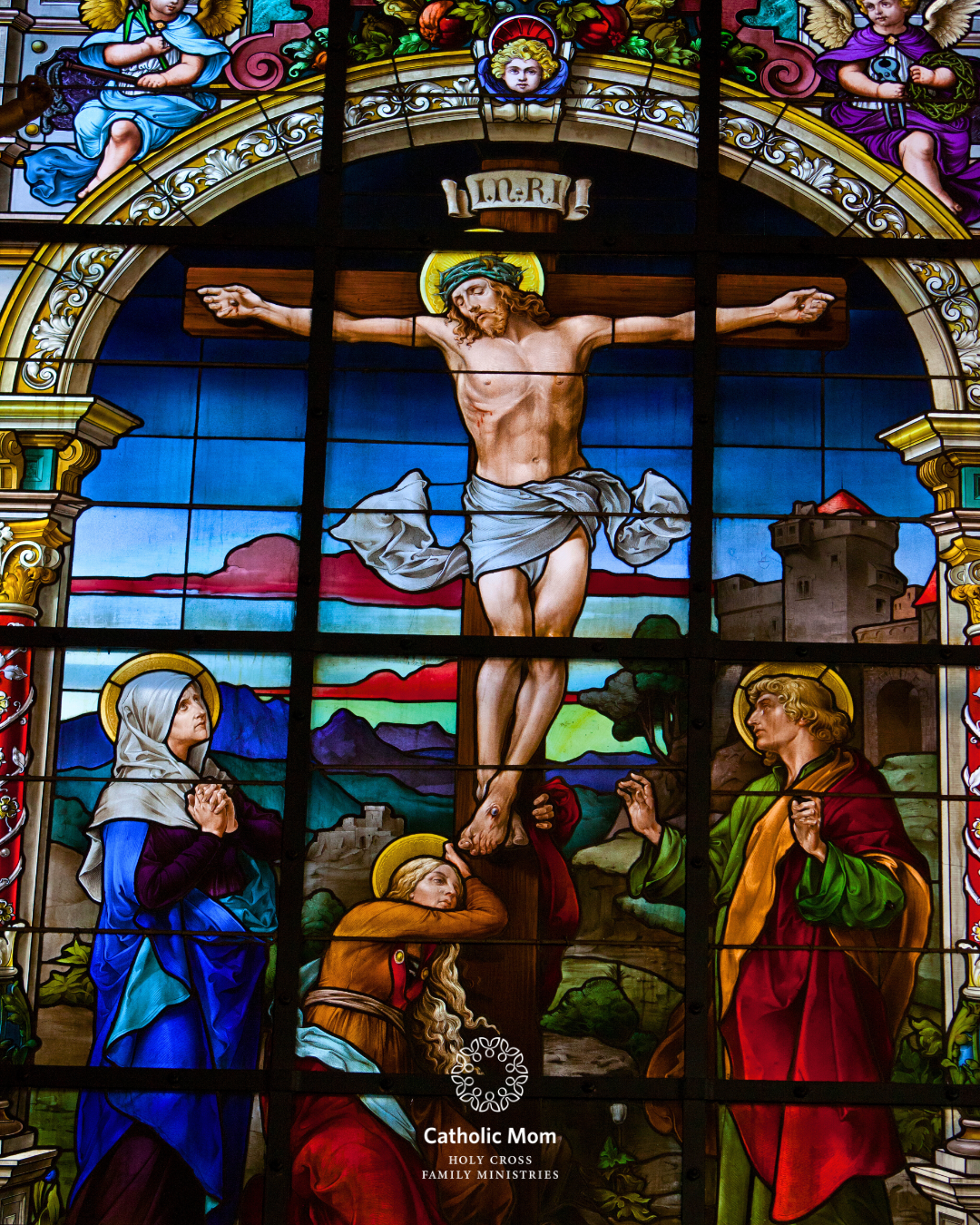
Sarah Appleton explores how Christ’s crucifixion unites justice and love, revealing the Cross not just as both satisfaction for sin but also as perfect self-gift.
A meditation on the Servant Song: Isaiah 52:13 - 53:12
Many Christians think of the Cross mainly as punishment or payment for sin, but scripture and tradition reveal it as something far deeper: a perfect act of love.
The Servant Song and Mystery of Punishment
Christ's death leads us out of death itself. How does Christ’s death do this? The prophet Isaiah presents an image that one has satisfied a debt that Israel owes because of her covenant disobedience. This figure bears the guilt of the whole of Israel and is the cause of Israel being restored home to the promised land. The exile goes back to Genesis 3 where the penalty of death is imposed.
At first glance, the servant song seems to be saying there is a penalty due and Christ pays the penalty. This is a beautiful image. Christ is innocent and takes the beating for us. Does this image disturb us, though? If this is the only account of the Crucifixion then, yes, it should.
We need to find a way to understand punishment not only as “satisfaction” of justice whereby a moral debt is paid, but also as the very act that makes restoration possible. One should interpret the Servant Song as the sacrificial life of a righteous servant of God who brings about the redemption of others. If we only view the cross with penal substitution language, it casts God the Father in an unusual light as one who demands and even delights in the destruction of his own beloved. We could say that, yes, God the Father is pleased but not because it is destruction, but because it is sacrifice, Jesus willingly and freely offering Himself for our atonement.
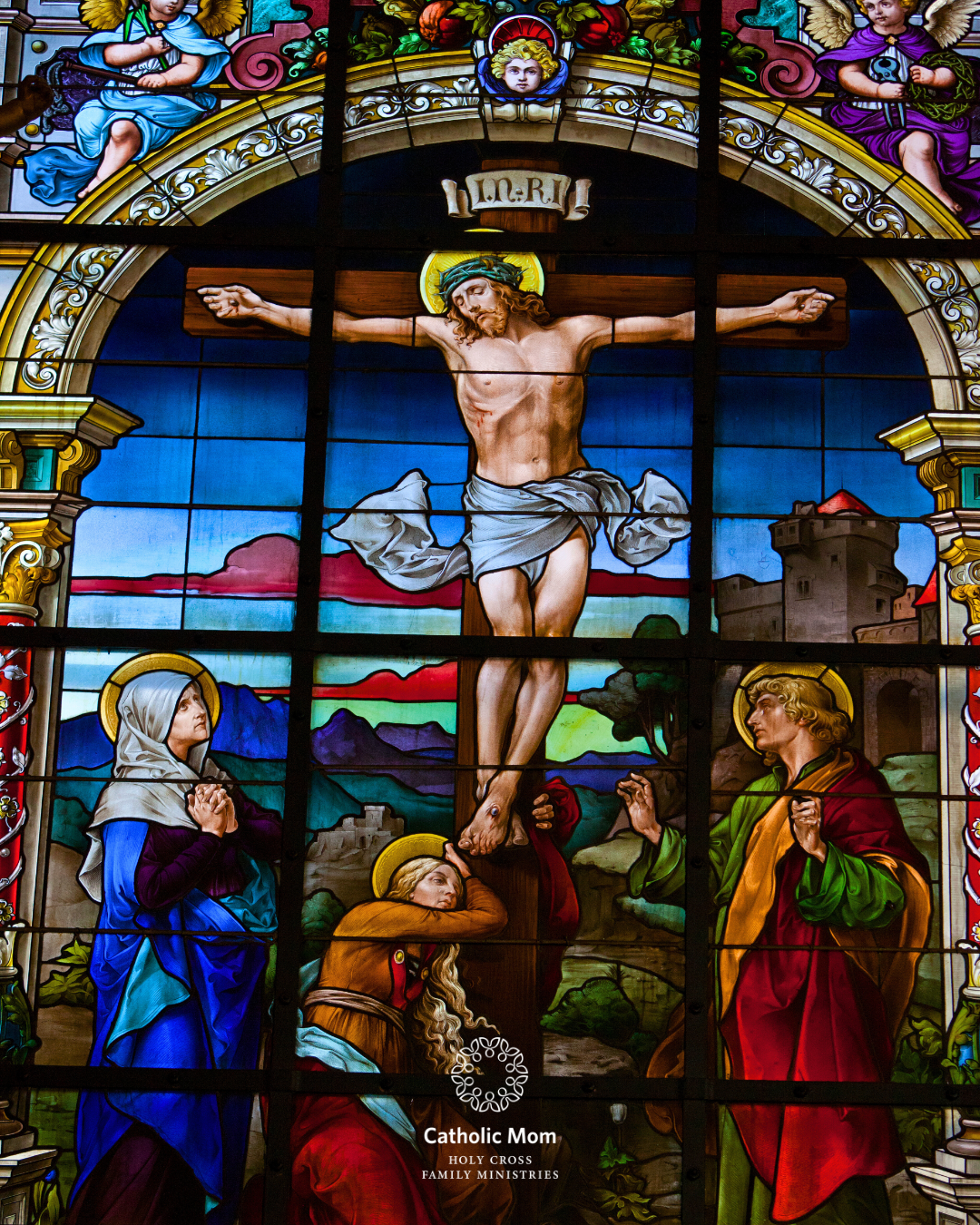
Sacrifice: Love Transformed
Joseph Ratzinger described sacrifice as “losing oneself as the only possible way of finding oneself,” and “love-transformed mankind, the divinization of creation and the surrender of all things to God. God all in all” (Liturgy-Cosmos-History pg. 28). The vocation of the whole of the world is to turn toward God and to offer oneself to God in a bond of love. When the world had fallen, God elected Israel to restore Creation, and the primary task of Israel was to keep the law which is worship and sacrifice.
Sacrifice has nothing to do with destruction but everything to do with giving oneself back to God in love. Creation is made to share in the communion of love. The whole task of Israel and Christ as the Son of Israel is to emerge from a state of separation and handover oneself back to God, to make re-entry into communion with Him.
The crucifixion is a handing over of oneself back into communion. Jesus reveals the truth about ourselves and God, yet we respond by killing Him. We burden Him with our rejection, wound Him with our transgressions, and crush Him with our iniquities. We ultimately send Him to his death. However, by bearing and overcoming these burdens, He triumphs over them. He strips sin of its power to separate us. Through his wounds, we find healing. So, how do we fit sacrifice and satisfaction together into the Crucifixion? How do we make a total gift of a human person as a sacrifice?
The Crucifixion as Perfect Self Gift
For starters, it does not mean the immolation and killing of the human person. God desires the full and complete “handing over.” God is a community of persons bound in love and desires that Creation hands itself over and perfectly formed in love that is self-giving.
Jesus was put to death for being near to Israel and speaking the truth of who He is and who they are: “I am the light of the world” (John 8:12). Jesus remains close to Israel even though He knows such closeness entails rejection. The Crucifixion is unique because it is perfect charity that is complete and total in such a way that Christ can say, “It is finished.” It is an offering that is irrevocable. Christ becomes the perfect sacrifice: “love-transformed humankind.”
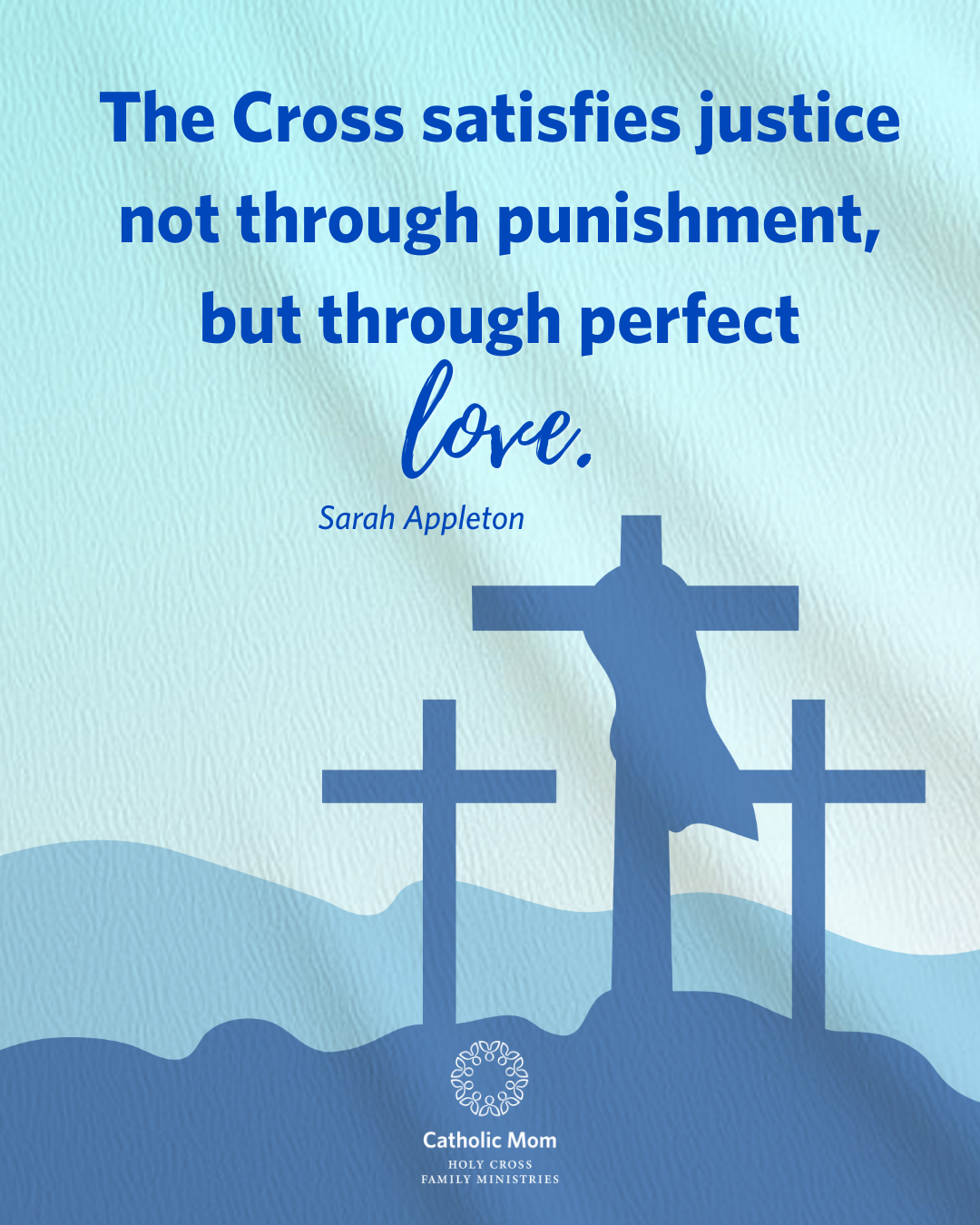
We see how Christ is sacrificed not because He is destroyed, but because He becomes the perfect self-gift. We see how Christ is satisfied as He is the one who does not have to die but wills Himself to die to pay the debt. The Cross satisfies justice not through punishment, but through perfect love. Christ’s sacrifice is not His destruction — it is His total gift of self.
Share your thoughts with the Catholic Mom community! You'll find the comment box below the author's bio and list of recommended articles.
Copyright 2026 Sarah Appleton
Images: Canva


About the Author


.png?width=1806&height=731&name=CatholicMom_hcfm_logo1_pos_871c_2728c%20(002).png "CatholicMom_hcfm_logo1_pos_871c_2728c (002)")


Comments