


Father Martin Nchedo Umeatuegbu, a priest of the Archdiocese of Santa Fe, NM, shares the marriage advice he offers in pre-Cana classes in his parish.
Love is a universal language needed by every human being. In expressing love toward another person, humans expect to be loved in turn. This is what enables a man and a woman to enter into a mutual relationship, which in turn leads to marriage.
The Universal Language of Love
The fact that love is a universal language is proven by the truth that there is almost no culture or language without a name for it. Yet despite these various languages in which it is reflected, they have a common point – that it goes from a person to a person. In other words, love involves a relationship between a subject and another subject, and not a subject and an object. For objects are not loved but used as means to achieve a desired end, while a subject is loved as an end in itself. Anything devoid of this is not love.
Love for neighbor is a new Commandment given by Christ, which today is lacking in many relationships and marriages. Love is the only language every human understands; no human desires to be hated. In logic, this is a universal affirmative, and not a negative.
The Ten Commandments for a Marriage Based on Love
The following are what it commands as demands if lovers truly wish to be fruitful, faithful, and successful in their marital unions.
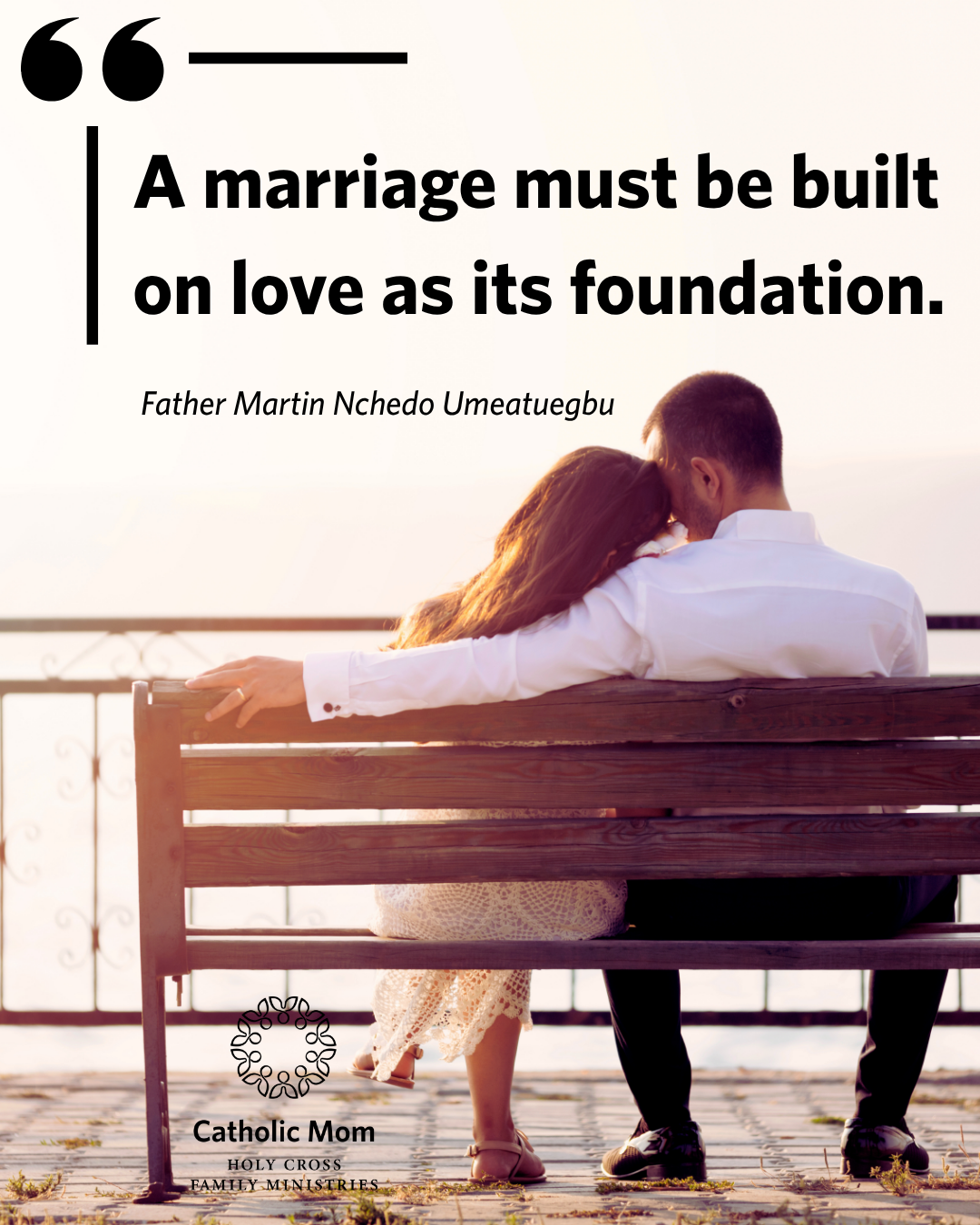
1. A marriage must be built on love as its foundation. This means to have it rooted in God and not in sin. For God is Love (1 John 4:8). If built on the sin of the flesh, then it is not love, but on lust. This shows why fornication, adultery, masturbation, the use of contraceptives, artificial birth control, pornography, and the use of all forms of sex instruments for inordinate pleasure are acts of infidelity. If built on God, it is genuine; if built on lust, it is headed toward disaster. Chastity is a virtue needed; it is the life of God.
2. Couples should avoid giving conditions to each other, for such places their love to have limitations. Love is not a parallel line without a meeting point, but perpendicular lines that cross to form different angles.
3. The extent of love is proven by the extent of forgiveness. The moment one refuses to forgive, the place of love begins to suffer in such a marriage.
4. Love welcomes disagreements between the parties, for as humans, they will have disagreements. Yet, in disagreeing, let it not be to disintegrate, but to agree. There should be a place for sincere apologies.
5. Married couples in love should avoid comparison of their union with that of others, for being in love is not being in competition. This is because every relationship has what makes it unique, which is not found in another.
6. Love does not come from any other place except from the heart. Therefore, anyone who truly loves must avoid breaking the heart of the other.
7. Love is not what just lovers do, but what lovers are. This is why their identity "lovers" derives from "love." Yet, both are nouns. They are lovers because they are humans.
8. Love is proven in sacrifice without reservation. Any party that is not ready to make sacrifices for the other is never in love but demonstrates a plagiarism of love.
9. Marriage has an end in God because the spouses have a beginning in Him, just as their center is the same God. Therefore, lovers should see each other as the best people to lead each to God. If the man sees the woman as the best woman to lead him to God, and the woman sees him as the best man that leads her to God, then God's presence will never depart from such a union, even in times of hardships and temptations.
10. Being in love can be sustained by sincere prayers. A prayerful man and woman are already a combined threat to the devil, who comes to steal, kill, and destroy (John 10:10).
From insincere marriages, deliver us, O Lord Jesus!
Recommended Books
Pope John Paul II, Love and Responsibility
Christopher West, Good News About Sex and Marriage
Christopher West, Our Bodies Tell God's Story
Father Lawrence Lovasik, The Catholic Family Handbook (out of print)
Annie S. Swan, Courtship and Marriage and the Gentle Art of Home-Making
Share your thoughts with the Catholic Mom community! You'll find the comment box below the author's bio and list of recommended articles.
Copyright 2026 Father Martin Nchedo Umeatuegbu
Images: Canva; author photo courtesy of Natassja Brito, all rights reserved.
 About the author:
Father Martin is a priest of the Archdiocese of Santa Fe, NM. Formed at North American College, Rome, and Mount Angel Seminary, Oregon, he enjoys writing, teaching, humor, and languages. He studied Spirituality and Mysticism and enjoys using the lives and teachings of saints to give hope to incumbent human problems. He sees the Liturgy as a place of abundant healing. Contact him at jesusthetherapist@gmail.com.


About the Author


.png?width=1806&height=731&name=CatholicMom_hcfm_logo1_pos_871c_2728c%20(002).png "CatholicMom_hcfm_logo1_pos_871c_2728c (002)")


Comments