



Michelle Hamel reflects on Martha and Mary’s emotions at the death of their brother Lazarus and how it can be applied to the brokenness in our own lives.
A couple of months ago, I woke up with a particular Bible verse swimming around in my mind:
"Father, I want to thank you that you have heard me. I know that you always hear me, but I have said this on account of the people standing by, that they may believe that you sent me." (John 11:41b-42, RSV2CE)
The verse is from the Gospel story when Jesus raises Lazarus from the dead. I went back and read the whole story and, as often happens, God highlighted some new perspectives on a story I have heard or read many times before.
Jesus was very close to Martha, Mary, and Lazarus. John 11:5 even says, "Now Jesus loved Martha and her sister and Lazarus." When Lazarus fell ill, Martha and Mary sent word to Jesus. They believed in Him and saw and were witnesses to His miracles. So, of course, they reached out to Jesus with the hope that He would heal their dying brother.
But Jesus didn't come right away. And while the disciples who were with Jesus knew His reason why, "This illness is not unto death; it is for the glory of God, so that the Son of God may be glorified by means of it,", (John 11:4), Martha and Mary did not. They were left to care for Lazurus, watch him die, and bury him, while dealing with the added grief that Jesus never came.
When Jesus finally does arrive, Lazarus has been in the tomb for four days. Martha runs to meet Jesus when she hears that He is coming, but "Mary sat in the house" (John 11:20). Martha and Jesus share an emotional exchange. Martha opens her deep brokenness and disappointment that Jesus wasn't there and that He could have prevented her loss. But she still believes and trusts despite her broken heart.
Then Martha went back to the house and "called her sister Mary, saying quietly, "The Teacher is here and is calling for you.” And when she heard it, she rose quickly and went to him" (John 11:28). "Quietly" sticks out to me in that line. Martha speaks to Mary with gentleness and reverence, missing the harshness of Martha's rebuke of Mary in Luke 10:38-42. Martha's gentleness shows a compassionate understanding of how Mary is carrying her pain and loving Mary within her emotional struggle.
I imagine that in the time between sending their message to Jesus and Lazarus' death, Martha and Mary would have spoken about their hope that Jesus would come and heal their brother. After Lazarus' death, they must have grieved together and asked each other why Jesus didn't come? They had hoped in Jesus to save them from this suffering, but He didn’t.
At Jesus' arrival, Martha's quick reaction to run out and meet Him outside of the town, seems to show that she carried disappointment but also a level of acceptance.
Mary's reaction seems to show that she was struggling with feelings of disconnection and abandonment. Mary needed an invitation. Mary needed proof that she was wanted, that she was not forgotten or abandoned in her pain. When Mary reaches Jesus, she falls at his feet, weeping. Her heart is so broken. I can imagine her words coming out in anguish amidst her grief and tears, "Lord, if you had been here, my brother would not have died."
Crying Out to Jesus
How many times have we fallen before the Lord on our knees in our grief? In Adoration, on our bedroom floor, in our showers, while we weep tears of anguish and grief and cry to Jesus:
You weren't here!
You could have saved them!
You could have saved me!
You could have saved all of us from this, but You didn't.
I cried out to you over and over and over again, and You didn't come!
Jesus' reaction to Mary in her deep grief, and His reaction to us in our deep grief, is not one of reproof or anger for questioning Him. "He was greatly moved and troubled" (John 11:33). Jesus meets us with love and gentleness in our pain. Jesus does not rebuke them, or us, for any negative feelings that we wrestle with towards Him. Whether we wrestle with doubting that God is good, or question whether God really is who He says He is, or struggle with self-worth because Jesus didn't save us from our crosses in the way we had hoped for, Jesus’ response is love and gentleness.
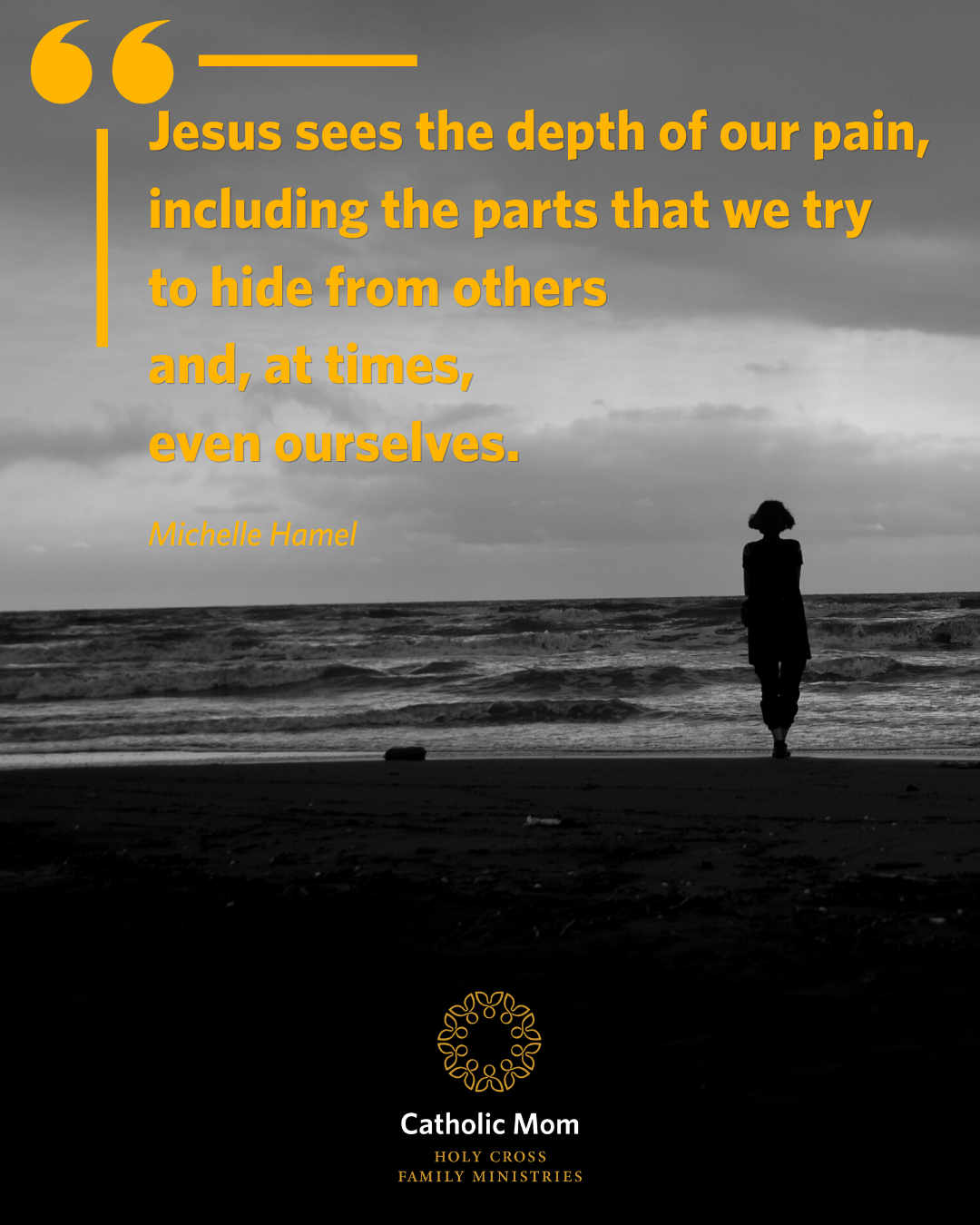
Jesus is completely present with us in our brokenness. He sees the depth of our pain, including the parts that we try to hide from others and, at times, even ourselves. Jesus' reaction is an intimate sharing in Martha and Mary’s suffering and in our suffering.
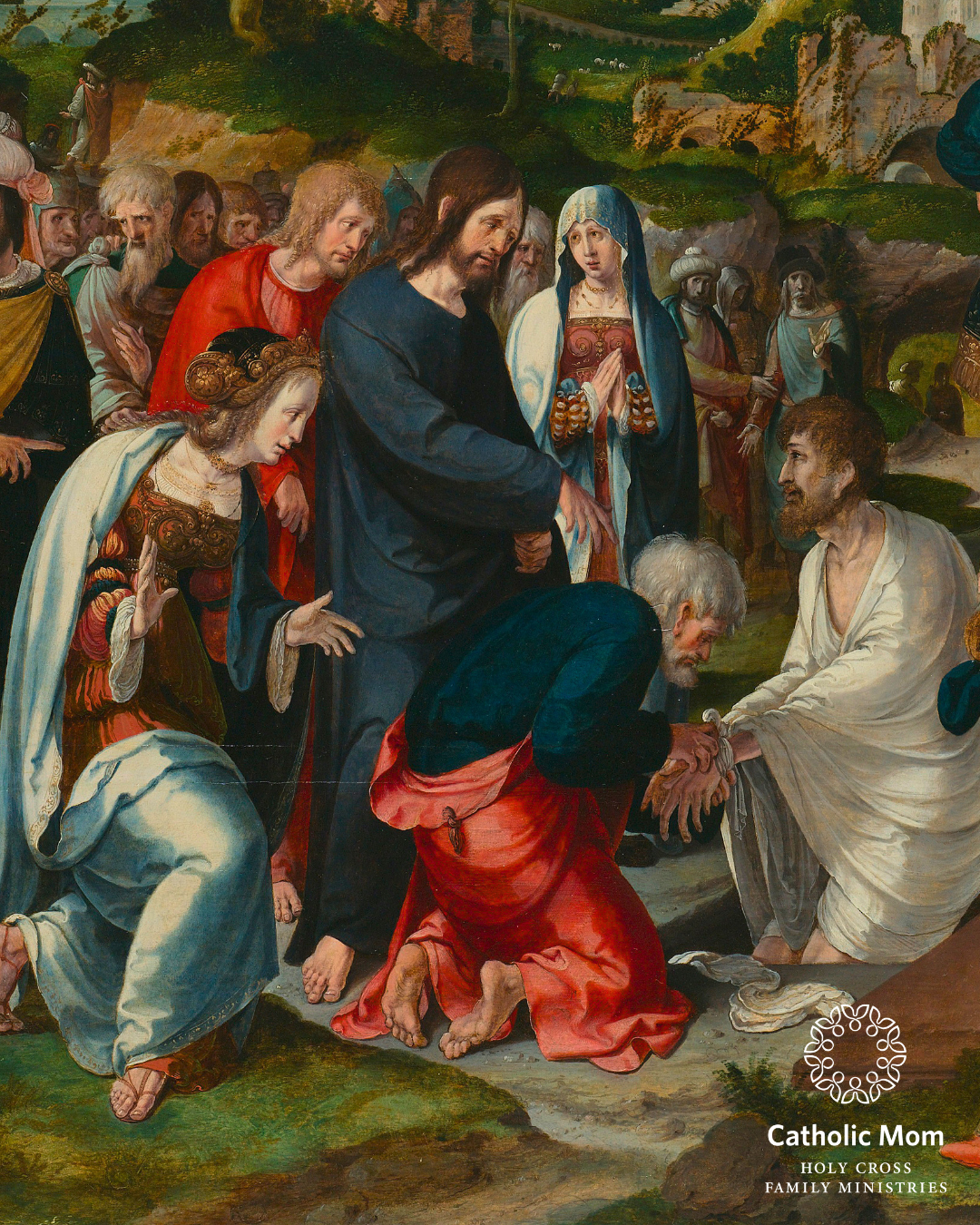
Jesus Wept.
"Jesus wept" (John 11:35). Jesus wept for the pain Martha and Mary carried, even though He knew that He was going to raise Lazarus from the dead in mere moments. Jesus weeps with us over the pain we carry even though He will resurrect and transform our brokenness in His time (see Romans 8:28).
Jesus asks Martha and Mary, "Where have you laid him?" (John 11:34). But Jesus knew ... He always knows. Jesus is asking Martha and Mary to lead Him to their greatest place of brokenness in that moment. They don't reject Jesus or push Him away in anger, or bitterness, or resentment. Martha and Mary open their brokenness to Him and invite Jesus in with their response, "Lord, come and see" (John 11:34)
Within the brokenness of our own hearts, Jesus asks us, "Where have you hidden what you thought was dead?" He asks with that same gentleness and love that He asked Martha and Mary. Jesus asks our permission to enter into the darkest, messiest caves of our hearts, where we have buried our deepest hurts. He wants to roll away the stones of self-protection that we have used to try (without real success if we are honest), to protect ourselves from the pain and grief of our broken places.
Jesus' timing is usually not what we had asked for. His arrival will not occur when we would prefer it. But the grace and peace that Jesus will bring to resurrect our broken places will be far beyond anything we could even imagine, as we whisper to Him …
“Come and see.”
Share your thoughts with the Catholic Mom community! You'll find the comment box below the author's bio and list of recommended articles.
Copyright 2026 Michelle Hamel
Images: Canva


About the Author


.png?width=1806&height=731&name=CatholicMom_hcfm_logo1_pos_871c_2728c%20(002).png "CatholicMom_hcfm_logo1_pos_871c_2728c (002)")


Comments