


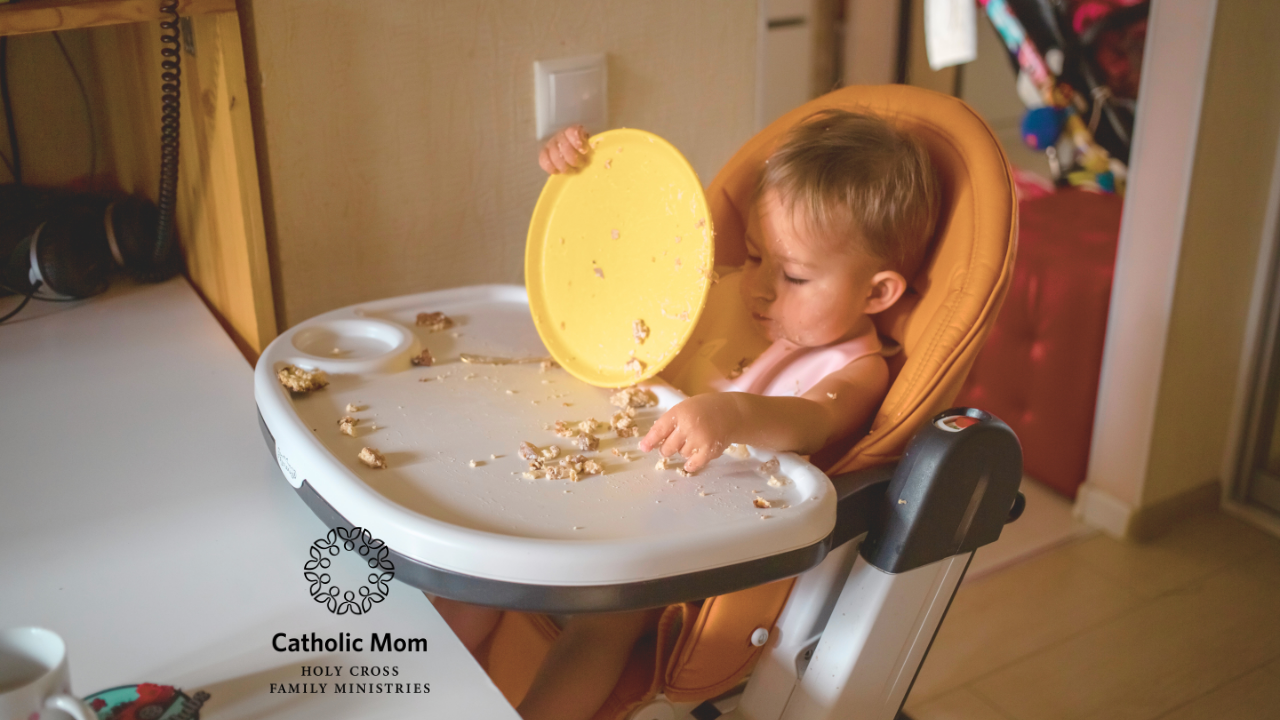
Emily Jerger reflects on the importance of a regular examination of conscience and the act of contrition.
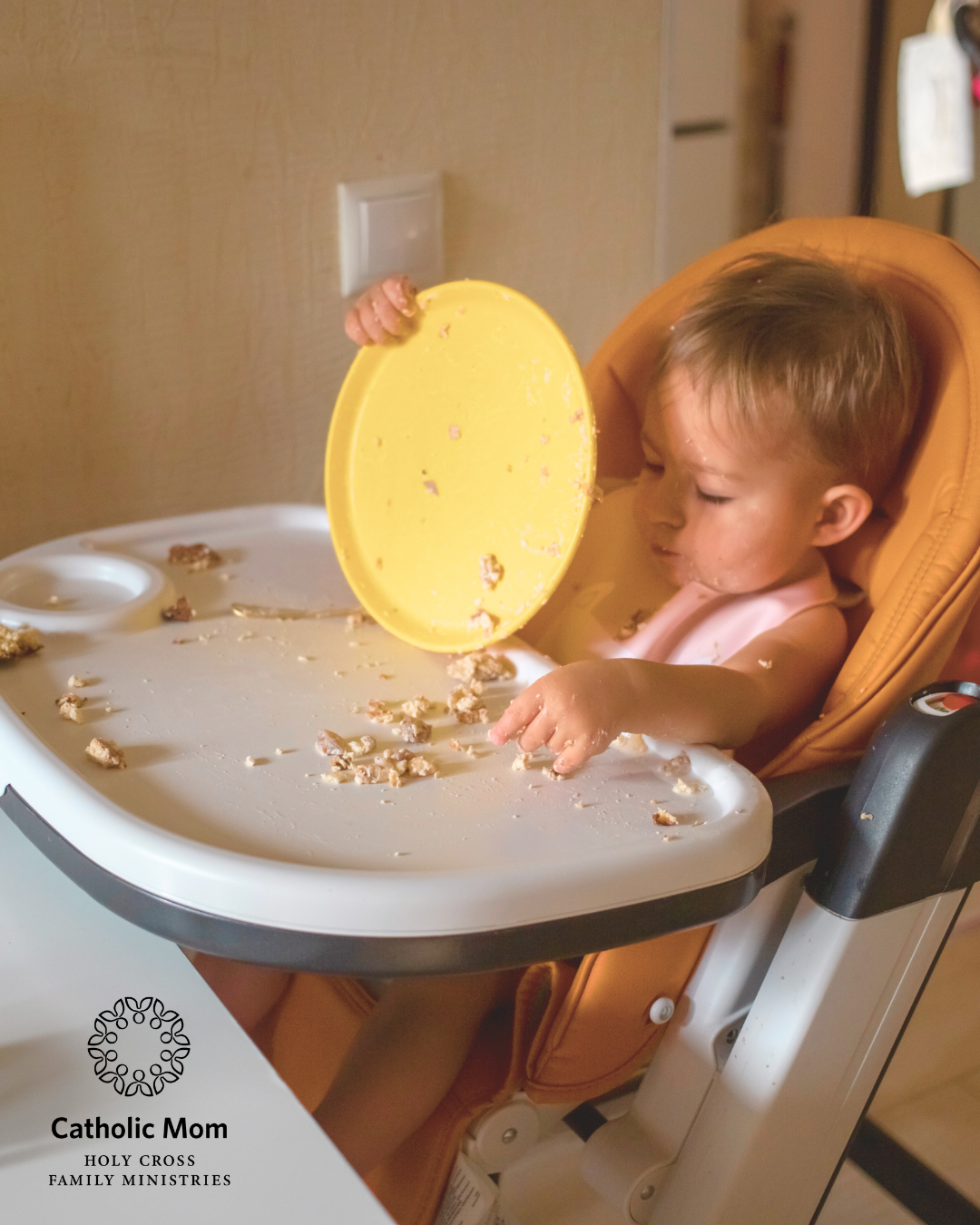
I currently have a toddler at home, and if you were to enter our kitchen and see my son’s highchair, you would immediately notice the off coloring of his sticky highchair straps. I am notoriously bad at cleaning the highchair straps on a regular basis. There are times when I wipe the highchair straps down (and maybe even once or twice sprayed the straps with bleach); nevertheless, I know these attempts at cleaning are insufficient because they are too infrequent. I would never get away with neglecting his highchair tray the way I do the straps, and yet something in me resists this necessary and important duty.
A Daily Examination of Conscience
I know that keeping my conscience clear is a good thing to do; however, I tend to let the daily sins of life, what are traditionally called venial sins, accumulate and begin to “stick” in my conscience. Paragraph 1863 of the Catechism of the Catholic Church explains that venial sins can weaken our love for God and hinder our ability to practice virtue. In fact, unrepentant venial sins can potentially dispose us over time to commit a mortal sin and lose the grace of God’s friendship. That is why it is important to practice a regular examination and pray the act of contrition.
The Church recommends a daily examination of conscience in the light of Scripture and the call to be disciples of Jesus Christ. One way that helps me to make an examination is to examine my attitudes, words, and actions in the categories of the love of God, the love of self, and the love of neighbor. Another helpful examination is to look at my sins of commission (things I’ve done that I should not have done) or omission (things I should have done that I failed to do).
While it’s not always easy to recognize the little sins in life, they can accumulate into attitudes and dispositions of heart that move us farther away from God’s friendship. For example, it is easy for me to justify speeding when I am running late, even though I know that God wants me to obey the reasonable laws of my country. There are also times when I sense that I should reach out to someone through a phone call, text, or even a letter, but I hesitate to do so and end up never reaching out. That might be a sin of omission if I fail to love someone as God is calling me to love.
Images and Analogies for Venial Sin
The Catechism uses a powerful analogy to help us understand the impact that venial sins can have in our lives: a drop of water can be little in itself but can accumulate over time into a river.
This is where the highchair is helping me see how the accumulation of little bits of food over time can lead to one big sticky mess that needs bleach. The bleach cleanup is like Confession, taking us from the stains of sin to the bright white of God’s grace.
The Act of Contrition
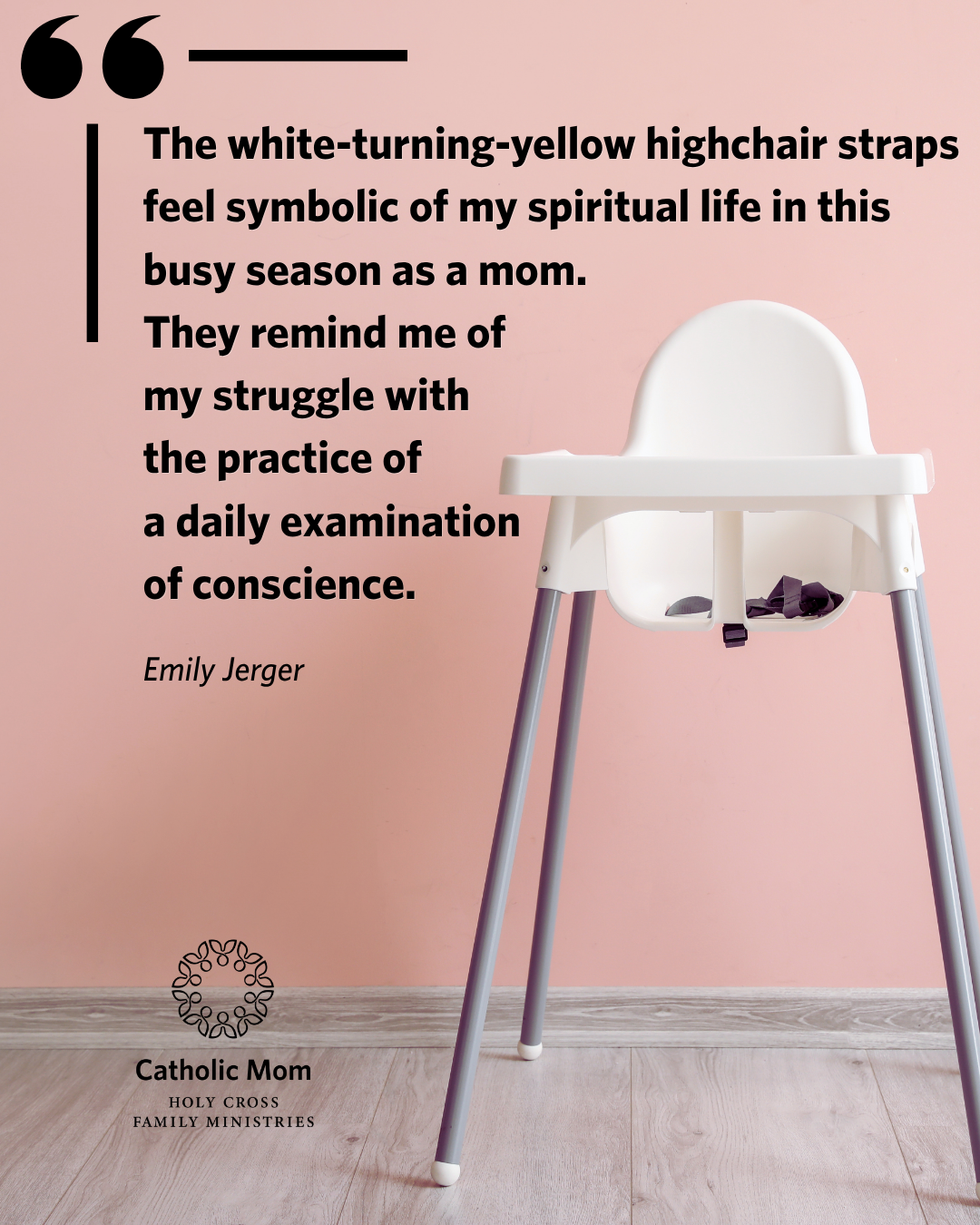
While the Sacrament of Confession was instituted by Christ to forgive the mortal sins committed after Baptism, the practice is also beneficial on a regular ongoing basis, to help cleanse us of every day venial sins. This practice is sometimes called a “devotional confession.” As busy moms (or dads) when it comes to the practice of the examination of conscience or going to the Sacrament of Confession on a regular basis, it can be hard, especially if you have little ones at home. The white-turning-yellow highchair straps feel symbolic of my spiritual life in this busy season as a mom. They remind me of my struggle with the practice of a daily examination of conscience. There are so many responsibilities in parenthood and there have been many times I have crashed into bed, too exhausted to reflect on my day.
One of the beautiful prayers offered to us by the Church is the Act of Contrition. There are a variety of forms we can pray and many of us memorized this prayer when we were children. My favorite version is short and simple: “Lord, Jesus Christ, son of the living God, have mercy on me, a sinner.”
If we say, ‘We are without sin,’ we deceive ourselves and the truth is not in us. If we acknowledge our sins, he is faithful and just and will forgive our sins and cleans us from every wrongdoing. (1 John 1:7-8)
The promise here is clear: If I acknowledge the stickiness, the mess, the discoloration in my life, Jesus will cleanse my conscience and forgive me. Jesus is much more willing to clean and to care for us than I am to clean and care for that highchair. An Act of Contrition is a simple way for busy parents to continue to ask for God’s grace to cleanse the stains of sin in our lives.
Share your thoughts with the Catholic Mom community! You'll find the comment box below the author's bio and list of recommended articles.
Copyright 2026 Emily Jerger
Images: Canva


About the Author


.png?width=1806&height=731&name=CatholicMom_hcfm_logo1_pos_871c_2728c%20(002).png "CatholicMom_hcfm_logo1_pos_871c_2728c (002)")


Comments