

Carolyn Astfalk hosts the Open Book linkup: Share what you're reading and get recommendations from other readers.
Welcome to the April 2026 edition of An Open Book, hosted both at My Scribbler's Heart AND Catholicmom.com.
An Open Book is all about what my family is reading this month, from the adults down to the little kids.
Share what you're reading by linking up your blog post below.
Simply write about what you're reading. You can make it personal or, as I do, extend it to the whole family. Your post can be as simple as a few lines about the book or as in-depth as a 700-word review. That's entirely up to you. You can even forego writing all together and record a video or simply post cover photos.
No blog? No problem. Please share what you're reading in the comments.
Here are the books my family and I have read this month:
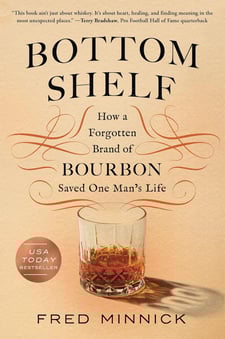 My husband makes his return to An Open Book after many months with Fred Minnick’s Bottom Shelf: How a Forgotten Brand of Bourbon Saved One Man’s Life. As the front cover quote from quarterback Terry Bradshaw says, “This book ain’t just about whiskey.” This is a memoir of an Iraqi war veteran who, to help cope with PTSD, employed “taste mindfulness and therapy,” a sensory-based exercise focused on taste and smell. This technique served him in both healing and furthering his writing career. The book covers his discovery of a rare bottle of whiskey and, more importantly, his marriage and growing family.
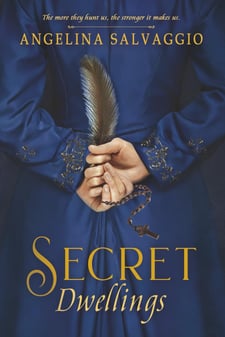 My youngest daughter and I both read Secret Dwellings, a historical novel set during the persecution of Catholics in Elizabethan England, by Angelina Salvaggio. I’d seen this novel recommended by another Catholic author and was lucky to win a beautiful prize pack with a copy of the novel. Young Isabel must navigate the persistent and troubling advances of an earl charged with hunting Catholics. I loved the storytelling, pacing, vivid settings, and dialogue, and faith is treated with the respect and complexity it deserves. If I could change one thing, it would be to add a final proofread to catch some distracting punctuation and word usage errors.
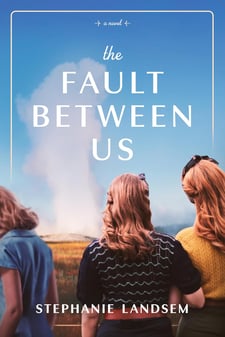 I had a long wait for the library copy of Stephanie Landsem’s The Fault Between Us, a historical women’s fiction novel set in and around Yellowstone National Park. Three sisters, raised by their father, share a summer in the area where Claire has settled with her husband, Red, and their infant daughter. Bridget arrives to further her nursing career, bring Claire home (as per Dad’s orders), and keep an eye on their youngest sister, Fran, a rebellious teen. The story is about their fractured relationships, set amidst the 1959 Hebgen Lake earthquake, an event I knew nothing of. Another excellent novel by this author, who deftly weaves the family’s Catholic faith into the engaging storytelling.
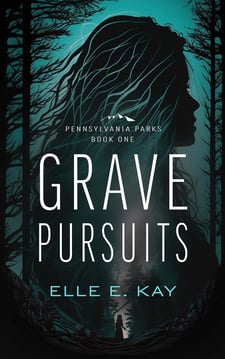 I downloaded Grave Pursuits, the first in a Christian romantic suspense series set in Pennsylvania State Parks by Elle E. Kay, a new-to-me author. My husband and I have visited, camped in, and had an unprovoked black bear encounter at Hickory Run State Park, so this held special interest for me. The striking boulder field in the park is the setting for the discovery of a body that propels the story and the hunt for a serial killer by Pennsylvania State Police and park rangers. It features a second-chance romance between Ranger Emily Davis and Sergeant Wade Brunner. I guessed the killer in the first quarter of the book but was interested in seeing how things would play out and how he was connected to his victims. This was a 3-star read for me, and I may or may not read the next book in the series, set in another beautiful Pennsylvania State Park we’ve hiked.
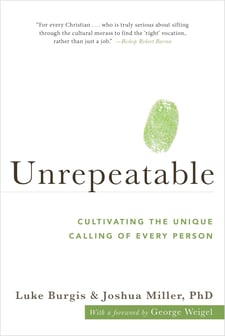 My oldest son read Unrepeatable: Cultivating the Unique Calling of Every Person by Luke Burgis and Joshua Miller. I read this book in 2018 and recommended it to him. Heavily influenced by Saint John Paul II and his phenomological approach, the authors seek to help young people discover their call using contemporary cultural references and personal experiences to explain the why and how of discovering personal vocations.
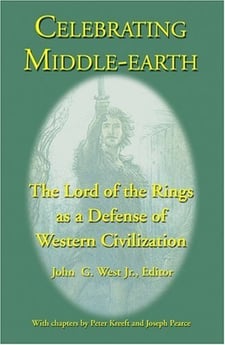 After re-visiting The Return of the King by J.R.R. Tolkien, my son read Celebrating Middle-earth: The Lord of the Rings as a Defense of Western Civilization, edited by John G. West. It is a short collection of essays by various Tolkien scholars addressing such topics as Tolkien’s literary influences and Christian themes in his work. The essay on Medieval literature was most helpful in understanding Tolkien and the themes of The Lord of the Rings. Other essays were okay but not as good, and Joseph Pearce’s essay was a very condensed version of his Tolkien biography.
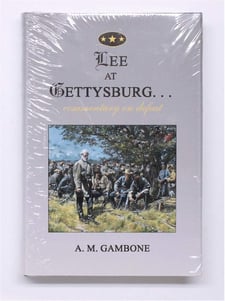 Lee at Gettysburg — commentary on defeat: The Death of a Myth by A.M. Gambone was a big disappointment. Some reviewers simply call it Lee-bashing. My son does not recommend it, saying, “The book contains too many typos, is much too opinionated, is consistently unfocused, and leaves out important parts of the battle. The book serves to blame Lee while never explaining or examining Lee’s rationale for the battle, which is probably the more interesting debate.”
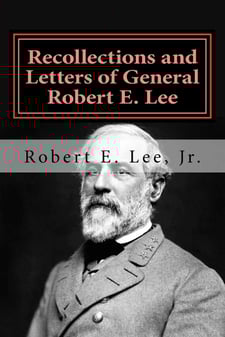 The Recollections and Letters of General Robert E. Lee by Robert E. Lee, Jr. served as an antidote to the previous book. Here, the Commander of the Confederate Army’s reminiscences and recollections are recorded by his son. It covers battles and wars, but also personal letters regarding his home, farming advice, family travels and relations, and the deep Christian faith that give insight into the man’s character. He’d like to continue his study of Lee by reading some additional biographies.
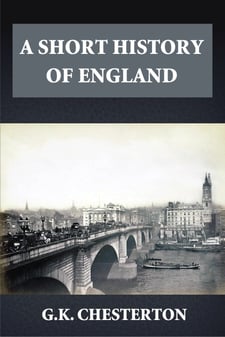 My son listened to A Short History of England by G.K. Chesterton, a short, popular history. It is more a commentary than a chronology, covering a wide breadth of history in the author’s engaging and witty style. It was a lot to digest and something he may revisit when he’s learned more about European history.
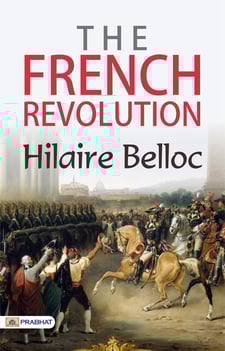 The French Revolution by Hillaire Belloc, as you’d expect, is an examination of France’s 18th-century revolution, with all the turmoil and upheaval it created. My son found Belloc’s sympathy towards the Revolution interesting. The last chapter addresses Belloc’s take on the Catholic Church in the Revolution, and he wasn’t sure what to make of that, right or wrong, wishing Belloc had written more about it.
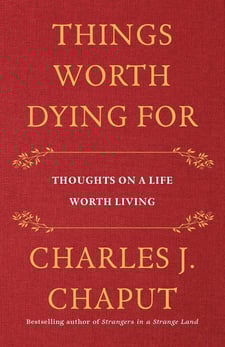 Things Worth Dying For: Thoughts on a Life Worth Living by Archbishop Charles J. Chaput was a gift to my son several years ago. I read this book when it came out on the heels of the global pandemic and societal upheaval that followed, and, reading it at a greater distance from those events than I did, my son had some different takes than I did. It includes Chaput’s keen insights into American history and contemporary culture, using a variety or cultural references with a prescription for how to live a meaningful life.
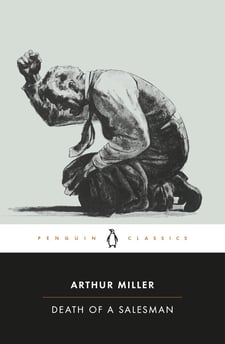 My oldest daughter read Death of a Salesman by Arthur Miller with her class. She enjoyed the play about salesman Willy Loman and thought the themes regarding the American dream, materialism, and worldly success are important for Americans to consider.
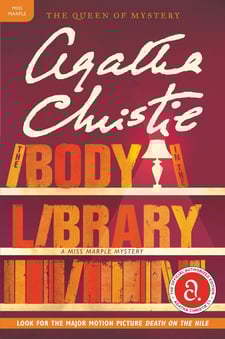 In addition to reading a couple of books already covered recently in An Open Book, my middle-school daughter continued to enjoy Agatha Christie’s Miss Marple series by reading The Body in the Library. The Bantry family discovers a woman’s body in their private library and invite Miss Marple in to discover who she is and how she might be connected to another dead girl.
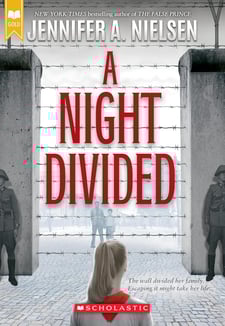 With her class, she is also reading S.E. Hinton’s The Outsiders, which has appeared in this space as each of my older children read it (and will appear once more next year as my youngest son reads it). She is also reading A Night Divided by Jennifer A. Nielsen, a historical fiction author she enjoys. A girl, Greta, is separated from her family by the Berlin Wall. She, her mother, and her brother are in East Berlin, under Soviet control. Her father is in West Berlin, and after spotting him on the viewing platform, she thinks he wants her and her brother to tunnel under the wall to reach him.
My youngest son did some re-reading and has also been working through an anthology of Greek myths with his classmates. His sister read this same book last year, and neither can ever remember the title, so I’m going to leave it at that. He’s reading about Narcissus, Persephone, et al.
Join the linkup to share what you're reading — or leave a comment below.

Want more details on An Open Book?
You can also sign up for An Open Book reminder email, which goes out one week before the link-up.
Copyright 2026 Carolyn Astfalk
Images: Canva
This article contains Amazon affiliate links, which provide a small compensation to the author of this piece when purchases are made through the links, at no cost to you. Thank you for supporting our Catholic Mom writers in this way.


About the Author

.png?width=1806&height=731&name=CatholicMom_hcfm_logo1_pos_871c_2728c%20(002).png "CatholicMom_hcfm_logo1_pos_871c_2728c (002)")


Comments