

Carolyn Astfalk hosts the Open Book linkup: Share what you're reading and get recommendations from other readers.
Welcome to the October 2026 edition of An Open Book, hosted both at My Scribbler's Heart AND Catholicmom.com.
An Open Book is all about what my family is reading this month, from the adults down to the little kids.
Share what you're reading by linking up your blog post below.
Simply write about what you're reading. You can make it personal or, as I do, extend it to the whole family. Your post can be as simple as a few lines about the book or as in-depth as a 700-word review. That's entirely up to you. You can even forego writing all together and record a video or simply post cover photos.
No blog? No problem. Please share what you're reading in the comments.
Here are the books my family and I have read this month:
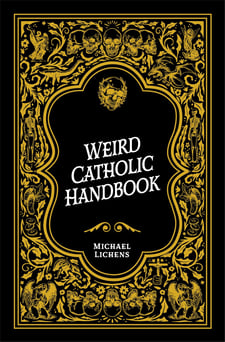 My husband received the Weird Catholic Handbook by Michael J. Lichens as a gift and has been reading it sporadically throughout the year. These odd but thoroughly Catholic stories described as “a journey through the strange and sacred,” are right up his alley since for years he contemplated gathering such tales on a website. With sections such as “Spiritual Warfare and Catholic Campfire Stories” and “Saints, Angels, and Monsters,” it includes a variety of high but holy strangeness.
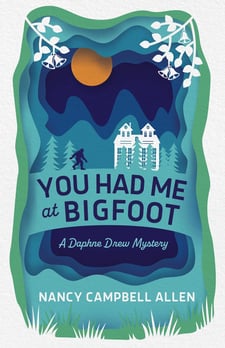 I can’t recall where I first heard about You Had Me at Bigfoot by Nancy Campbell Allen, but I’m glad I added it to my to-read list. The first Daphne Drew mystery includes a lot of campy fun by really leaning into the Nancy Drew/Scooby Doo mystery vibe without being over the top. Daphne and Clark were both so likable and relatable, and their romance was a nice sidebar to the central mystery, which has a little paranormal Bigfoot flair.
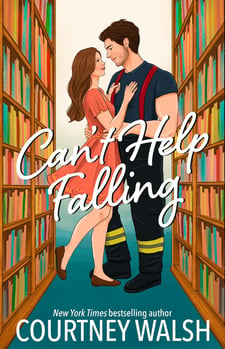 I’ve taken a dip into fall reading, which seems to be its own subgenre now, and read a Courtney Walsh book I missed a few years back. Can’t Help Falling was a quick favorite. I’m a sucker for unrequited love, and that’s the backstory of this friends-to-more romance between left-at-the-altar firefighter Owen and bookshop owner Emmy, who’s anonymously hosting an all-things-romance podcast on the side.
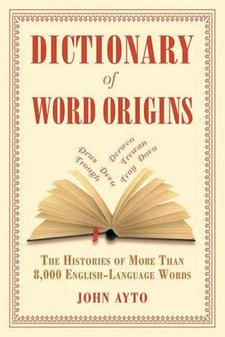 Dictionary of Word Origins: The Histories of More Than 8,000 English-Language Words by John Ayto has been lying around our living room for years now, and I’d completely forgotten about its existence until my son started pulling it out to look for etymologies and explanations. It’s an easy-to-use reference for those who are curious where that word or phrase comes from.
 My adult son read North Against South: The American Iliad, 1848-1877 by Ludwell H. Johnson, a history of the American Civil War and Reconstruction. It explains the build-up to the war and Reconstruction better than any book he’s read so far. The book is hard to find, but it is concise and effective. Written from a Southern perspective, it still strives to be objective and provide evidence-based arguments. It’s also a great source for understanding Civil War historiography.
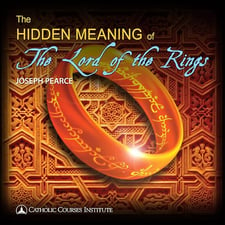 On his daily commute, he listened to The Hidden Meaning of the Lord of the Rings: The Theological Vision in Tolkien’s Fiction, a Catholic Courses Institute lecture by Joseph Pearce. My son thought it would be a rehash of Pearce’s Tolkien: Man & Myth, but while the first lecture does summarize that biography, the subsequent lectures go more deeply into tropes, characters, themes, etc., and what Tolkien may have meant by employing them. The explanations of Tom Bombadil and the Ents were very well done.
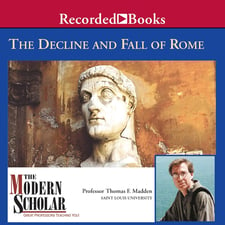 The Decline and Fall of the Roman Empire by Thomas F. Madden is a recorded book by The Modern Scholar. My son finds that the Madden courses are helpful in understanding overall concepts and are generally a condensed version of what you’d expect from a college course. This book was interesting and a good refresher on the Roman Empire.
 Turning to fiction, my son also picked up Robinson Crusoe, the story of a shipwrecked castaway, by Daniel Defoe. Although he didn’t dislike the book, he found it easy to put down and hard to pick up, which meant it took him longer to read than expected. For a while, he wanted Crusoe to just get off the island already, but he still found it a book worth reading. Salient themes included trust in Divine Providence and God working all things for good. It also was interesting in its characterization of the state of nature and colonization during the time. Defoe was not Catholic, but Catholics are portrayed fairly in the book.
 Finally, my son is currently reading Death Comes for the Archbishop by Willa Cather. He called it an excellent book, beautifully written, with great descriptions of landscapes and the people and their faith. There are themes throughout he’d like to go back and revisit. It is a great examination of a setting in American history that doesn’t get much attention, New Mexico Territory, and the growth of Catholicism there.
 My college daughter is enrolled in a Catholic writers course, and I almost wish I could’ve enrolled alongside her. The first book read was A Portrait of the Artist as a Young Man by James Joyce, a novel loosely based on Joyce’s experience of his Catholic upbringing in Ireland and his later rebellion. The stream of consciousness style was new to her and slowed her reading progress. It wasn’t her favorite (as it wasn’t mine, either, when I read it in high school).
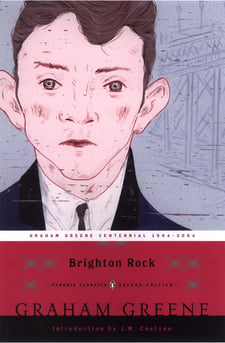 Brighton Rock by Graham Greene was easier to read and more enjoyable than Joyce’s novel. In pre-WWII Brighton, England, teen gangster Pinkie is a calculating killer. Ida Arnold seeks retribution for Pinkie’s murder of Hale, a reporter. I haven’t had a chance to talk to my daughter more about it, and I haven’t read it myself, so that’s as much as I’ve got, so far, on this novel.
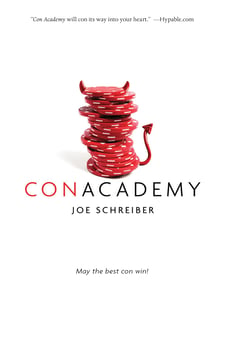 My high-school daughter read Con Academy by Joe Schreiber, a book her older brother and I read years ago. It’s a fast, fun read about a student who’s conned his way into an elite prep school where he meets his match. Whichever of the two con artists can con the richest kid in the school out of $50,000 gets to stay at the school. It’s twisty and complicated.
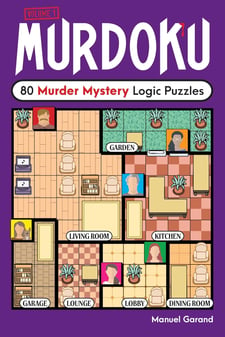 For her birthday, my daughter received Murdoku: 80 Murder Myster Logic Puzzles by Manuel Garand, a book of puzzles in a style she first tried in Games magazine. As you can guess by the moniker, they are a cross of murder mystery (think Clue) and sudoku. The difficulty of the puzzles increases as you progress through the book.
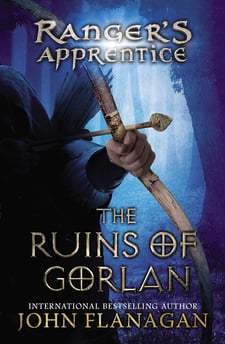 My youngest son read The Ruins of Gorlan, by John Flanagan, the first book in the fantasy Ranger’s Apprentice series, which I’d seen recommended several places for middle school boys. Fifteen-year-old Will has been chosen as an apprentice but doesn’t readily understand the Rangers’ role or the battles they must fight.
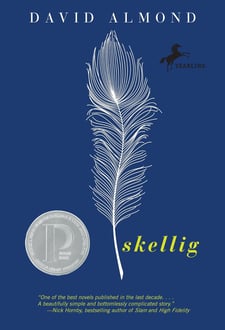 With his class, my son read Skellig, a Printz Honor novel by David Almond about a ten-year-old British boy who discovers a strange creature in his garage amidst the serious illness of his baby sister. The boy, Michael, and his friend Mina bring the creature out into the light. My son said it was a fine book, but he would’ve liked to know for certain what the creature was.
Join the linkup to share what you're reading — or leave a comment below.
Want more details on An Open Book?
You can also sign up for An Open Book reminder email, which goes out one week before the link-up.
Copyright 2026 Carolyn Astfalk
Images: Canva
This article contains Amazon affiliate links, which provide a small compensation to the author of this piece when purchases are made through the links, at no cost to you. Thank you for supporting our Catholic Mom writers in this way.


About the Author

.png?width=1806&height=731&name=CatholicMom_hcfm_logo1_pos_871c_2728c%20(002).png "CatholicMom_hcfm_logo1_pos_871c_2728c (002)")


Comments