



Rachel Watkins takes a look at how being a helicopter parent can hamper your children’s successful flight into the world.
Picture the parents of a toddler learning to walk. They walk along with arms thrown wide open, removing any obstacles to help prevent injury as the first steps are taken. For an older child the parent is running behind the first forays on a two-wheeler. To do otherwise in situations such as this would be irresponsible. Our hovering protection instills success for our children learning new tasks as they grow. This is good parenting.
Recent stories are more off-putting. Parents are showing up to school to argue over a child’s grade. Not at an elementary school, but high school and even college. Parents not only come with their college graduate to a job interview, but want to do all the talking. Hopefully, you are shocked by these situations and not guilty of having done it.
As adults, we know our world is fallen and suffering is a part of life. Our children will also learn this difficult truth as they grow. Our job as a parent is to be there when they do and help them learn from their experiences, not prevent them from happening.
An article over at Parenting.com not only describes what helicopter parenting is but delineates when it becomes harmful to our children. In reading the article myself, I was surprised to find this term was first coined in 1968 — and not by the author, but a teen who endured it.
What Tempts Moms and Dads to Hover?
From the article, we learn helicopter parenting can come from a fear or an overcompensation for what we lack. In other words, do we trust God as we parent and our children as they grow? As adults, we know our world is fallen and suffering is a part of life. Our children will also learn this difficult truth as they grow. Our job as a parent is to be there when they do and help them learn from their experiences, not prevent them from happening.
As our children learn to walk, they will fall, and we will swoop them up and kiss their boo-boo. But as they get older, we need to teach them how to get through the disappointments of not getting past the audition, a broken heart, or an invitation that doesn’t come. We have heartfelt conversations with our children about our own experiences. Hard times can teach resilience and our ever-present love as well as God’s.
Are We Seeking God’s Will for Our Children?
We all want our children to have lives better than our own. But, when that hope and wish becomes a demand and pressure shouldered by our children, it is us living vicariously through them. This type of parenting doesn’t seek God’s will for our children, but only our own will. We never became the superstar, so they have to! Remember the mother of James and John asking about the seating arrangements in heaven?
We may believe our concern and assistance to our children in every situation is a sign of our love, but if it becomes constant hovering, we stand in the way of them becoming confident adults. Modern helicopter parenting most often results in teens or young adults who are either spoiled or fearful of trying anything new. Having never been taught how to solve problems or never having faced a mistake on their own, they don’t know what to do when they encounter an obstacle. They just might head off to college unable to do their own laundry! I discovered this back in the ‘80s, and while I happily made a little side money doing laundry for other students, that soon got old and I gave them the lessons their parents should have.
Modeling Good Parenting
I hesitated to write this article, as my own husband has a “Helicopter Dad” t-shirt he got for Father’s Day a few years ago. But my young adult children gave it to him out of real love and gratitude. On the long list of things Matt made sure our kids knew before leaving the house were knowing how to change oil and a tire on a car. He did practice interviews with them when they started looking for jobs. He was also the designated parent for learning how to drive, help in getting into college and tax returns. My helicoptering was more house bound such as how to cook, grocery shopping, and basic mending. They gave him the shirt out of gratitude for what he had taught them that some of their friends had yet to learn.
When it comes to parenting, the extremes come from smothering them with too much attention or ignoring their needs with an attitude of letting them just figure it out on their own — and both are harmful. There is no quippy, fun name for parents who forgo teaching even the basic skills to their children. It is almost sad to notice the older adults who have found minor fame on their YouTube channels and other social media, teaching skills such as how to tie a tie or how to take care of basic first aid. These online “parents” are filing in where other parents have failed.
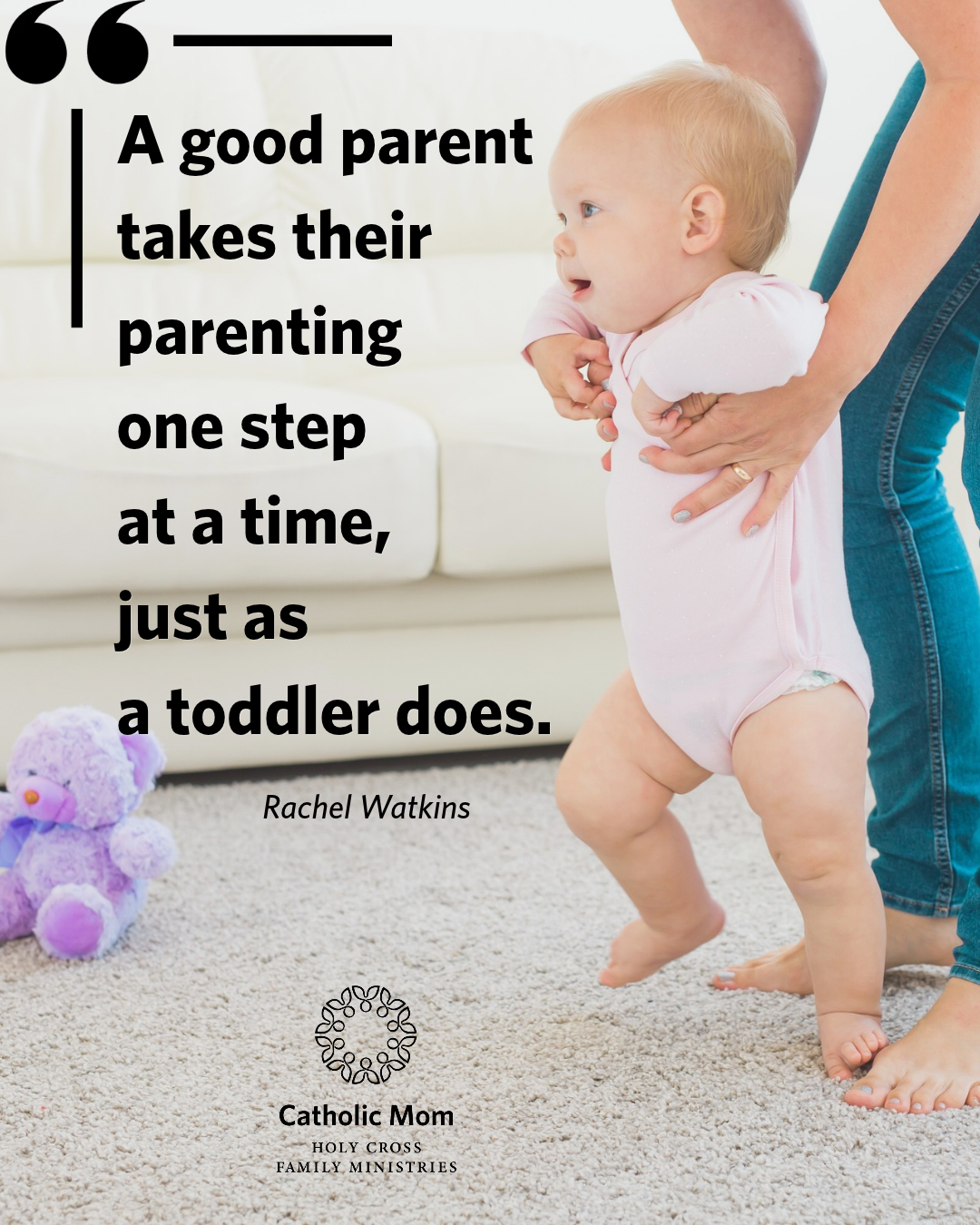
Thinking about where you sit on the parenting spectrum is important, all the time. How will we approach our children as they learn new skills and encounter new situations? A good parent takes their parenting one step at a time, just as a toddler does. We are there when they need us to ensure the path is free of obstacles, but then we watch from a bit of distance as they tackle a path with pebbles. We watch, holding our breath, as they fall but seeing that only their pride has been bruised, we cheer as they get back up and keep going. Before too long they are avoiding the small rocks and climbing over the boulders, smiling as they conquer new heights — on their own, with us at their backs.
Parenting with Prayer
When our children are still at home, we check in on them daily about how they are doing, what new situations have come up, and whether they are feeling strong and confident in themselves. We watch their moods and intervene with loving help when they seem off-kilter, but also see if they are doing well on their own. We teach and explain how the world works and watch how easy or challenging they find it for themselves. We are protective and shepherding as Christ Himself is. We know the storms are out there, and we are ready to tell our children, "Do not be afraid” if they need that reassurance.
We pray for our children every step of the way as they find their way in the world, knowing and accepting that their success is something to celebrate but not anything we can dictate or create for them. God is God, and we are not. Our involvement in our children’s lives should move from daily encouragement and instruction to support as they get older. We move from daily kisses and prayers before bed to updates from texts or phone calls as they work their way through the world. This is the success that really matters, and no pilot’s license is required.

More Resources
Need more help? While I referenced Parenting.com for help in knowing if you are a helicopter parent, CatholicMom.com is an excellent source of advice on how to become a great Catholic parent.
Share your thoughts with the Catholic Mom community! You'll find the comment box below the author's bio and list of recommended articles.
Copyright 2026 Rachel Watkins
Images: Canva


About the Author



Comments