


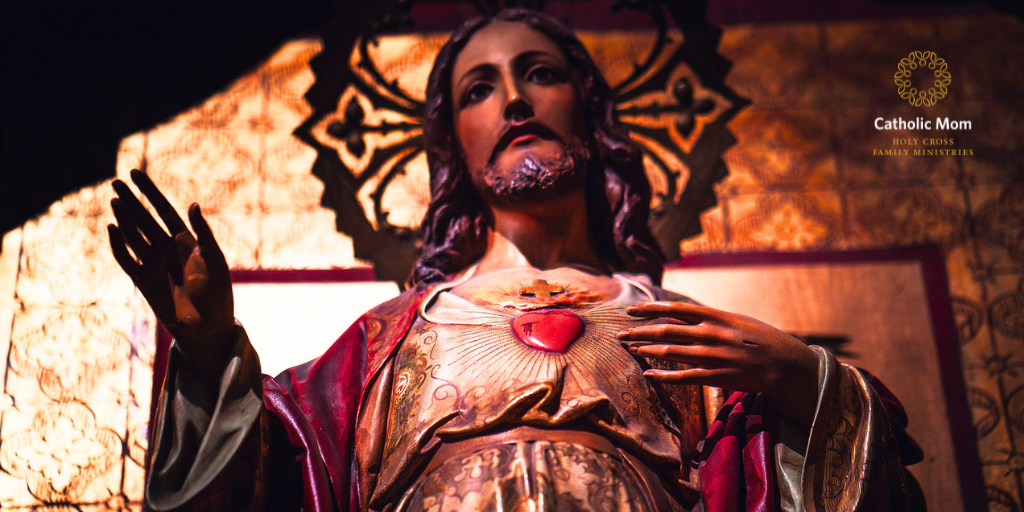
Ivonne J. Hernandez reflects on the beauty of a mother’s heart and how Christ transforms it through His own.
A few weeks ago, I was watching a video of a podcast that had two Sisters of Life as guests. The host read a letter from a mother who had aborted her first child and deeply regretted it. She was struggling to reconcile that with the fact that she now has a little girl whom she really loves, but who would not be if she had allowed her first one to be born. The sisters were visibly moved as they listened to her story. They then commented on how beautifully aware this woman was of her situation, of how much love she had for both of her children, the one born and the one who was not. They said it was the beautiful heart of a mother.
Something about that moment lingered with me. A few days after that, I received a call from my mother. She needed to talk to me about a situation with one of my brothers that was upsetting her. She was worried and needed to have someone listen to her. As I listened to her words, I heard something inside me saying, “Can you hear her mother’s heart?”
A Place of Encounter
When we speak of the human heart, we speak of a twofold reality. We speak of the organ at the center of the body, which purifies and pumps the blood that flows through the whole body, and we speak of the hidden center of the human soul, the place of decision, the place of truth.
The heart “is the place of encounter, because as image of God we live in relation: it is the place of covenant.” (Catechism of the Catholic Church, 2563)
Saint Peter Julian Eymard tells us that “the essence of devotion to the Sacred Heart of Jesus is the love that moved him. Love and heart are synonymous” (Books for Eymardian Formation 1). When we receive the Eucharist and allow His heart to transform ours, we can then become the heart of His mystical body, allowing His grace to flow to all its members.
When Jesus was asked, “Which is the first of all the commandments?”, He replied:
“You shall love the Lord your God with all your heart, with all your soul, with all your mind, and with all your strength. The second is this: You shall love your neighbor as yourself. There is no other commandment greater than these.” (Mark 12:28, 30-31)
The second commandment flows from the first. If we love God with all our heart, if we respond to His love with love, He will change our hearts of stone and give us a new heart of flesh (cf. Ezekiel 36:26). Loving God with all our heart means giving Him our whole heart. He wants our broken hardened hearts, so He can transform our wounds from sources of sin into sources of grace, for ourselves and for others.
This new heart, this heart of flesh, this source of grace, is really His own heart beating in us, dwelling within us, in the place of covenant, the hidden center of the human soul. This most beautiful Sacred Heart, the model and life of love, is with us in the Most Blessed Sacrament. We receive Him, we adore Him, we love Him. He transforms us into Himself.
The unity of the Mystical Body produces and stimulates charity among the faithful: From this it follows that if one member suffers anything, all the members suffer with him, and if one member is honored, all the members together rejoice. (Catechism of the Catholic Church, 791)
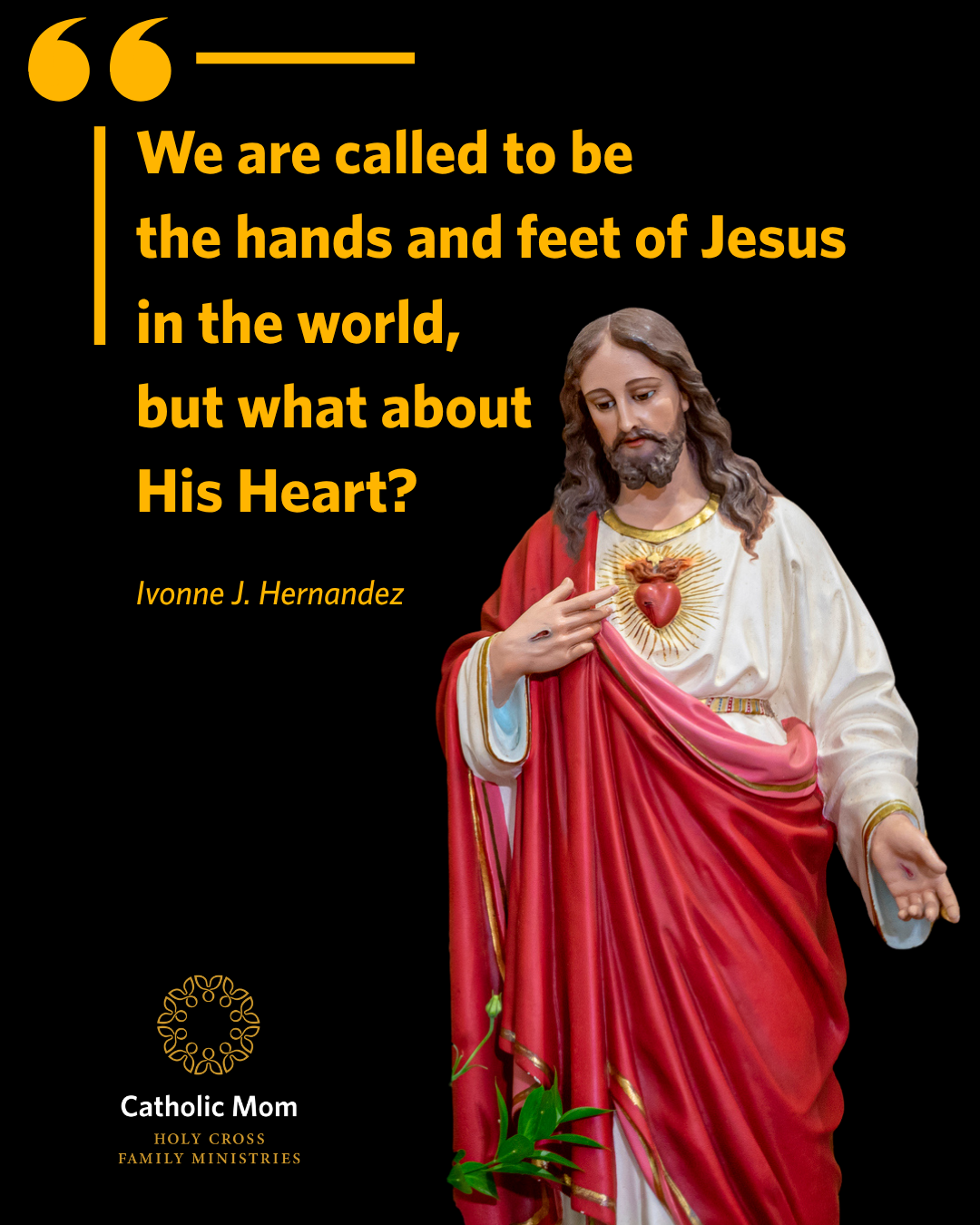
We are called to be the hands and feet of Jesus in the world, but what about His Heart? Jesus is the Head of His Mystical Body, and we, the Church, are the rest. We must bring all of Him to the world. We must become that Heart, overflowing with His Blood, pumping His Grace to every part of the Body.
When circulation is cut off, the physical body gets diseased, and a part has to be amputated if blood flow is not restored in time. By remaining united to the Heart of Jesus in the Most Blessed Sacrament, we are directly connected to the source of life, and, by remaining in Him and allowing Him to work through us, we can bring His love to our neighbor, who is really part of our own Body in Christ.
Two Hearts
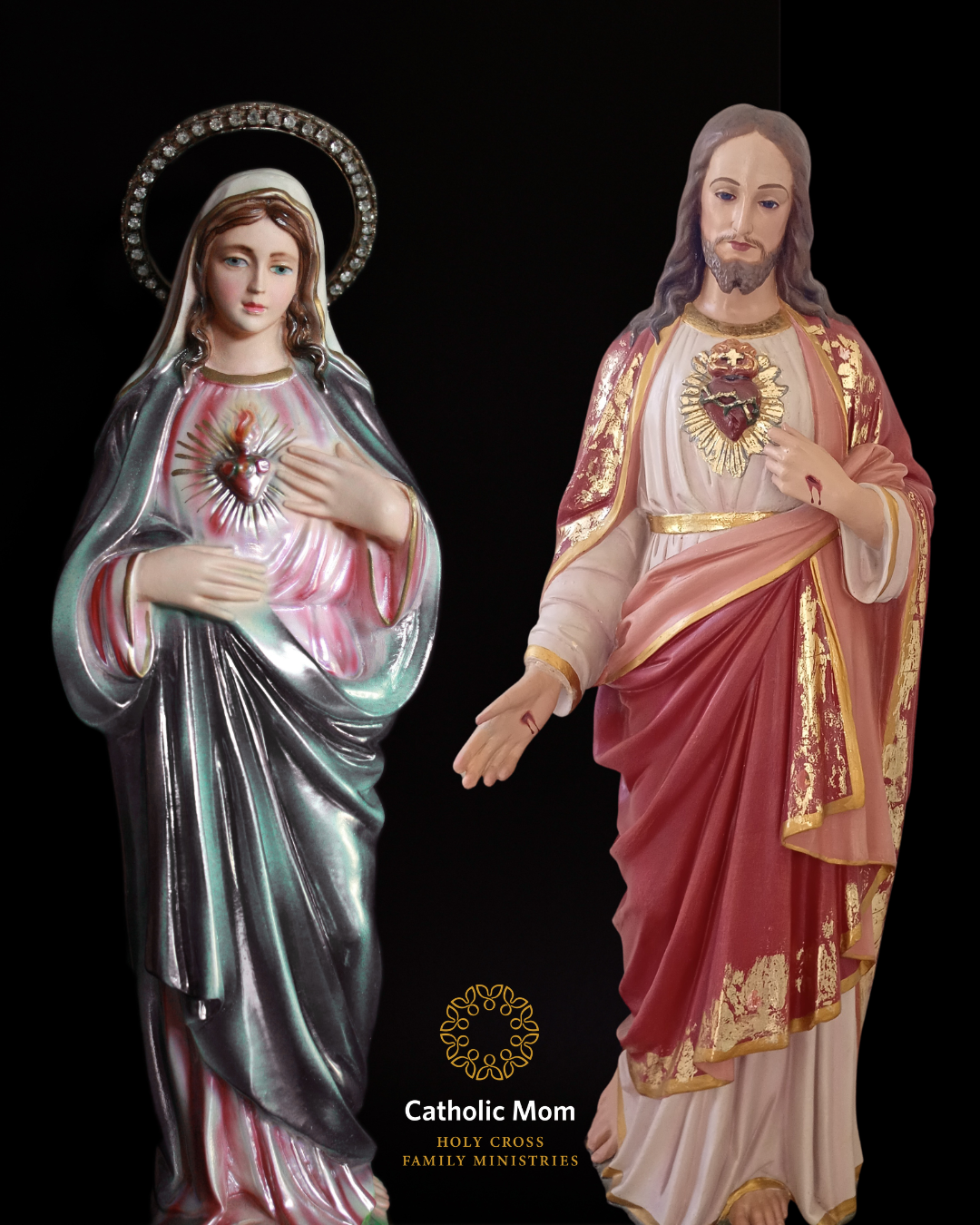
The month of June is dedicated to the Sacred Heart of Jesus. And even though the date of the Solemnity itself changes each year, it is always followed by another beautiful feast day: the Feast of the Immaculate Heart of Mary. There is no degree of separation between these two hearts. And in pondering this mystery we come to see that there is no degree of separation between God and our own hearts.
It is this unity of the Mystical Body that we celebrate on that day. In honoring Our Mother, in rejoicing together, we become a community of one heart and mind. And together, with Our Mother, we adore the Sacred Heart. Can we hear her mother’s heart?
Share your thoughts with the Catholic Mom community! You'll find the comment box below the author's bio and list of recommended articles.
Copyright 2026 Ivonne J. Hernandez
Images: iStockPhoto.com, licensed for use by Holy Cross Family Ministries; Canva


About the Author


.png?width=1806&height=731&name=CatholicMom_hcfm_logo1_pos_871c_2728c%20(002).png "CatholicMom_hcfm_logo1_pos_871c_2728c (002)")


Comments