


Janelle Peregoy introduces four prominent Black Catholics who are on the path to canonization.
This Black History Month, enjoy the stories of four prominent Black Catholics who are on the path to canonization. Any of these extraordinary men and women may become the first African-American saint from the United States. Saint Martin de Porres, a lay Dominican from Peru, is widely recognized as the first Catholic saint from the Americas with African and mixed-race ancestry.
Servant of God Thea Bowman, F.S.P.A.
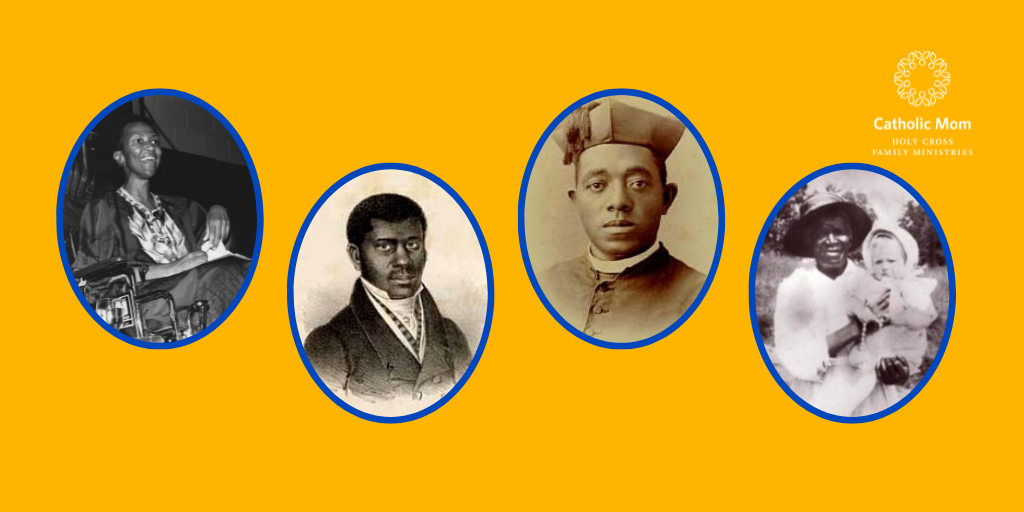
 Sister Thea Bowman, F.S.P.A. was born in 1937 in Canton, Mississippi. She converted to Catholicism as a child, having been inspired by the witness of how Catholics seemed to care for each other, especially the poor and vulnerable. She later joined the Franciscan Sisters of Perpetual Adoration and dedicated her life to spreading the joy of the Gospel. Having grown up amid the blatant racism of segregation, Sister Thea fully embraced the cultural and spiritual renewal she experienced during the 1960s — both the Second Vatican Council and the Civil Rights movement.
Known for challenging the Church to accept her as “fully black and fully Catholic,” she dedicated her ministry to sharing the abundance of African American spirituality through evangelization, writing, teaching and singing. Though the final years of her life were strained with breast cancer, she remained undeterred from sharing the boundless love of God. When asked how she understood suffering, she said, “I don’t make sense of suffering. I try to make sense of life…I try each day to see God’s will.” Learn more about her cause for canonization.
Venerable Pierre Toussaint
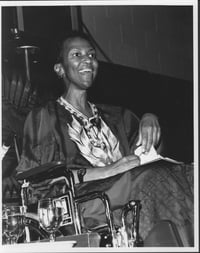
 Pierre Toussaint was born enslaved in 1766 in modern-day Haiti. He migrated to New York in his early twenties. To provide for his family, he became a renown hairdresser. Alexander Hamilton’s sister-in-law was one of his first clients. Pierre was known for his generosity, even providing for the widow of his former enslaver. His choice to respond to injustice with compassion, was in of itself, a quiet act of dignified resistance. Pierre and his wife, Juliette, opened their home as a sanctuary to the marginalized. They welcomed orphans, the sick during an epidemic of yellow fever, and anyone in need, regardless of status or race.
A devout Catholic, Pierre sustained his faith through attending daily Mass at St. Peter’s, the same parish where Saint Elizabeth Ann Seton attended. Later urged to retire and enjoy his accumulated wealth, he responded, “I have enough for myself, but if I stop working I have not enough for others.” Denied entry to the old cathedral due to his race, he is now buried under the altar of St. Patrick’s Cathedral in Manhattan — the only layperson honored accordingly.
Venerable Augustus Tolton
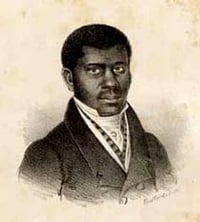
 Father Augustus Tolton was born in 1854 as the country was plummeting into the rupture of Civil War. Drawn to religious life at a young age, Augustus taught religion classes to other black children in his home of Quincy, Illinois. Seminaries denied him entrance due to his race. The local clergy, recognizing his zeal for the Lord, began privately teaching him theology. Eventually, he was ordained in 1886 at the St. John Lateran Basilica in Rome.
Responding to Father Augustus’ ordination, Cardinal Giovanni Simeoni remarked, “America has been called the most enlightened nation; we'll see if it deserves that honor. If America has never seen a black priest it has to see one now!” Known for his gentle demeanor and quiet determination against the reality of racial inequities, Father Tolton would minister faithfully to Black Catholics in the Archdiocese of Chicago until his death in 1897 at the age of 43. Learn more about his cause for canonization.
Servant of God Julia Greeley
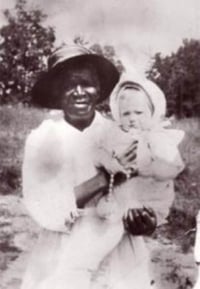 In June of this year, the U.S. Conference of Catholic Bishops will consecrate the United States to the Sacred Heart of Jesus. This would have delighted Servant of God Julia Greeley, who was deeply devoted to the Sacred Heart and her local Sacred Heart league. Julia was born into slavery in Hannibal, Mississippi and was likely emancipated from slavery in 1865. Julia’s employer, Mrs. Dickerson, was a devoted Catholic and encouraged Julia’s prayerful conversion to Catholicism.
Nicknamed “Denver’s Angel of Charity” despite her own meager means, Julia would often leave coal, groceries, or other necessities overnight at the home of poor neighbors. She was a friend to the local clergy and religious sisters throughout Denver and would often do odd jobs for local parishes. She joined the Third Order of St. Francis (Secular Franciscans) in 1901. After her death in 1918, she was buried in a Franciscan habit. Learn more about her cause for canonization.
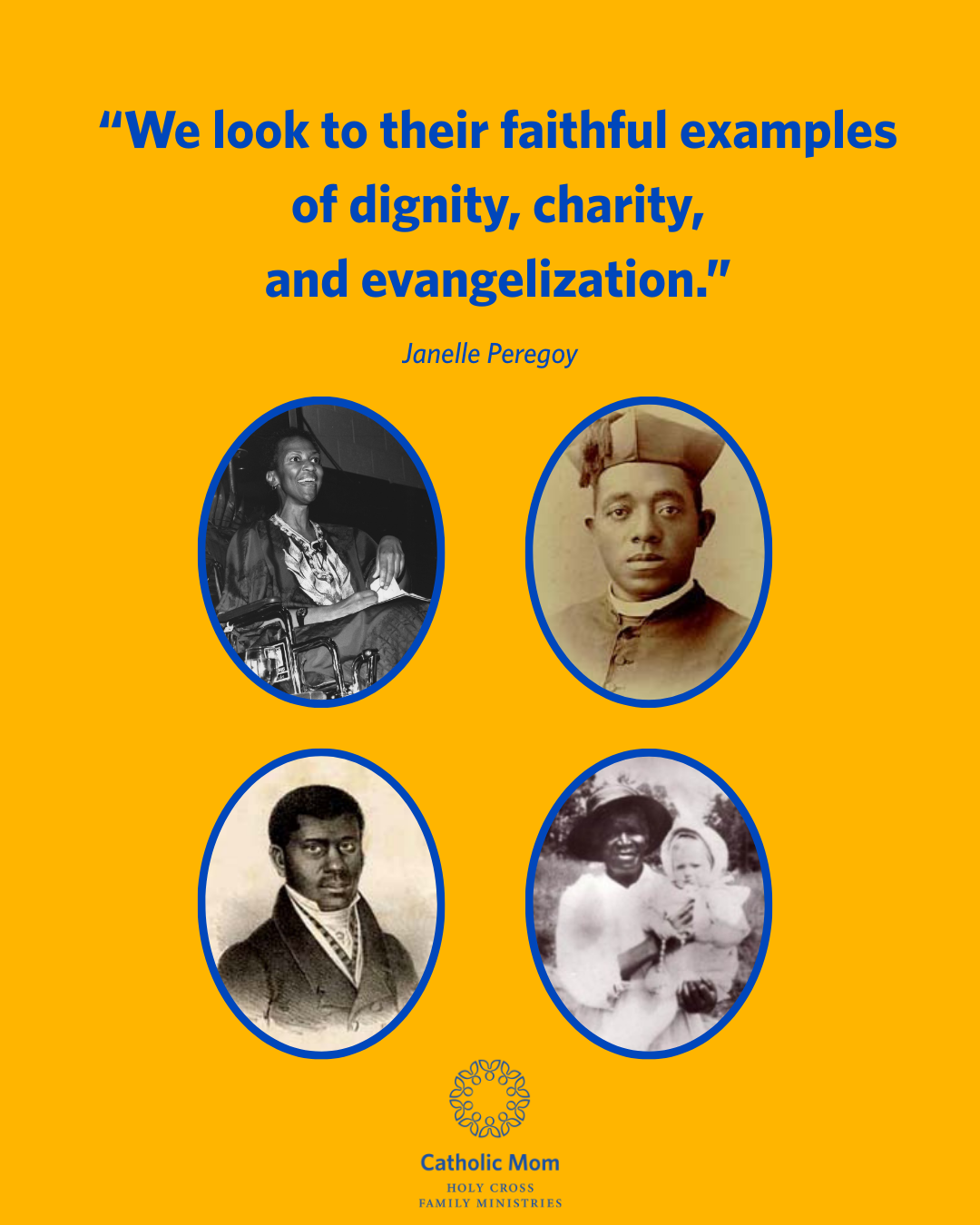
During the month of February, please pray for these holy women and men as we look to their faithful examples of dignity, charity, and evangelization.
Share your thoughts with the Catholic Mom community! You'll find the comment box below the author's bio and list of recommended articles.
Copyright 2026 Janelle Peregoy
Images: KatieHutchison, CC BY-SA 4.0 , via Wikimedia Commons; http://docsouth.unc.edu/neh/leehf/, Public domain, via Wikimedia Commons; Unidentified photographer, Public domain, via Wikimedia Commons; Denver Catholic, Public domain, via Wikimedia Commons


About the Author

.png?width=1806&height=731&name=CatholicMom_hcfm_logo1_pos_871c_2728c%20(002).png "CatholicMom_hcfm_logo1_pos_871c_2728c (002)")




Comments