


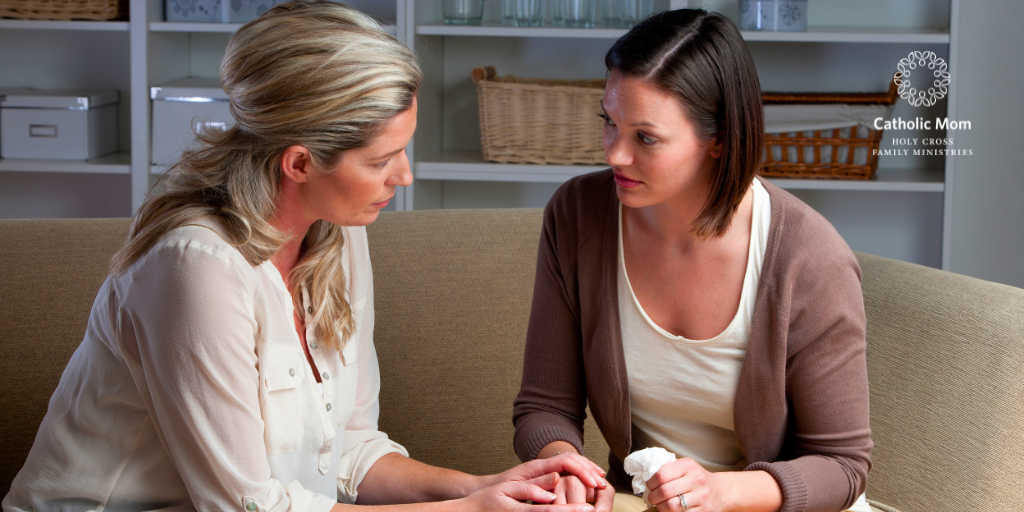
Pondering the death of her unborn baby, AnneMarie Miller reflects on the gift of community.
I lay on the bed at my prenatal appointment and sobbed. I was just over 16 weeks pregnant and had anticipated hearing a healthy baby heartbeat before chatting with my midwife about prenatal care. However, a bedside ultrasound confirmed what I had feared when my midwife was unable to find the heartbeat on Doppler: My baby was dead.
I drove my five living children home and shoved food in my mouth, desperately hoping that maybe my baby was somehow still alive and just needed a jolt of chocolate. I prayed for a miracle; for my still baby to move once again — but when the technician at my next ultrasound that day silently searched for fetal heart tones, the truth pierced me anew. God did not work the miracle of bringing my baby back to life in my womb. I was now in the category of “women who have had a miscarriage.”
Many married couples mourn the death of their child in silence. Some people tell others when a miscarriage occurs, but their news is not always received with compassion. Not only that, but each woman — as well as her husband and other family members — grieves differently.
What would my grief process look like?
Grieving with the Church
As I faced my new reality on that fateful Thursday morning, I knew I could not go through this ordeal alone. I needed the support of the Body of Christ, the Church. When I left my prenatal appointment, I immediately texted several family members and friends to let them know what was happening and to ask for prayers. I also asked for prayers in a couple of Catholic writer online groups. After the official diagnostic ultrasound that afternoon confirmed the death of my baby, I continued to ask other people for prayers as I shared the sorrowful news. Prayers and support began flowing in, and one friend even sent me a list of local Catholic miscarriage resources.
I grieved with my husband and living children, but our mourning process expanded to include other people. Our home became an “open house” of sorts as people daily brought food, played with my kids while I rested, and sat with me as I talked through my experience. Many friends quietly listened to me as I processed my grief, and some even shared incredibly vulnerable ways that God had been offering healing and redemption in their lives. I don’t think I’ve ever cried with so many different people; both people I knew well and people I had barely even spoken with before.
When I went to church following my miscarriage, I unashamedly sobbed in the pew. Before and after Mass, several other people — some of whom I barely knew — offered me hugs, prayers, and condolences. Although they could not comprehend my exact experience of grief and loss, they too mourned the death of my child. Many of them had gone through deep grief in some way prior, and they received my outpouring of sorrow with love and compassion.
Life After Miscarriage
I don’t know if I’ll ever fully comprehend the tremendous gift that I’ve received from this experience of grieving in community. I don’t think I’ll ever fully be able to express my gratitude to other people for their love, support, and prayers. Within a few days of sharing the news with others, hundreds of people — internationally — were praying for my family and me. This fact alone overwhelmed me with gratitude and disbelief. I’m not a “famous” Catholic by any stretch of the imagination; yet dozens upon dozens upon dozens of people were offering prayers and sacrifices for our family as we grappled with the death of our little one. At times, I sat back on the couch weeping, overwhelmed with gratitude alongside all of my grief.
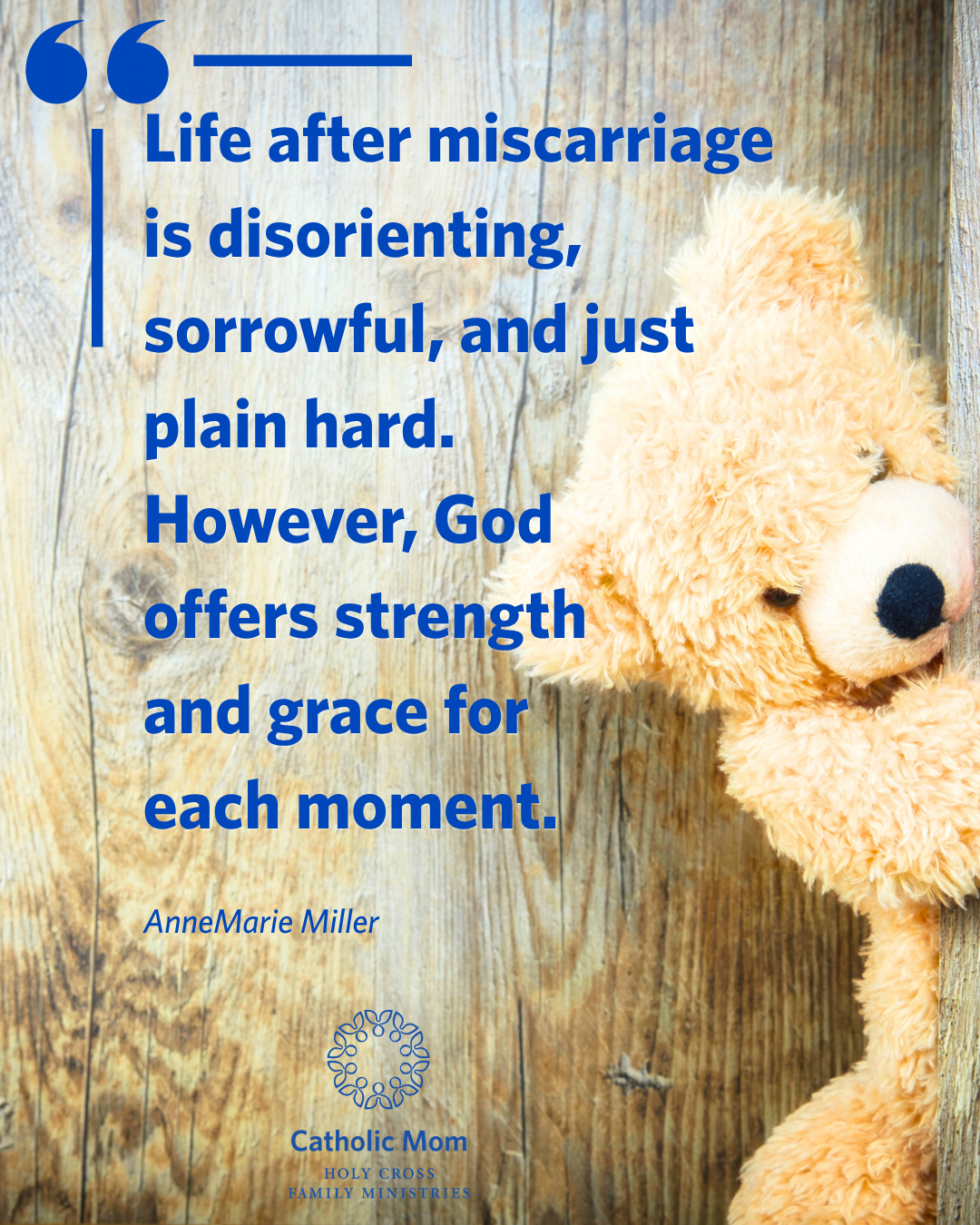
Life after miscarriage is disorienting, sorrowful, and just plain hard. However, God offers strength and grace for each moment. Many unknowns and uncertainties linger in the distance, but I know that God is with my family and me. So is the Body of Christ as they pray and cry for, and with, us.
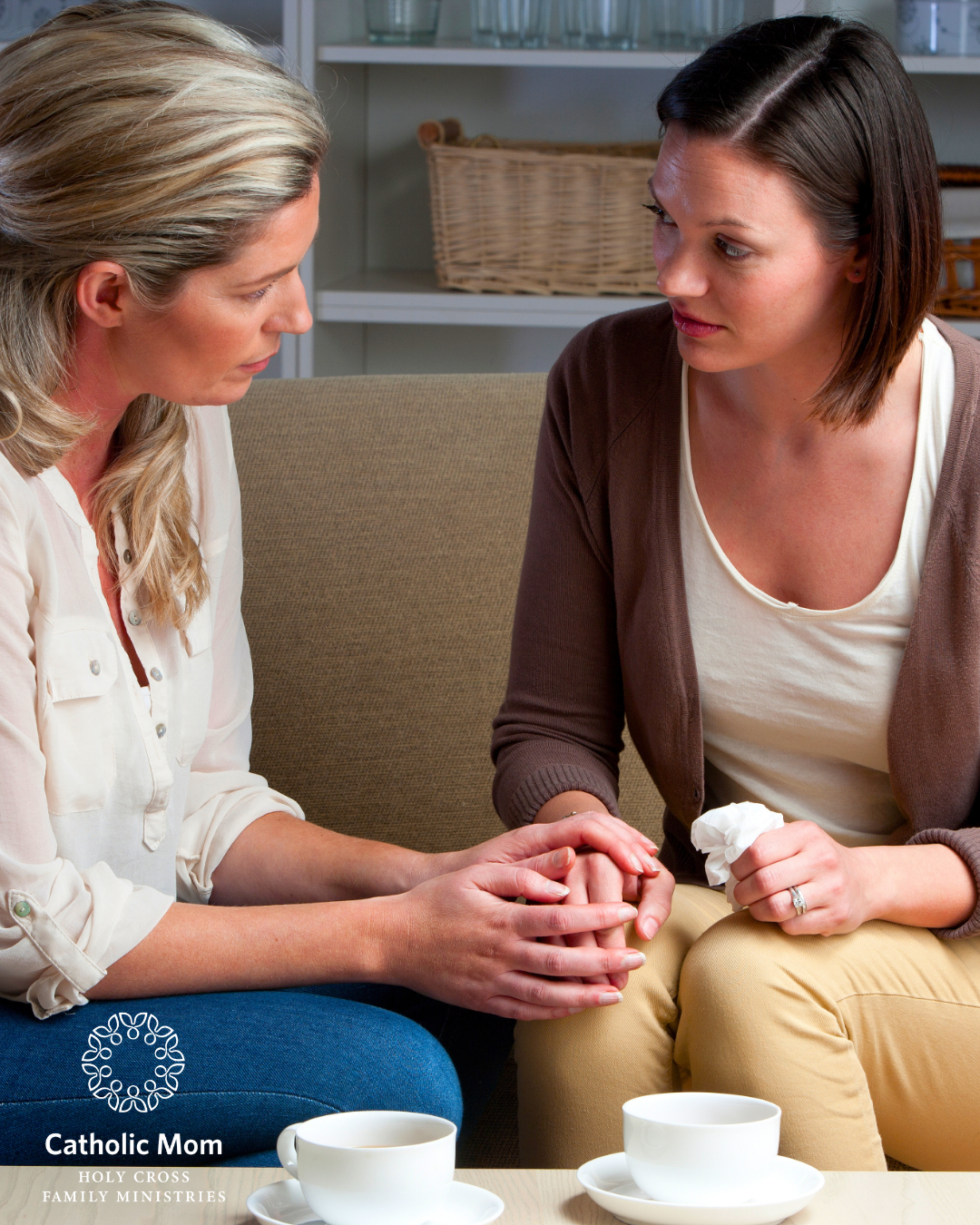
It can be hard to know how to help couples who are suffering a miscarriage. Although I have found value in “grieving in community,” not every woman feels comfortable with this approach or has a supportive community near her.
What are some compassionate ways you can help couples who are going through a miscarriage?
Share your thoughts with the Catholic Mom community! You'll find the comment box below the author's bio and list of recommended articles.
Copyright 2026 AnneMarie Miller
Images: Canva


About the Author


.png?width=1806&height=731&name=CatholicMom_hcfm_logo1_pos_871c_2728c%20(002).png "CatholicMom_hcfm_logo1_pos_871c_2728c (002)")


Comments