


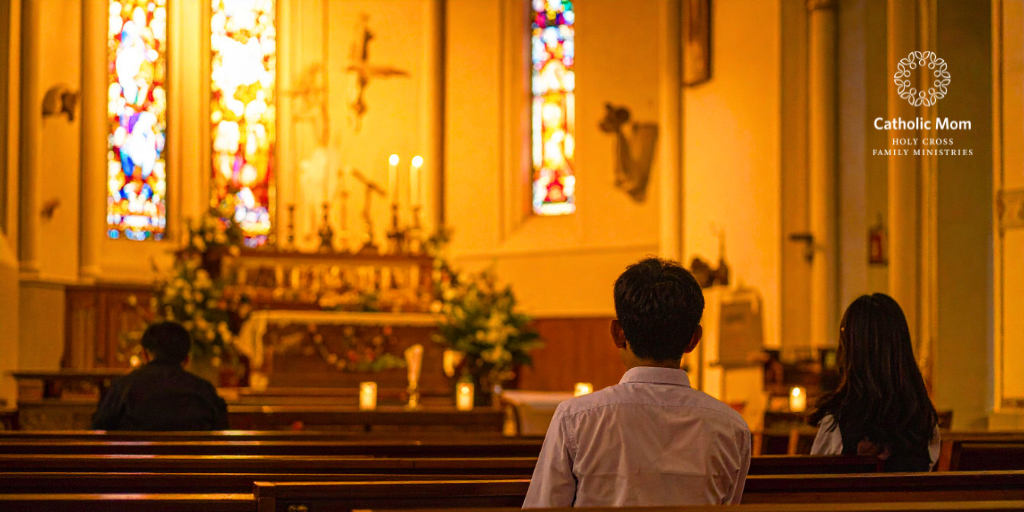
Elena LaVictoire's parish is currently hosting the relics of Saint Christina, an early Christian martyr.
I have always been fascinated with the idea of relics. I think it goes back to a rosary my grandma had, with a tiny, thin piece of a saint’s bone in the clear centerpiece. First of all, it was interesting to me that someone took the time to shave a piece of bone off of a saint and then place it in the rosary. How did Grandma get it? I have no clue. But I used to look at it carefully and wonder about the person it came from, about his or her life, and what made this bone so special.
My mother had something similar in her wedding rosary. It too had a clear centerpiece, but it was said to contain a drop of water from Lourdes! Did it miraculously bless my mom on her wedding day? The water has since evaporated, but does the blessing remain? I like to think it does, since I still have this rosary some 17 years after Mom’s death and almost 70 years since her wedding.
What is a Relic?
The word relic comes from the Latin reliquiae, which means "remains."
The church has always revered relics and religious objects as sacred and helpful to the faithful. There is some biblical backup to this. In the Old Testament, the Israelites placed the Ten Commandments, Aaron’s rod, and a plate of manna into the ark of the covenant for safekeeping and as a blessing to the faithful.
In 2 Kings, a dead man is thrown into the tomb of the prophet Elisha. The man instantly came back to life upon making contact with the prophet's bones. The bones would be what we consider a first- degree relic.
The New Testament also contains examples of relics. In the book of Matthew, a woman suffering from a chronic illness reaches out and touches the hem of Jesus’s robe and is instantly cured. After the Ascension, the shadow of Saint Paul was enough to cure anyone it fell on.
It is not the relic itself that is powerful, but God working through the relic. Also, although we venerate and respect relics, we do not worship them. Saint Jerome put it this way:
We do not worship relics, we do not adore them, for fear that we should bow down to the creature rather than to the creator. But we venerate the relics of the martyrs in order the better to adore Him whose martyrs they are. (Ad Riparium, i, P.L., XXII, 907)
All Relics Are Not the Same
The church realized that these items, which have been touched by the holy men and women of God, and indeed the bodies of the holy ones themselves, are holy and powerful for the benefit and use of the faithful.
As mentioned above, a first-degree (or first-class) relic is an item with a direct connection to a saint, such as the body, bones, flesh, or hair, or something closely associated with the saint, such as the wood of the true cross.
A second-degree (or second-class) relic is something that the saint used regularly, such as a rosary, a crucifix, or a piece of cloth (such as Veronica’s veil).
The third-degree (or third-class) relic is the most common. That is a piece of cloth, metal, paper — really anything that has been touched to a first- or second-degree relic.
Relic Visits
A few years ago, Father Carlos Martin brought the relic of Saint Jude Thaddeus's arm to our parish. People lined up down the street to come into the church, see the relic, and pray. We were encouraged to touch our rosaries, prayer cards, wedding rings, and anything we wanted to use to create a third-degree relic, in the rare opportunity to see such a relic.
Recently, though, my parish has had the honor of hosting the complete relics of Saint Christina, an early Christian martyr. Not much is known about the saint, and she may have never been discovered at all except for the efforts of Pope Pius XI (1922-1939). Pius had an interest in archaeology and established the Pontifical Commission for Sacred Archaeology. During these efforts around the Vatican that, the remains of young Christina were found. We know almost nothing about her life except that she was buried among Christians, she was very young, about 13 or 14 years old, and she was a martyr. We know that because she was buried with a vial of her blood, which was an indication that she was noted to have died a martyr's death.
The bishop of the Diocese of Cleveland at the time, Bishop Joseph Schrembs, was an enthusiast about this endeavor and donated generously to the excavation. In recognition of his generosity, the Pope gifted the Diocese of Cleveland the complete remains of Saint Christina. The young Roman girl, who probably never traveled more than 10 miles from her home in her life, traveled from Rome to France, and then, accompanied by the Bishops of Detroit and Cleveland, by steamboat to her new home in the Cathedral of St. John in Cleveland, Ohio.
Interestingly, while renovations are going on in the Cathedral of St. John in Cleveland, Saint Christina’s relics will be housed at St. Sebastian in Akron, OH, for around the next six months! We are happy to have her.
During that time, we can pray for her intercession before her relics, marvel at the bravery that led her to defend her faith even unto death, and ask her intercession for our special intentions.
We can also make our own third-degree relics for friends and family by pressing our items to her glass-enclosed case. When the bishop came to Akron to leave Saint Christina with us, he prayed that the parish receive many great blessings from her intercession.
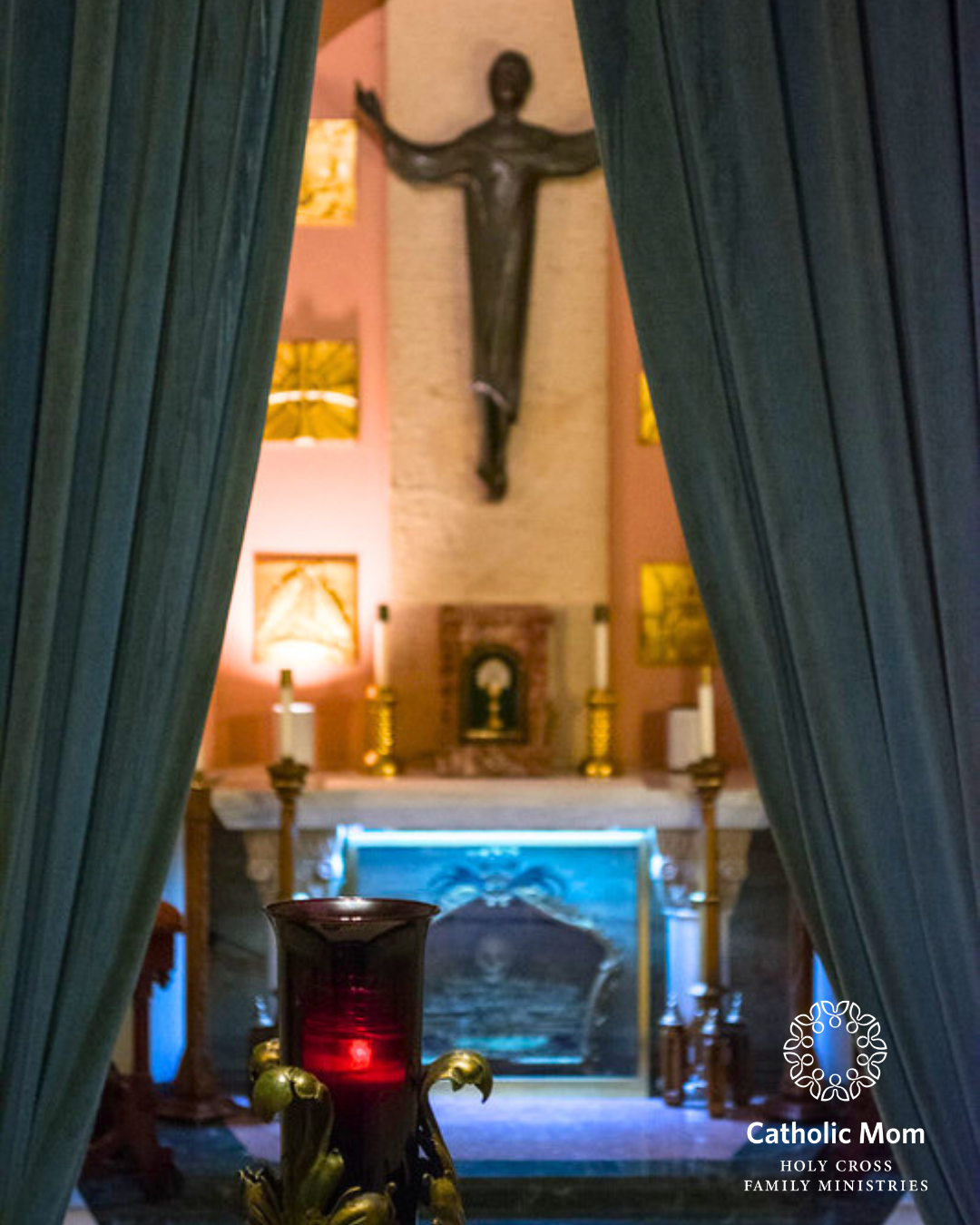
On a personal note, my granddaughter will be confirmed this year and will be doing preparation while Saint Christina’s relic is with us. I am praying that, through her intercession, my granddaughter and all the confirmandi will be strengthened and inspired to grow in their faith and to learn from the examples of the lives of the saints.
I am looking forward to that.
Saint Christina, pray for us.
Share your thoughts with the Catholic Mom community! You'll find the comment box below the author's bio and list of recommended articles.
Copyright 2026 Elena LaVictoire
Images: (top, center) Canva; (bottom) copyright 2026 Elena LaVictoire, all rights reserved.


About the Author


.png?width=1806&height=731&name=CatholicMom_hcfm_logo1_pos_871c_2728c%20(002).png "CatholicMom_hcfm_logo1_pos_871c_2728c (002)")


Comments