


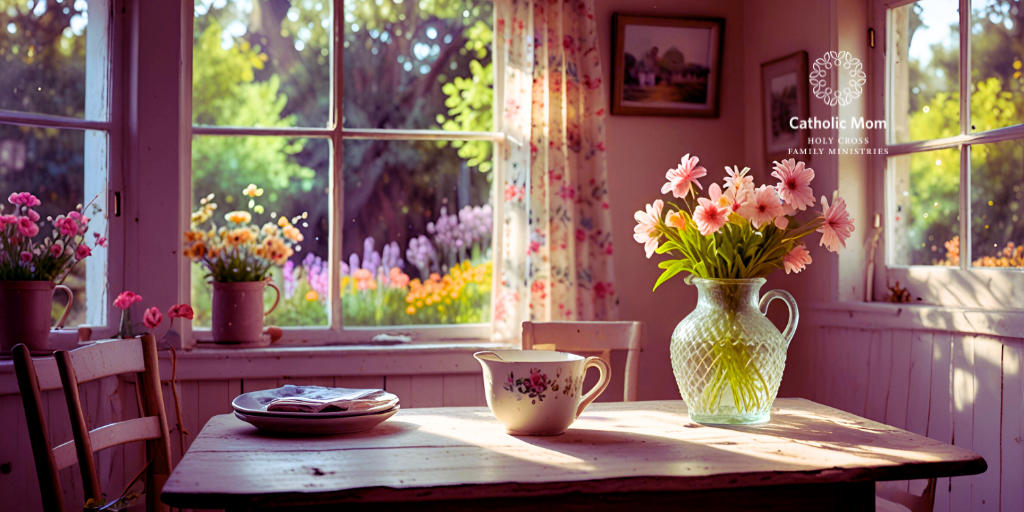
Neena Gaynor reflects on how true peace in a busy homesteading life comes not from nostalgia or self-sufficiency, but from the rooted faith Marcus Grodi explores in his new book.
Learning Contentment
By Marcus Grodi
Published by EWTN/Sophia Institute Press
Too many of us who are first-generation homesteaders, farmers, and seekers of a slower, simpler life forget what tugged us toward it.
We long for the peace our grandparents and great-grandparents seemed to have. We admire their gardens, their bread, their front porches, their regular family dinners, their self-sufficiency, but those were the fruits — not the roots — of their peace.
In his new book, Learning Contentment, former host and founder of the Coming Home Network, Marcus Grodi shares that so many of us are restless, searching for peace and looking at the past like all the answers are buried there. In reality, that pre-smartphone age wasn’t perfect, but it did have something we often forget.
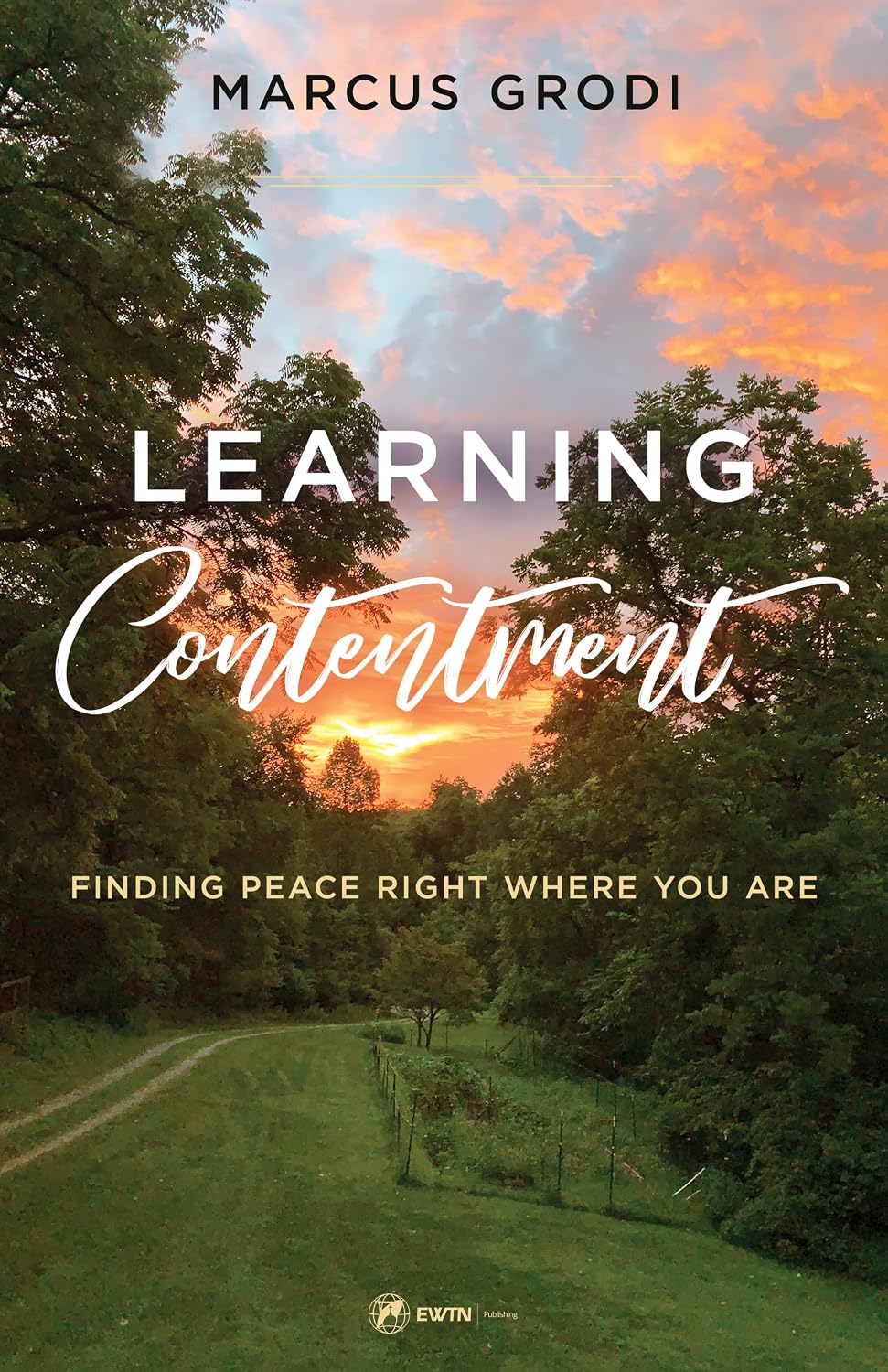
When my husband, Wade, and I shared our conversion story on The Journey Home, we ended the day over lunch with the team, including Mr. Grodi. Between sandwiches and smiles, we listened to their stories and the hearts behind their beautiful mission of walking alongside those seeking Christ and His Church.
Every time Marcus spoke, the room grew still. Everyone listened intently, hanging on his every word because they carried the weight of lived faith.
A Book That Feels Like a Conversation
One of my favorite things in a book is when I can hear the author’s voice through the pages. Learning Contentment is like sitting across the table from Marcus. It’s the kind of book that feels more like a conversation than a lecture, with words that linger long after you’ve closed the cover — including his reminder about the temptation to look back to the “good ole days” and assume that life fifty, one hundred, or two hundred years ago is to be preferred.
I tend to praise those eras as simpler, even worthy of imitation as pounds and pounds of blackberries sit on my counter ready to be made into jam. Yet, I’ve been called away to serve at Vacation Bible School, work in the baseball team’s concession stand, and stuck on the phone with the insurance company for an hour. By the time I ended the call, someone needed help finding their jersey, someone else needed a ride, a diva-duck was in the swimming pool, and supper was starting to smoke on the stove. Those berries would’ve already been jam if I lived in a pre-industrial age … but if proof is indeed in the pudding, is holiness in the jam?
Probably not.
“I think is also essential that each of us accept the fact that we are living now in this time in history through the wisdom and will of God,” Grodi writes. God has a plan for each of us, and it includes Him first and foremost.
The garden and fields weren’t the source of Granny and Pappy’s peace. It was the place where they lived out their trust in God’s providence. Their homes weren’t calm because life was easy (far from it!). They were, however, more anchored by prayer, sacrifice, gratitude, and the conviction that every good thing came from the Lord.
It’s a beautiful and even necessary thing to care about what we eat, to steward the land well, to raise children with intention, and to reclaim forgotten skills. But if we pursue the fruit without planting the roots, we’ll always find ourselves chasing something that feels just out of reach. Contentment isn’t found in the pace of life, but in the posture of the heart.
Let’s not romanticize the lives of those who came before us while forgetting the faith that sustained them. The peace we admire didn’t grow from sourdough starters or flourishing gardens. It grew from hearts that belonged to Christ … and those bloom right where God plants them.
If your heart could use a little more peace and a little less striving, Learning Contentment is a wise a steady companion.
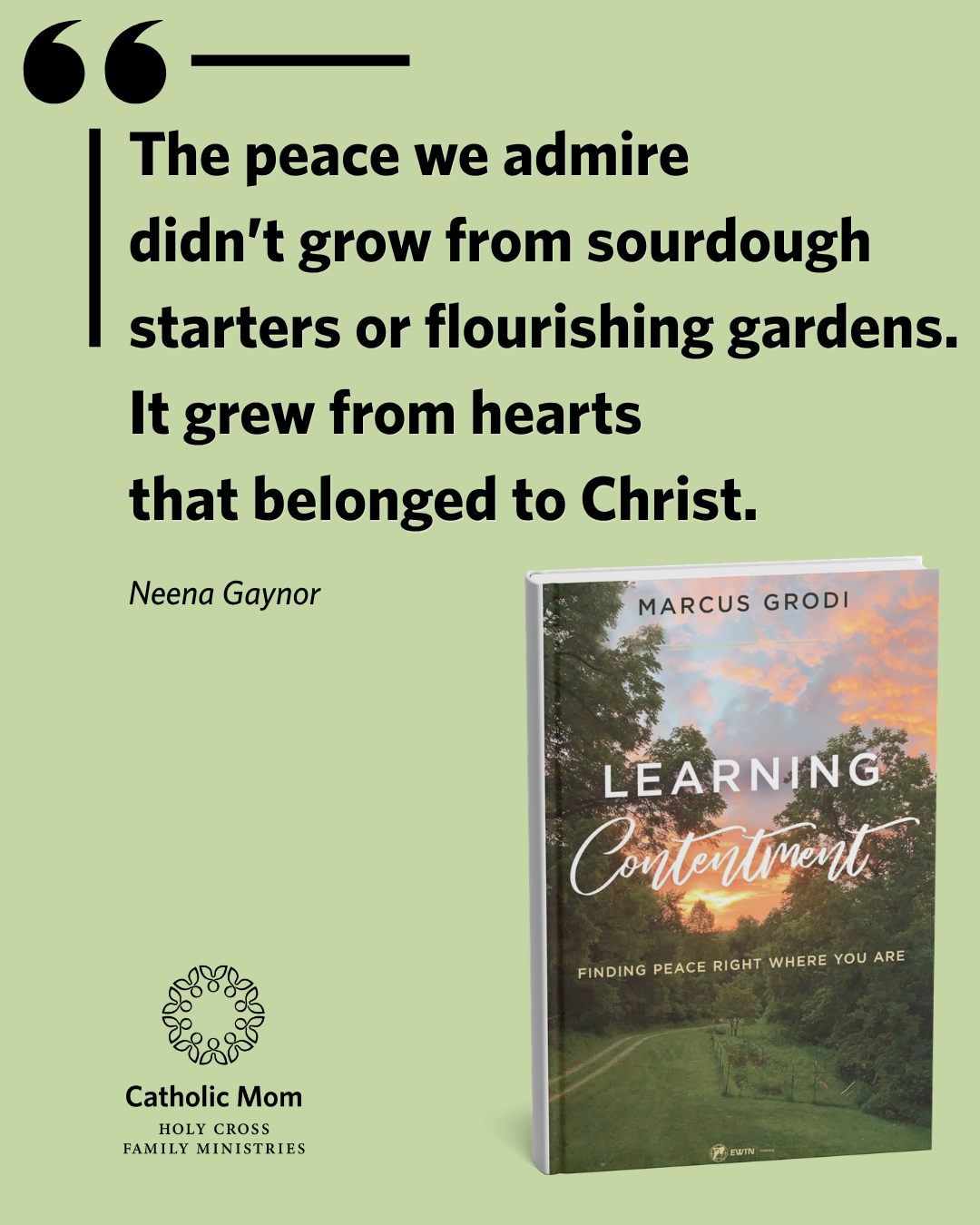
Ask for Learning Contentment at your local Catholic bookseller, or order online from Amazon.com or the publisher, Sophia Institute Press.
Is this a book you'd like to read? Share your thoughts with the Catholic Mom community! You'll find the comment box below the author's bio and list of recommended articles.
Copyright 2026 Neena Gaynor
Images: Canva


About the Author

.png?width=1806&height=731&name=CatholicMom_hcfm_logo1_pos_871c_2728c%20(002).png "CatholicMom_hcfm_logo1_pos_871c_2728c (002)")


Comments