



Johanna Stamps uses a key moment as a caregiver to her elderly parents as a reminder we all need.
It has been an adjustment in my household to see my parents (at age 86) running on so little energy. What’s shocking to me is how similar this is to the experience of people in my life who are processing loss. The grace we’ve learned to give each other in our home is often the same remedy needed for those struggling with major grief. In fact, this same grace is abundantly available to us from God if we learn to pause and listen.
The Important Statement
Every few days, we repeat this key phrase in our household: “Remember, just do one thing today.” Then we collectively breathe.
Getting old is not for sissies.
Going through an unexpected loss is equally not for the faint of heart.
We burn through precious, excessive energy when we repeatedly say things to ourselves like:
“You’re not doing enough,” or “You’re not enough! What’s wrong with you?”
In times of intense loss — when our body, mind, and spirit are completely overwhelmed — the experience can be remarkably similar to aging:
- We seem physically unable to do the things that were once easy.
- We question or rethink almost every element of our existence.
- We are overwhelmed by intensely critical self-talk.
Thoughts That Keep Us Captive (And Burn Us Out)
These types of thoughts are highlighted beautifully in Mike Foster’s work, The Seven Primal Questions. Foster writes that these are the almost innate questions that live inside us, often born in infancy and childhood:
- Am I safe?
- Am I secure?
- Am I loved?
- Am I wanted?
- Am I successful?
- Am I good enough?
- Do I have purpose?
Are these familiar to you? Which one jumps out at you?
If you’re going through a time of major loss or transition, it’s quite possible that all of these questions are swirling in your mind — often at the least opportune moments. It’s as if a completely new lens has been placed over your life, forcing you to see everything in a different light.
As Christians, what happens when — instead of allowing a thought to swirl like a tornado in our minds — we bring it to God and wait for a peace-restoring response? When was the last time we truly made space to sit and listen?
It’s up to you whether this lens will foster self-criticism and rob you of energy, or if you will choose to approach these questions with grace and surrender.
Finding Self-Discovery and Self-Preservation
In low-stress times, reevaluation can be exciting and liberating. During seasons of severely limited energy, however, it can be beyond painful and exhausting. It feels forced upon us.
It can even get to the point where you ask yourself: “Am I even here anymore? Do I even exist?”
This isn’t a morbid thought or an inquiry about self-harm; it is an attempt to understand what it means to exist when we are no longer performing at our previous baseline.
Because that’s the real question, right? How much of our life is just a performance?
When we are used to operating at high energy and high performance, and suddenly multiple parts of our being hit rock bottom, questioning and self-flagellation consume every last drop of our energy reserves.
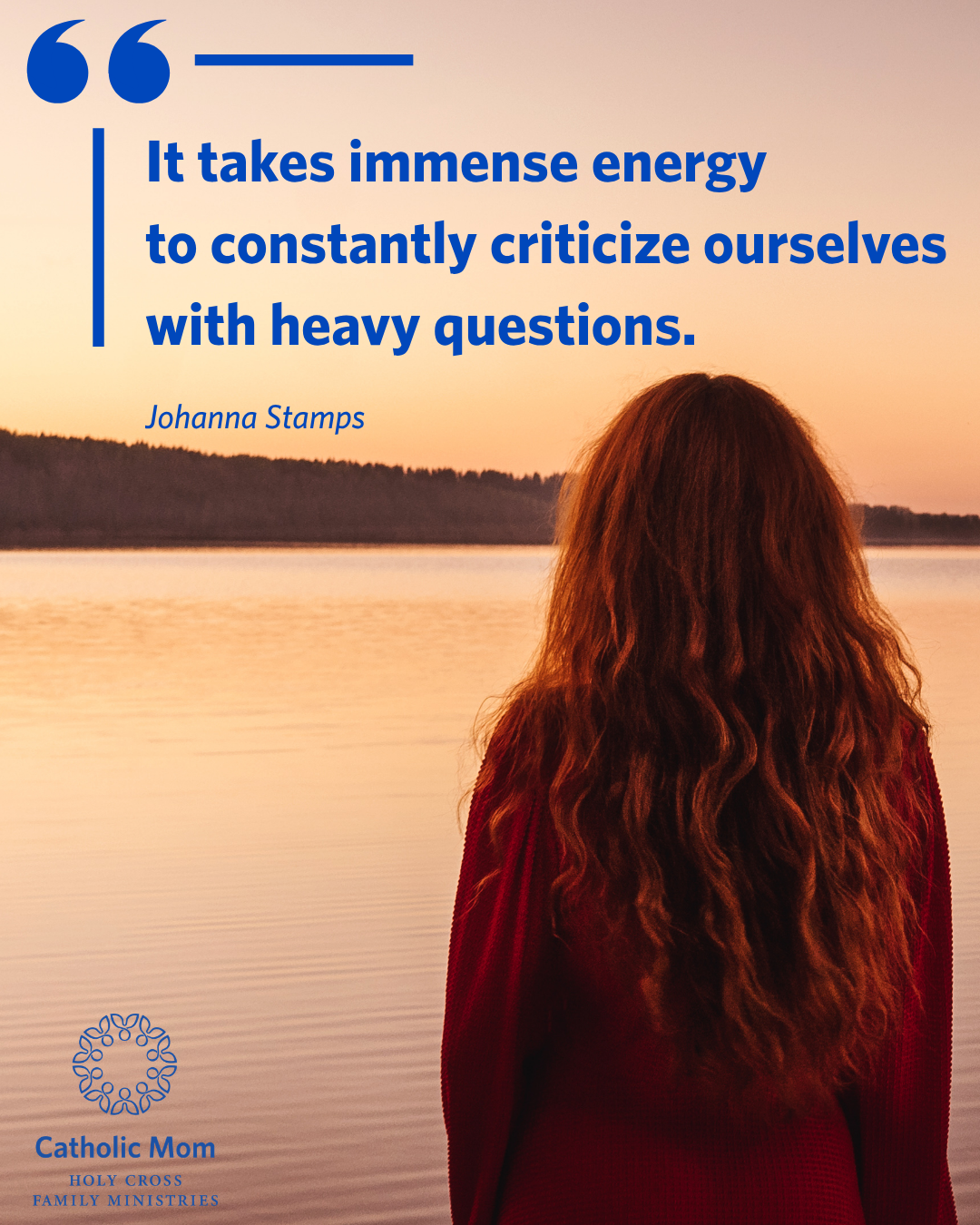
It takes immense energy to constantly criticize ourselves with heavy questions.
Where to Turn Instead?
So often, I receive an urgent message like this:
“Johanna, I’m completely overwhelmed by my life today. I can’t sit still, and I’m questioning everything I’m doing.”
In moments like these, what are people used to hearing? Do these sound familiar?
- "Just keep busy."
- "Stop thinking about it."
- "Distract yourself."
Perhaps you sent a message to your friend saying exactly this recently.
You can almost feel the sensation of “not being enough” rising up, right?
In those moments, my response is different:
“Give yourself exactly what you need right now. When you have a burst of energy, do just one thing.”
My response might also include: “What is the Holy Spirit actually calling you to do today?”
More often than not, this gives people permission to simply just be.
One thing at a time. If your body needs a nap, give it a nap. If you need someone to sit next to you while you complete a task, ask for help. If you need a walk or a nourishing meal, respond to yourself graciously.
In these moments, we suddenly see that we only need to do what is most important — and often, that means giving ourselves exactly what our hearts need.
Share your thoughts with the Catholic Mom community! You'll find the comment box below the author's bio and list of recommended articles.
Copyright 2026 Johanna Stamps
Images: Canva


About the Author

.png?width=1806&height=731&name=CatholicMom_hcfm_logo1_pos_871c_2728c%20(002).png "CatholicMom_hcfm_logo1_pos_871c_2728c (002)")


Comments