


Sarah Damm explores how Our Lady of Sorrows can accompany midlife mothers through the bittersweet season of letting go.
This spring, my twins graduated from high school — numbers four and five in a lineup of six. With just one child left at home, I find myself somewhere in the middle of midlife and the transition toward an empty nest.
This season of life holds a wide range of emotions.
I watch my older children choose career paths that allow them to shine in their gifts, and my heart beams with pride.
At the same time, I miss what used to be: the endless play, bedtime stories, and being a volleyball mom.
I miss what is gone while being genuinely excited about what is coming.
Perhaps that is the strange tension of midlife motherhood: joy and grief existing in the same heart.
There is also a messy side of mothering young adults: the phone call about a heartbreak and the fresh ache of realizing I cannot fix it. A dream shattered, and all I can do is remain as my child begins to rebuild. A poor decision and the worry that my child may not fully understand what he or she is getting into. Watching them stumble through relationships, jobs, finances, and their faith.
Motherhood in midlife means loving deeply and remaining close while having very little control over what happens.
In this season, Our Lady of Sorrows becomes a sweet companion. For Mary is not only the mother of the Magnificat and the Nativity. She is also the mother who ponders, waits, suffers, and remains.
Understanding a Mother’s Heart
Traditionally, the Catholic Church honors seven sorrows in the life of Mary:
- The Prophecy of Simeon
- The Flight into Egypt
- The Loss of Jesus in the Temple of Jerusalem
- Meeting Jesus on the road to Calvary
- The Crucifixion and Death of Jesus
- Receiving the Body of Jesus from the Cross after He Died
- Jesus’ Burial
I find it deeply comforting to know that Mary understands what it means to love someone and remain steadfast through life’s joys and sorrows.
Pondering in Her Heart
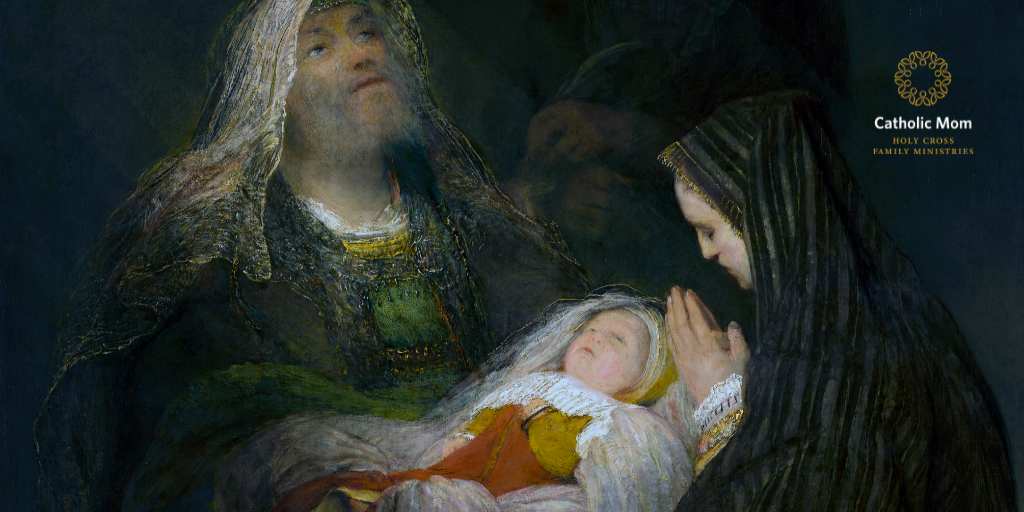
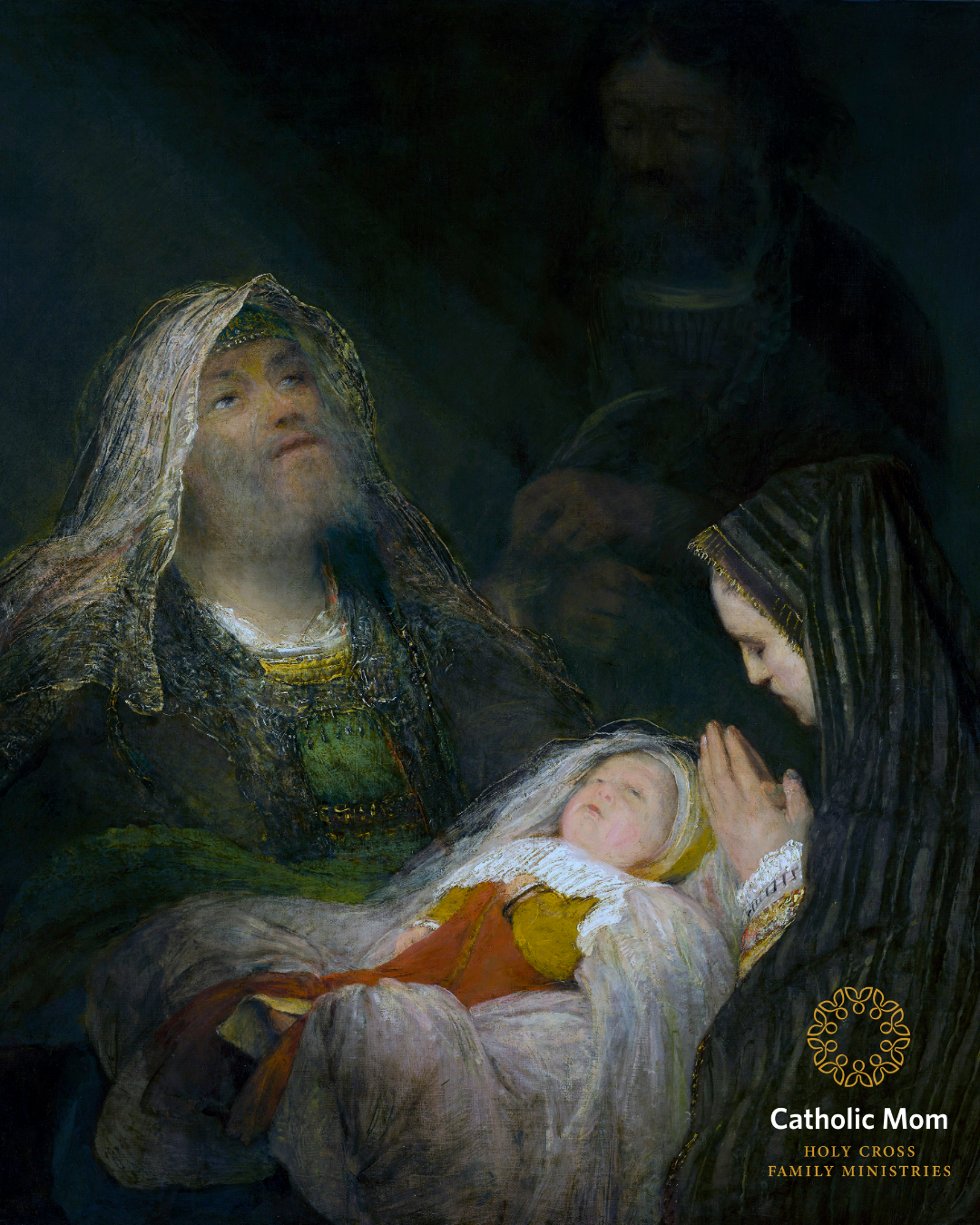
Before any sorrow enters her life, Simeon tells Mary that her heart will be pierced (see Luke 2:25-35). While she may not have known exactly what his words meant, I am sure she pondered them in her heart.
Likewise, when I became a mother, I had a sense of the joys and sorrows that might come with this vocation. But I didn’t really know what they would be until they unfolded right before my eyes.
When my children were little, the sorrows felt small — or at least fixable.
I could wipe the tears, give a hug, and put a Band-Aid on a scraped knee.
As they grew, I realized that some sorrows are bigger than I can handle on my own: a broken relationship, a job loss, a poor decision, a crisis of faith, a mental health struggle.
My instinct has remained the same: Let me take this from you. Let me make it better.
But I can’t fix everything.
Mary understands something about this kind of helpless love, too.
Grieving What Was While Receiving What Is
When Mary and Joseph fled into Egypt and when they lost Jesus in the temple, both experiences disrupted their ordinary lives.
In Egypt, they had to leave what was familiar and depend completely on the Lord, waiting for the all-clear that it was safe to return home. In Jerusalem, I imagine Mary felt both helpless as she searched for her missing Son and proud to see Him engaging the teachers in the temple.
During those seasons of disruption, perhaps Mary fondly remembered Jesus as a baby in the manger, His first smile, His first steps.
Those were easier times, she may have thought.
Likewise, there are so many small endings in midlife motherhood. I look back with fondness at simpler times as a bittersweetness stirs in my heart.
The toys get packed away. Family traditions change. There are fewer people around the dinner table. The child who once needed me for everything now needs me less.
And sometimes I wonder why I feel a pang of grief about these things. After all, I raised my children to grow up and become independent.
So why does it hurt?
Maybe because I can be grateful for who my children are becoming and still miss who they were. I can celebrate the next chapter while mourning the one that has ended.
Mary’s sorrows remind me that love has room to do both.
Motherhood: From Doing to Being
When Mary met Jesus on the road to Calvary and throughout His Passion and death, she could not prevent what was happening. She could not rescue Jesus. She could not take His place.
This was the will of the Father, and she trusted in Him completely.
That does not mean she felt anything less than immense sorrow and pain for her Son.
So she remained.
And eventually, motherhood asks me to do the same.
I can no longer do for my children what I once could. But I can be there for them — loving without trying to control, listening without fixing, letting them experience natural consequences without making them doubt my love.
This does not mean I become passive or indifferent. I can still speak the truth. I can offer advice. I can pray, encourage, advocate, and help when needed.
But I am learning to understand that my children’s lives are not mine to manage. And I am invited ever more deeply to entrust them to the will of God, as Mary did at the foot of the Cross.
Letting Go Without Giving Up
After Jesus died, Mary received His body and watched Him be laid in the tomb.
While I do not think she believed it was the end, I also don’t think she knew exactly what was coming next — or when.
Neither do I.
I may not know how my children’s stories will unfold. I may worry about their choices. I may grieve their struggles. I may wish I could spare them certain heartaches.
But ultimately, my children belong to God.
Letting go does not mean loving them less; it means entrusting them more fully to Him.
Our Lady of Sorrows reminds us that sorrow is not a failure of faith but a measure of how deeply we love.
And while this can be a lonely season, she reminds us that we do not carry any of this alone. The struggles of parenting young adults are discussed less over coffee than potty training, bedtime battles, and game-day victories. We begin to protect the privacy of our adult children. Their stories are no longer ours to share.
So, we hold the grief and worry quietly in our hearts, only daring to speak about them in prayer. And we find comfort finding Mary standing beside us here.
I don’t know what comes next for my children — what joys will fill their hearts or what sorrows they will endure.
But I am learning that not knowing is part of motherhood.
What I do know is that I love my children. I pray for them. I entrust them to God.
I remain, like Mary.
Our Lady of Sorrows, pray for me.
Share your thoughts with the Catholic Mom community! You'll find the comment box below the author's bio and list of recommended articles.
Copyright 2026 Sarah Damm
Images: (top, bottom) Canva; (center) iStockPhoto.com, licensed for use by Holy Cross Family Ministries


About the Author



Comments