


Lisa Hess brings us along as she solves an organizing dilemma in her own home.
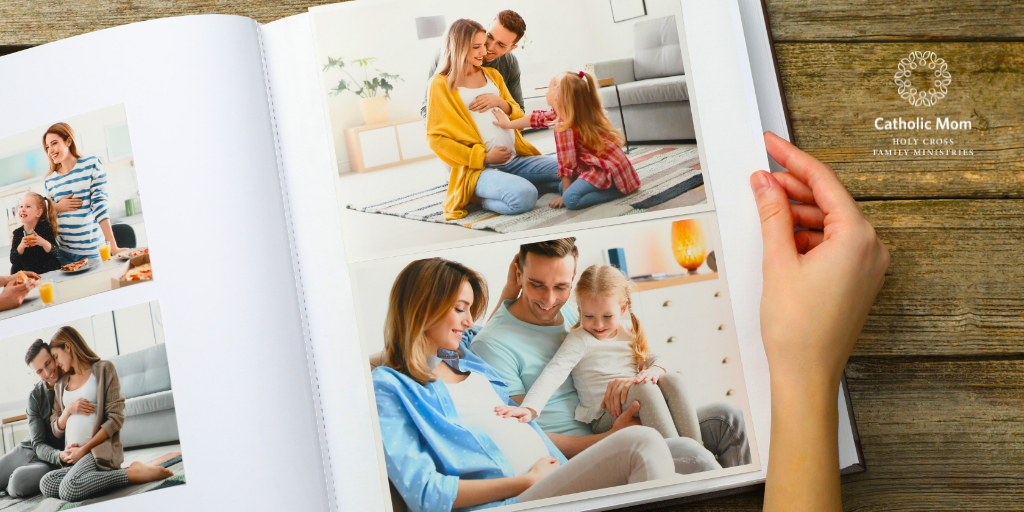
It started with a scrapbook. We came across it when my daughter’s massive organizing session of her childhood bedroom began to expand into other rooms of the house. The scrapbook in question held cards from baby showers celebrating her impending arrival and congratulations cards celebrating her birth (the baby is now 28). After going through the scrapbook and enjoying the nostalgia it inspired, I set it on the dining room table. It needed a home and determining the right spot required some think time.

Principle #1: The first idea isn’t always the right idea
When I finally came up with “the perfect place” (after getting sick of staring at the scrapbook on the dining room table where it most decidedly did not belong), my solution was flawed, to say the least. It made sense from an organizational perspective in terms of accessibility and location, but the scrapbook was too big to fit in the space I had in mind.
Unfortunately, I discovered this only after I had pulled out the contents of half a cabinet shelf in my office. You've heard of measure twice, cut once? This is a version of that same idea, which apparently had completely slipped my mind.
Principle #2: Organizing one space can lead to organizing another space
Thus, the simple act of finding a home for one found object kicked off yet another organization project. Among the things I’d removed from my office cabinet was a stack of memorabilia, so the first thing I did was to gather some empty file folders and an empty file bin so I could sort the clippings, cards, and other collected items into file folders by category. This not only tidied things up a bit, but it also gave me an idea of what size and type of containers I might need to corral the items that survived the purge.
In this case, not only did my containers need to follow all the usual container roles — fitting the space, having room to grow, fitting my styles — but I also wanted them to be archival so that my treasured clippings didn't fall apart any sooner than they had to.
Principle #3: Choosing the right container
Fortunately, my daughter and I both love shopping for organizers and so a trip to a home store was not only fun, but productive. I found just what I was looking for: pretty, inexpensive boxes that went with a pricier item I’d already purchased because it was just the right size for what I was storing. Because the containers were attractive, I had the luxury of deciding whether to put them in my cabinets or keep them out, a choice I’d need to make as the project progressed.
Principle #4: Organizing almost always takes longer than you think it will
Piles? Check. Boxes? Check. I would like to tell you that possessing all the necessary components led to an immediate conclusion of this project, but I would be lying through my teeth. The cabinet shelves look better than ever — pretty storage boxes have replaced the stacks that once occupied the space and there’s lots of empty space because I haven’t yet finished putting everything away; I’m still sorting and deciding on homes. The counter looks better because I’ve cleared and/or re-organized more than half of the space.
The floor, on the other hand, reveals the truth: that this is still a work in progress. A collection of containers (meant to store whatever I find as I work my way through the rest of the sorting and re-homing) occupies a relatively significant part of the floor, and a piles still needing to be sorted takes up a portion of the otherwise new-and-improved counter.
Principle #5: Both clutter and clear space can nudge us forward
Still, I'm making progress. Slowly. Travel, work, and other obligations have made it harder to find time to finish what I’ve started. While the pile of pretty boxes on the floor makes me grimace at least once a day, the newly organized cabinet shelves make me smile every time I open the door. It’s an interesting dichotomy, one that motivates me to spend at least a few minutes each day improving the space.
Principle #6: It’s a process
It’s easy to clear clutter — we can simply toss everything into a box or even a plastic grocery bag (or six) and stash everything away behind closed doors to deal with later. It’s much harder to bring true, lasting order to a space. That requires time, thought, and attention to our personal styles, our organizational styles and our lifestyles. But, when we invest the time necessary to organizing in a way that makes sense for us, we create systems that save time in the long run.
Now, if you’ll excuse me, I have some clutter-busting to attend to.
Share your thoughts with the Catholic Mom community! You'll find the comment box below the author's bio and list of recommended articles.
Copyright 2026 Lisa Hess
Images: Canva


About the Author


.png?width=1806&height=731&name=CatholicMom_hcfm_logo1_pos_871c_2728c%20(002).png "CatholicMom_hcfm_logo1_pos_871c_2728c (002)")


Comments