


Cycling through two months of meal plans has made food prep and grocery shopping loads easier for Lindsay Schlegel.
If you’ve ever meal-planned for a week, you probably know how much of a relief it is to know what’s for dinner before you get out of bed. Maybe you even posted the list on your fridge or on a cute little chalkboard, so you didn’t have to answer the question “What are we having for dinner?” from each member of your family. You felt organized and with it. Time you used to spend thinking about meals was opened up as margin for other good work.
But all good things come to an end, and like me, you probably got to a week where you didn’t have time to make a plan, when someone got sick or things were so hectic that cobbling together a plan midweek didn’t even seem possible, so things felt even harder.
Enter the monthly meal plan.
My Favorite Organizational Hack
One of the best organizational tools I’ve harnessed in the last few years is the monthly meal plan. I post a calendar of the whole month’s weeknight (and sometimes weekend) dinners on the fridge, where everyone can see it. Not only do I not have to think about what to make or answer the aforementioned question five or six times a day (I have five children, but sometimes they ask and forget and ask again), but grocery shopping is a breeze. Between this plan and the list on the side of the fridge where the whole family writes things we’ve run out of or need for some future event, I can submit an online order in about ten minutes.
The more precise I am, of course, the more effective the meal plan is. It helps to lay out not only the main dish, but the vegetables or starches I’ll serve as sides. The posted plan also encourages help from the kids. “Hey Mom? We’re having cornbread tonight. Can I make that?”
Yes, my dear one. Yes, you can.
Planning Out the Plan
I use a calendar template available in Microsoft Word. There’s a space for a line of text under the month and year in the one I selected, so I’ll use this space to say “Happy birthday, Jacob!” when it’s my son’s birthday month or something like “You are dust, and to dust you shall return” during Lent. In the boxes, I write what we’re having, trying to make sure we’re not eating beef every night for a week or chicken three nights in a row the following week.
As I fill in the calendar, I also have my planner on hand, so that I can keep in mind which days of the week I need to prepare food before I pick kids up from school and plan meals best suited to that method. Certain dinners are better for karate nights in our house, when different kids have classes back to back.
At the end of the month, I can open the document back up, change the dates to fit the following month, and shift anything I need to in order to accommodate the next month’s schedule, without rewriting the whole thing. (Maybe Wednesdays are going to be the tricky day this month.) I don’t need to shift much more, since we won’t have had the chili in week one for almost a month now, and the pasta from week four won’t show up again for a while.
If there is a meal that really didn’t go over well, I remove it, go back to our family recipe book (a binder of recipes printed from the Internet over the years), and find a replacement. If there’s something all but one person liked, I’ll make a note that; for example, Thomas can have leftovers when I make chicken pot pie (and I ought to make something he likes the day before!).
Teamwork Makes the Meal Plan Work
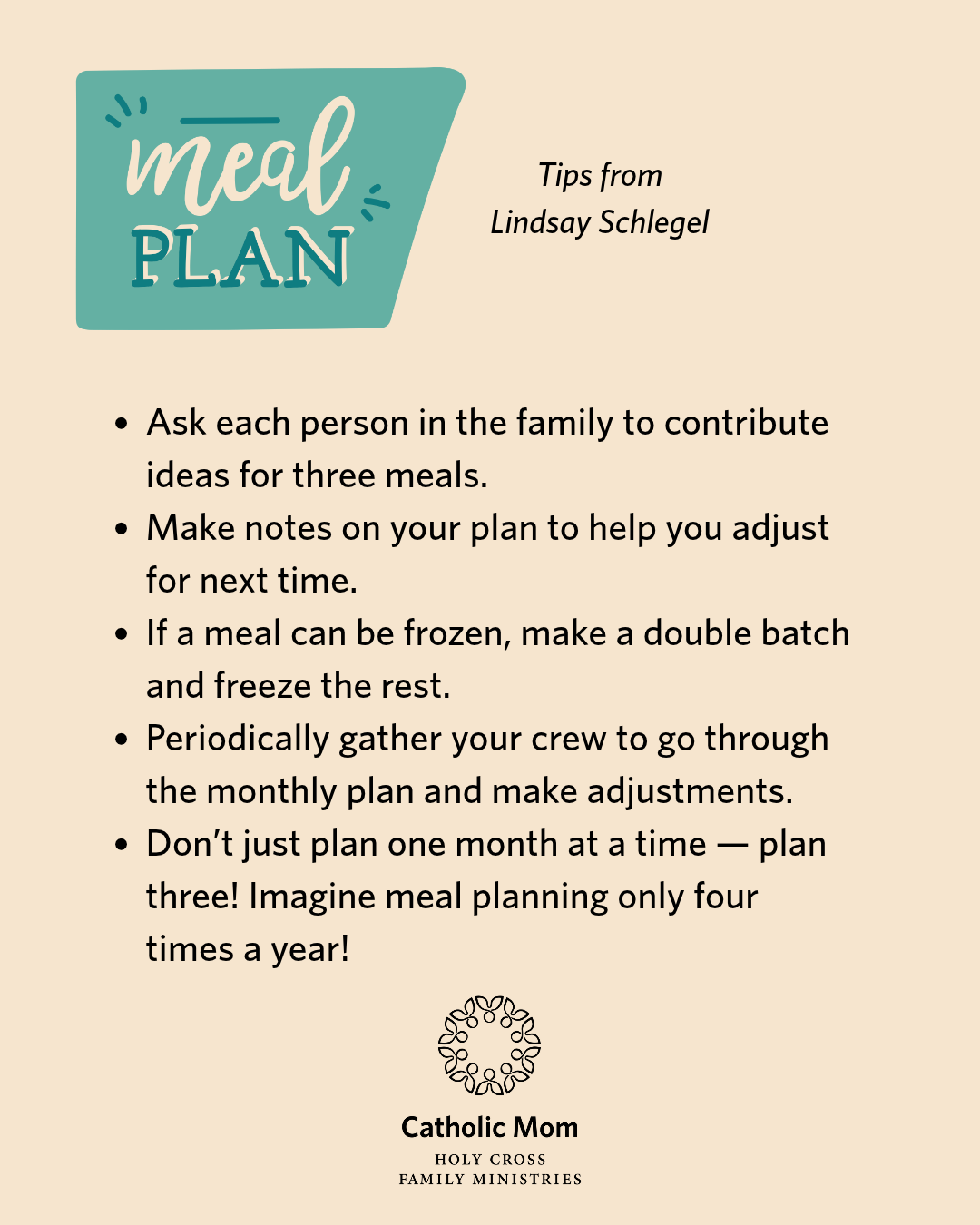
Meal planning doesn’t have to be a one-person job. Here are some tips to make a monthly meal plan a reality for your family:
- Ask each person in the family to contribute ideas for three meals (that they will actually eat). Pizza and take-out don’t count.
- Make notes on your plan regarding what took too long to cook, what didn’t yield enough food, what made for too many leftovers, and what can be made with pantry staples.
- If a meal can be frozen, make a double batch and freeze the rest. Make a note on next month’s meal plan that this meal will require time to thaw and reheat.
- Periodically gather your crew to go through the monthly plan and make adjustments. Is there something people are getting tired of? Take it off the plan for a month or two, and make a note to add it back in later.
- Don’t just plan one month at a time — plan three! I find that I can plan ahead within a sports/activity season, since our schedule largely stays the same during that time. Imagine meal planning only four times a year!
What's your best meal-planning tip? Share it in the comments!
Share your thoughts with the Catholic Mom community! You'll find the comment box below the author's bio and list of recommended articles.
Copyright 2026 Lindsay Schlegel
Images: Canva


About the Author



Comments