

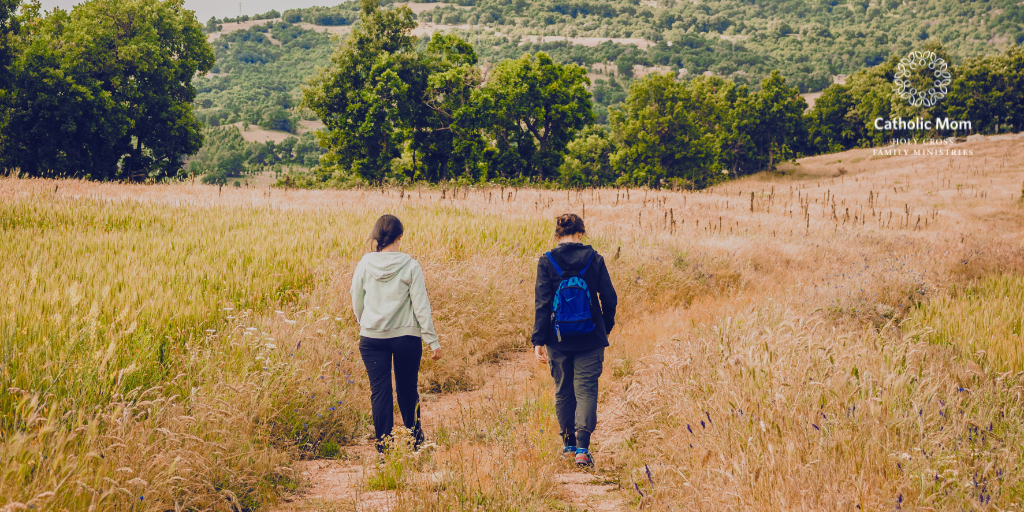
Sarah Pedrozo explains the three levels of vocation and offers tips on helping your kids find theirs.
The month of August signals the beginning of the end of summer.
If your kids are in middle or high school, school activities like sports and band begin again in earnest. The shelves at the grocery stores are lined with new school supplies, and clothing shops everywhere are advertising all kinds of great deals on back-to-school wear.
It’s always a little bittersweet, this time of year. The freer, softer days of summer are drawing to a close, but the promise of new starts, renewed learning, and catching up with friends is beckoning.
But before the early-morning breakfasts start and the school bus rumbles around again, there’s still time to have a small discussion with your kids about vocations. In fact, this time of year actually lends itself perfectly to talking about vocations.
When Catholics of just about any age hear the word “vocation,” we automatically think of Holy Orders (for boys) or the religious life (for girls). But the word “vocation” is much bigger and wider than that, and it’s important to teach that meaning to our children.
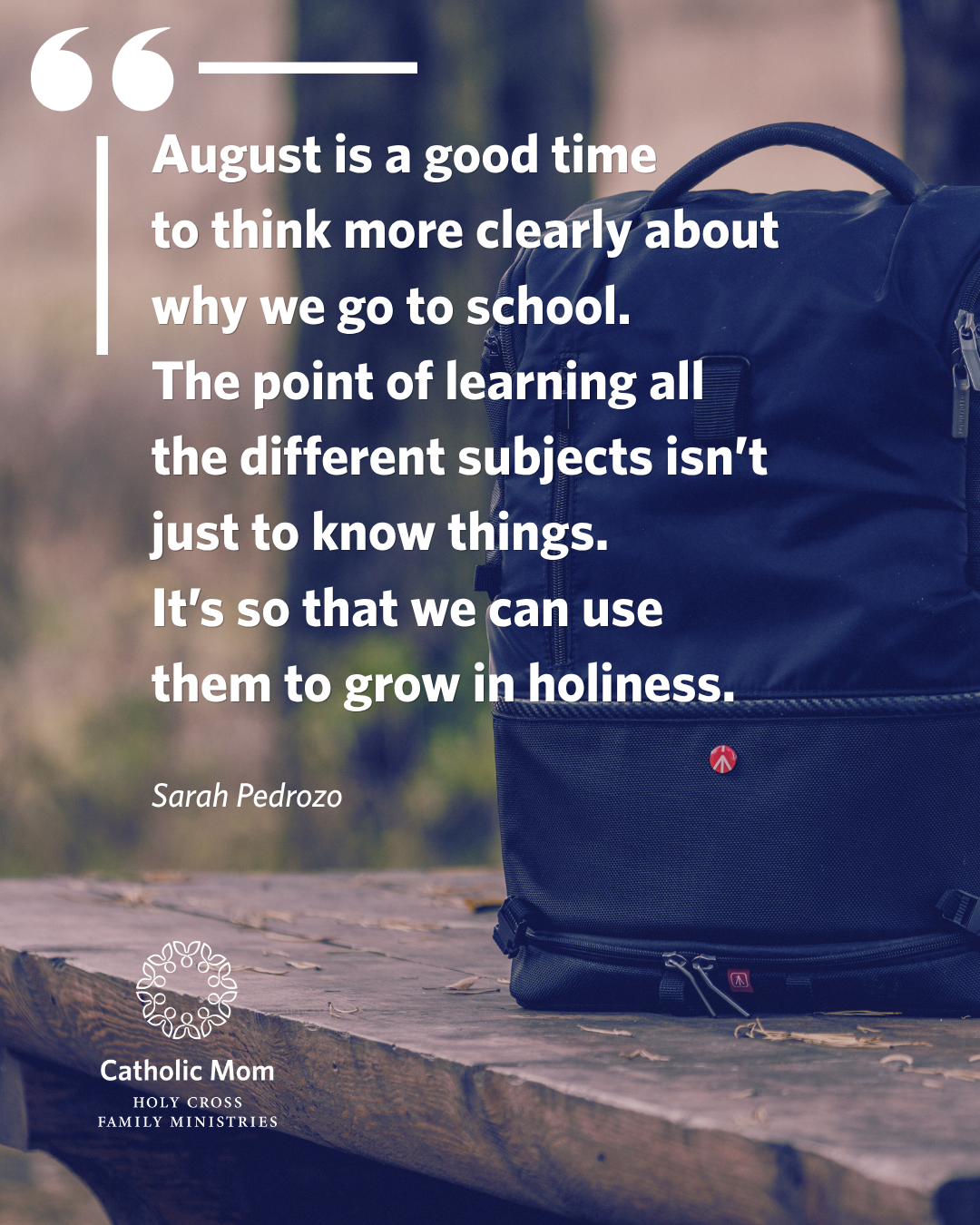
Three Levels of Vocations
The first thing to know about “vocation” is that there are three levels to it. There is the Universal Vocation, which applies to everyone, then the State of Life level of vocation, in which we live out the call to become holy. Finally, there is the Personal level to each vocation, the individual path we each walk.
First Level: The Universal Call to Holiness
The first way to understand the word “vocation” is to know that it doesn’t refer to just one or two ways of living. In fact, everyone has the same basic vocation, to be holy. In 2018, Pope Francis wrote his Apostolic Exhortation on the Call to Holiness in Today’s World. In this document, he lays out the one vocation that every person who ever was and ever will be born has: the universal call to holiness.
I want to insist primarily on the call to holiness that the Lord addresses to each of us, the call that he also addresses, personally, to you: “Be holy, for I am holy” (Lev 11:44; cf. 1 Pet 1:16). ... The Second Vatican Council stated this clearly: “Strengthened by so many and such great means of salvation, all the faithful, whatever their condition or state, are called by the Lord – each in his or her own way – to that perfect holiness by which the Father himself is perfect.”
We can think of the spiritual life, the life that helps us to grow closer to God and become holy, as a type of “equal opportunity employer.” No one is left out. It applies to all. The universal call to holiness extends to everyone, not just to a few people. But even though we are each called to holiness, there are many different paths that this can take.
Questions for Discussion:
Here are some questions that you can use to introduce the idea that we are each called to be holy.
-
What does holiness look like?
-
Does “being holy” also mean being boring?
-
What does “holiness” even mean? Is it just praying a lot and being a ‘goody-goody,” or something more?
Second Level: The State of Life Vocation
We are each called to be holy, but the specific way we live out that call varies from person to person. The State of Life level of “vocation” means that some people are called to live in a community, meaning they may join a religious order. Others are called to form new communities, by getting married and having a family. Some men discern their vocation lies within Holy Orders. Some women may decide to become religious sisters or nuns. Other people are called to live the single life. There are many different ways that people live out their vocation in their specific state of life.
Questions for Discussion:
-
Can you imagine yourself as a married person?
-
Can you picture yourself as a priest/brother/nun/sister?
-
What parts of living a single life can help you be holy?
-
What parts of a married life or being in a religious order could help you become holy?
Third Level: The Personal Vocation
We tend to focus on the third level of vocation the most, but it should really be the last one we think of. The Personal level involves our careers and the jobs we do. Just like the state of life we live, the personal level is also aimed at our holiness. This is where we take stock of the specific gifts and talents that God has given to us, and we figure out how to use them to grow in holiness. It’s often difficult for kids to think about what their talents are, so the best place to start is just by asking “What do you like to do? What are you good at?” Your Personal vocation will lie somewhere in that area.
Questions for Discussion:
-
What do you dream of doing?
-
If you could do any type of work, what would it be?
-
What brings you joy and makes you smile?
-
What do you like to do in your free time? How can these gifts and talents be used for holiness?
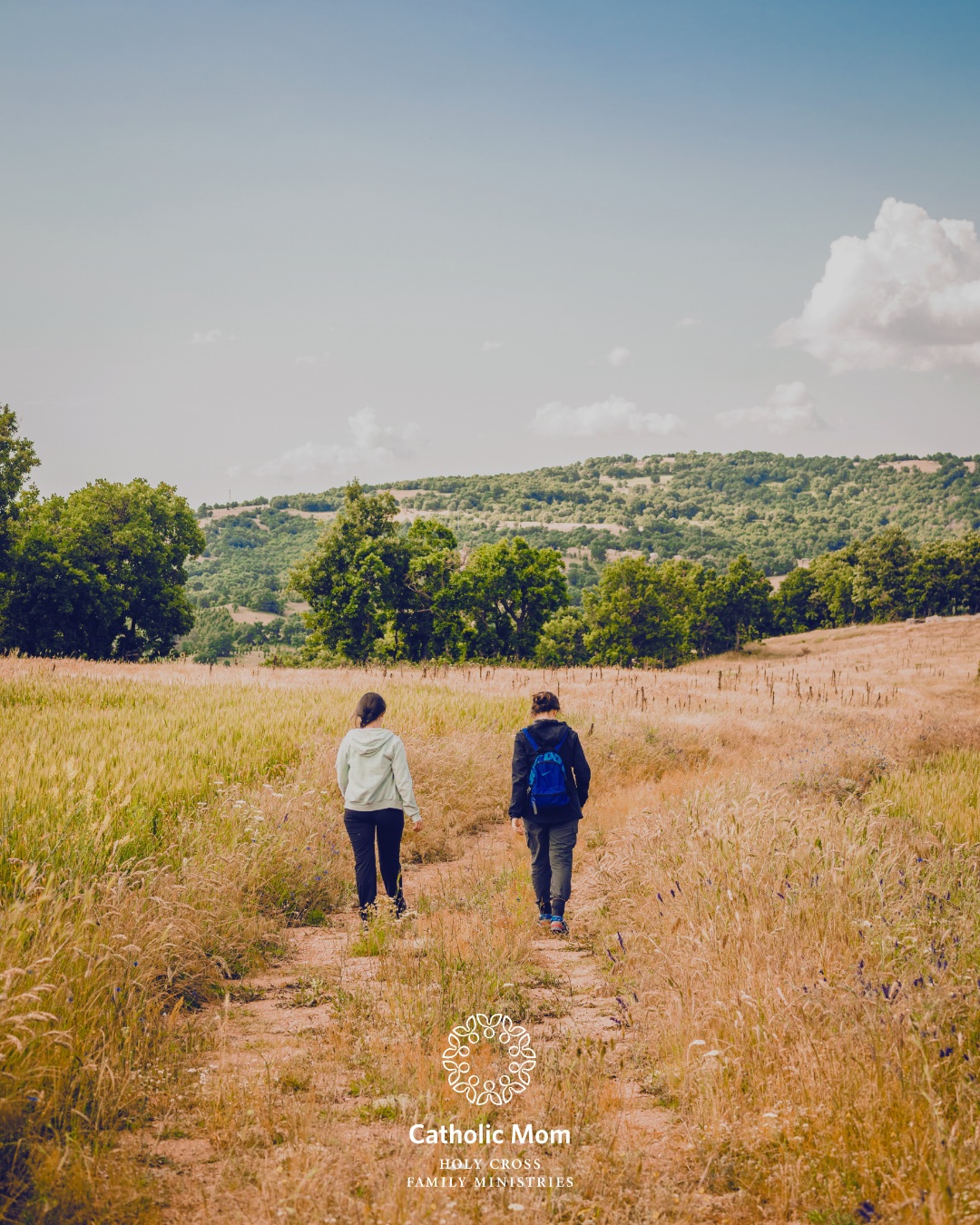
With the new school year just beginning, August is a good time to think more clearly about why we go to school. The point of learning all the different subjects isn’t just to know things. It’s so that we can use them to grow in holiness. Especially as children get older and can start choosing after school clubs and class electives, it’s a great gift to give them a way of thinking about how their personal vocation and the state of life they will live will all fit into the universal call to holiness. Our newest Doctor of the Church, Saint John Henry Newman, put it this way:
God has created me to do Him some definite service; He has committed some work to me which He has not committed to another. I have my mission — I never may know it in this life, but I shall be told it in the next. I am a link in a chain, a bond of connection between persons. He has not created me for naught. I shall do good, I shall do His work; … He does nothing in vain; He knows what He is about. (John Henry Newman, Meditations and Devotions, Newman Reader, Meditations and Devotions, Part 3)
Share your thoughts with the Catholic Mom community! You'll find the comment box below the author's bio and list of recommended articles.
Copyright 2026 Sarah Pedrozo
Images: Canva


About the Author

.png?width=1806&height=731&name=CatholicMom_hcfm_logo1_pos_871c_2728c%20(002).png "CatholicMom_hcfm_logo1_pos_871c_2728c (002)")


Comments