


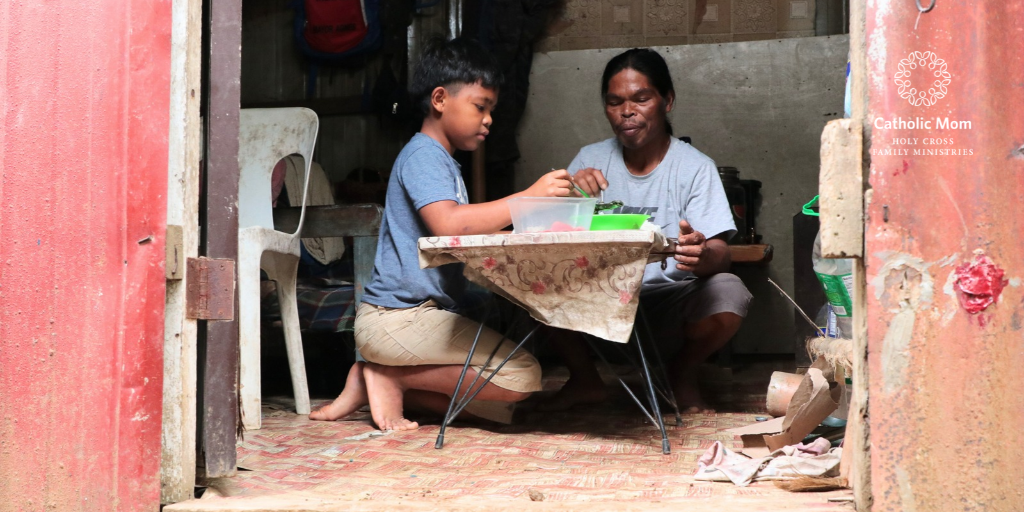
Tammy Marino of Unbound shares strategies for helping children of all ages to cope and find the light through hard times.
Fourteen years ago, my father passed away after a battle with brain cancer. The months leading up to losing him, and the final goodbye, remain among the most difficult experiences of my life. As an adult, I had some understanding of grief and loss. But my children, who were only ages 9, 8, 6 and 1, were experiencing the illness and death of a loved one for the very first time.
They were not ready for their mother to take trips out of state to care for and spend time with their sick grandpa (“Peepa”). They struggled to understand the depth of my sadness. They had never attended a funeral. And they certainly weren’t prepared for childhood without one of their grandparents.
Magic in the Memories
As a mom, part of me wanted to shield my kids from the grief because that kind of intense emotion can be overwhelming — especially for very young children. But I knew that although they were young, they were insightful and sensitive. I could have pretended everything was OK because Peepa was no longer suffering. But they would still sense something was off and possibly wonder if they did something wrong.
And I also worried about them forgetting their Peepa. Would they remember his smile? His mustache? His hugs? His laugh? Would they remember how he played with them and joked with them? How he gently tugged on the girls’ ponytails? How he drove them around in his convertible? How he traded his McDonald’s french fries for my baby’s dry Cheerios?
So instead of masking my emotions, I shared them with my children at an age-appropriate level. They needed to know that it was OK to be sad. It was OK to miss him. And it was important to talk about him, to share the stories, to look at pictures.
We almost immediately started a tradition of lighting a candle in his memory. We still do it today — on his birthday, on special holidays when we miss him, on the anniversary of the day he went to be with God. We light a candle and we take turns sharing a memory.
It is in those moments when we remember that he is still with us, that we can talk with him about our days and lean on him for support and guidance, just as when he was here. Memories are powerful, and sharing them helps keep them alive.
Looking back, I can see that many of the choices my family made instinctively are supported by research on childhood grief.
Professional Insights
While parents naturally want to protect their children from pain, creating space for honest conversations, healthy expressions of emotion and meaningful remembrance can help children build resilience. Grief looks different at every age and for every person, but several approaches can help children navigate loss in a healthy way.
My sister, Robyn Spodek Schindler, a licensed professional counselor and art therapist, has worked with children, adolescents and young adults for over a decade in various settings and runs an art therapy practice. She also wrote and illustrated a children’s book, Three Brave Stars, reminding children and families who have lost a loved one that we always remain connected to those we can no longer see.
When asked about parenting best practices for helping children through loss, Robyn shared:
Grief and related topics such as death and dying can be difficult for parents to approach with their children. My first bit of advice for parents is to remain real and genuine with their children. Do not attempt to hide your true emotions in an attempt to shield your children.
Next, I always stress that parents remember that grief, in general, is like waves in the ocean. Waves can be loud, strong and debilitating. At other times they can be calm and quiet. Waves of grief, much like waves in the ocean, can change at any time and they cannot be ignored or pushed away.
But regardless of what type of wave of grief one is experiencing, it is part of their grief journey, and it needs to be expressed and understood; grief needs to be processed. Expression can be through creative processes like play, art and music. It can also be through talking, remembering, laughter and more.
For families of faith, Scripture also offers comfort and perspective during times of loss. In John 11:35, we learn that Jesus wept when Lazarus died, demonstrating that sorrow is not a sign of weak faith but a natural expression of love. God doesn’t ask or expect us to hide our pain.
A Father's Presence Through Hardship
Around the world, parents facing loss and hardship must find ways to help children process grief while continuing to build hope for the future.
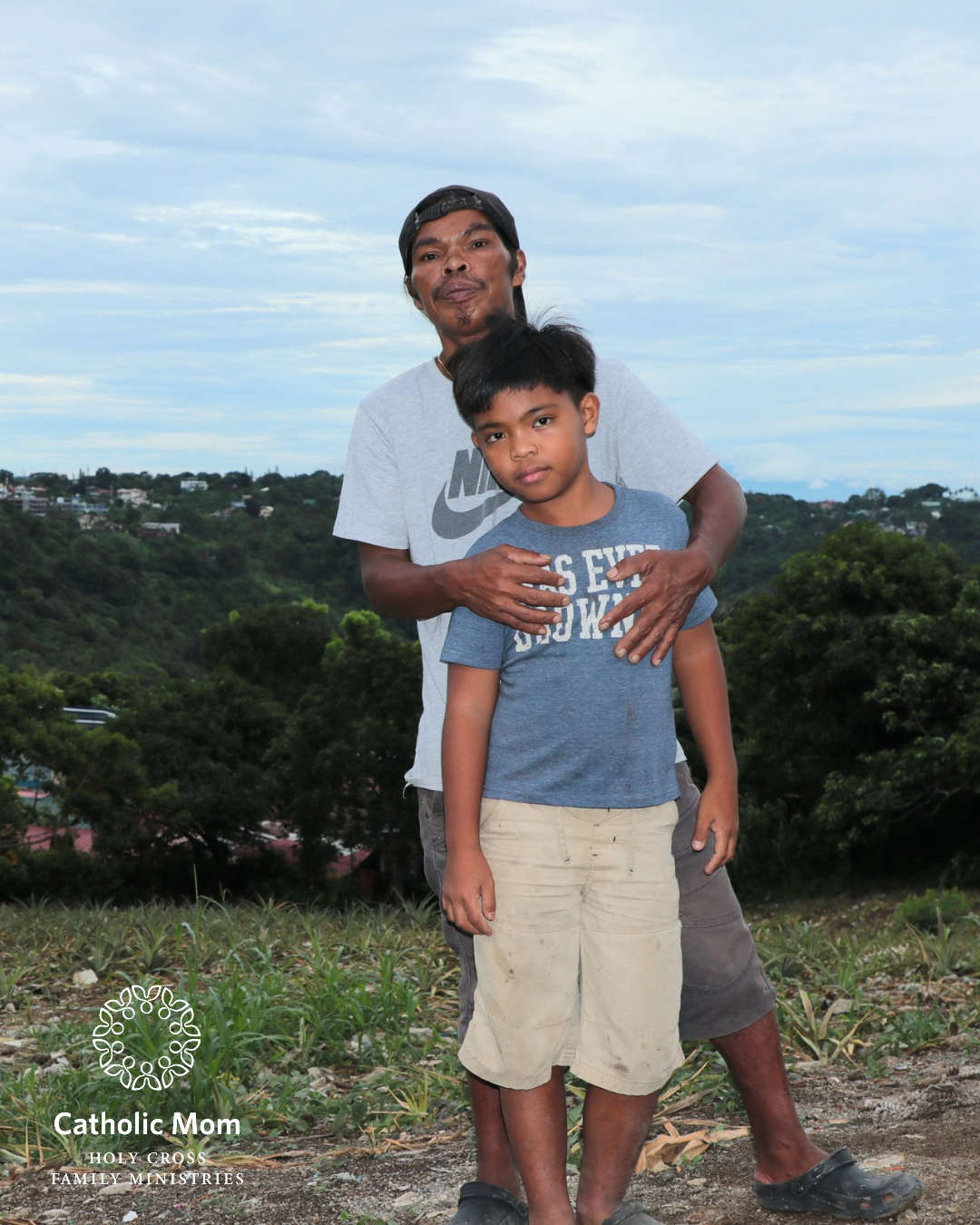
Avelino, the father of Alvin, a child sponsored through Unbound in the Philippines, has been forced to navigate poverty, his own grief and that of his young son.
Avelino lost his wife to a stroke in 2021, when Alvin was only 6. While Avelino battled his own immense grief, he knew that his son needed him. Working six days a week in construction, he quietly stepped into the additional roles his wife once filled: preparing meals, helping with schoolwork, comforting his son’s fears and creating moments of joy whenever possible.
In 2024, tragedy struck their family again when a fire destroyed their home and all their belongings. Through every challenge, Avelino makes sure his son never has to face hardship alone. Whether leaving work to comfort him at school or sharing a quiet afternoon at the park, Avelino’s steady presence has become a foundation for healing and hope.
When asked what he would want to tell his father, Alvin, now 11, said, “Thank you for always being there whenever I need you and for taking such good care of me every day. I know it is not easy to be both my father and my mother at the same time, but you never stop doing your best for me.”
By remaining strong and present through loss, uncertainty and hardship, Avelino has helped his son find comfort and hope.
“Losing [my wife] was one of the most difficult experiences our family has ever faced,” Avelino said. “Although balancing work and parenting can be challenging, I do my best to be present in [Alvin’s] life and give him the care, guidance, and support he needs every day. Whenever my son hugs me, my heart is filled with happiness.”
Providing Quiet Support
Just a few years after my father died, my father-in-law, my children’s other grandfather, passed away. Though the kids had been through the loss of a grandparent already, this new loss hit them hard.
I found that the candle-lighting and memory-sharing tradition was effective once again to allow the kids to voice their distinct relationships with their Grandpa. While there were many tears shed, and lots of consoling hugs, sharing stories gave the kids permission to smile and even giggle when thinking of Grandpa.
As an adult, I know grief can come in waves. It works the same with children. They may experience new sadness with certain milestones, special occasions or significant moments. I try to be attentive to these and turn them into open dialogues.
“I bet if Grandpa were here, his smile would be brighter than the sun,” I might say. And that gives everyone permission to imagine what he might be doing or saying or feeling in this moment.
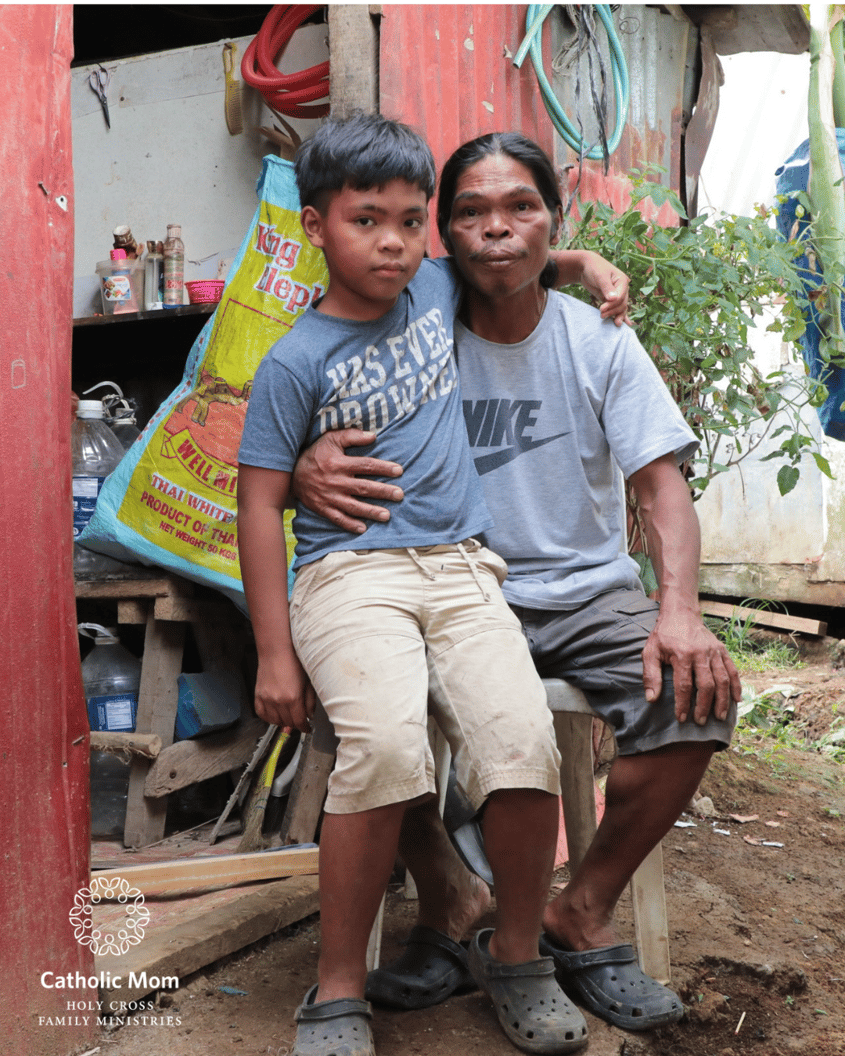
The most powerful support we can provide is often simply being present, listening and reminding our children that they do not have to carry their grief alone. Sometimes that support looks like a conversation or a hug. Sometimes it looks like lighting a candle, sharing stories and remembering a loved one together.
Share your thoughts with the Catholic Mom community! You'll find the comment box below the author's bio and list of recommended articles.
Copyright 2026 Tammy Marino for Unbound
Images: copyright 2026 Unbound.org, all rights reserved.


About the Author



Comments