


In part 1 of a 3-part series, Cristina D’Averso-Collins discusses the perils of the online sphere of influence and identifies its roots in an ancient heresy.
If you have had any recent interaction with social media and popular culture, perhaps you have noticed that the market seems to be flooded with individuals claiming to be influencers. Influencers can be found of nearly every variety, so much so, that one need only pick his or her "flavor" to experience a menu of options. Social-media algorithms, relying upon personal browsing history, even allow one to continue viewing related content, leading to a deluge of information designed to cater to personal preference. This has, in fact, become such a cultural phenomenon that it is worth taking the time to reflect upon and explore it in a substantive, reflective way.
At the outset, let me just say that I am not immune to online media culture or its difficulties myself. I, too, listen to podcasts and enjoy online content that benefits me and my family. I am also sympathetic to the desire for truth about the world’s affairs and do think that we have arrived at this place for a reason. There are also some great content creators and positive reasons for seeking them out. Nevertheless, there are various pitfalls of the online space that cannot be ignored, not the least of which can be found by unpacking an ancient heresy.
What Does Heresy Have to Do with Social Media?
The social media sphere is often described as an echo chamber with algorithms leading users further and further into particular information silos or even the proverbial “rabbit holes.” What is most interesting, however, is that few are ignorant of how the algorithms work (and most are capable of articulating it), yet they keep coming back for more. We must assess why this is the case. Of course, there have been countless studies explaining the addictive nature of social media and phone usage in terms of dopamine and the brain’s response.
Without denying any of this, I would contend that the problem also goes much deeper and leads us back to the ancient heresy of Gnosticism, for nothing is really new under the sun. The central tenet of Gnosticism is that salvation is reached by gaining a secret knowledge. This naturally results in a dualistic worldview in which the material realm (especially the body) is deemed to be evil and the spiritual realm is aggrandized.
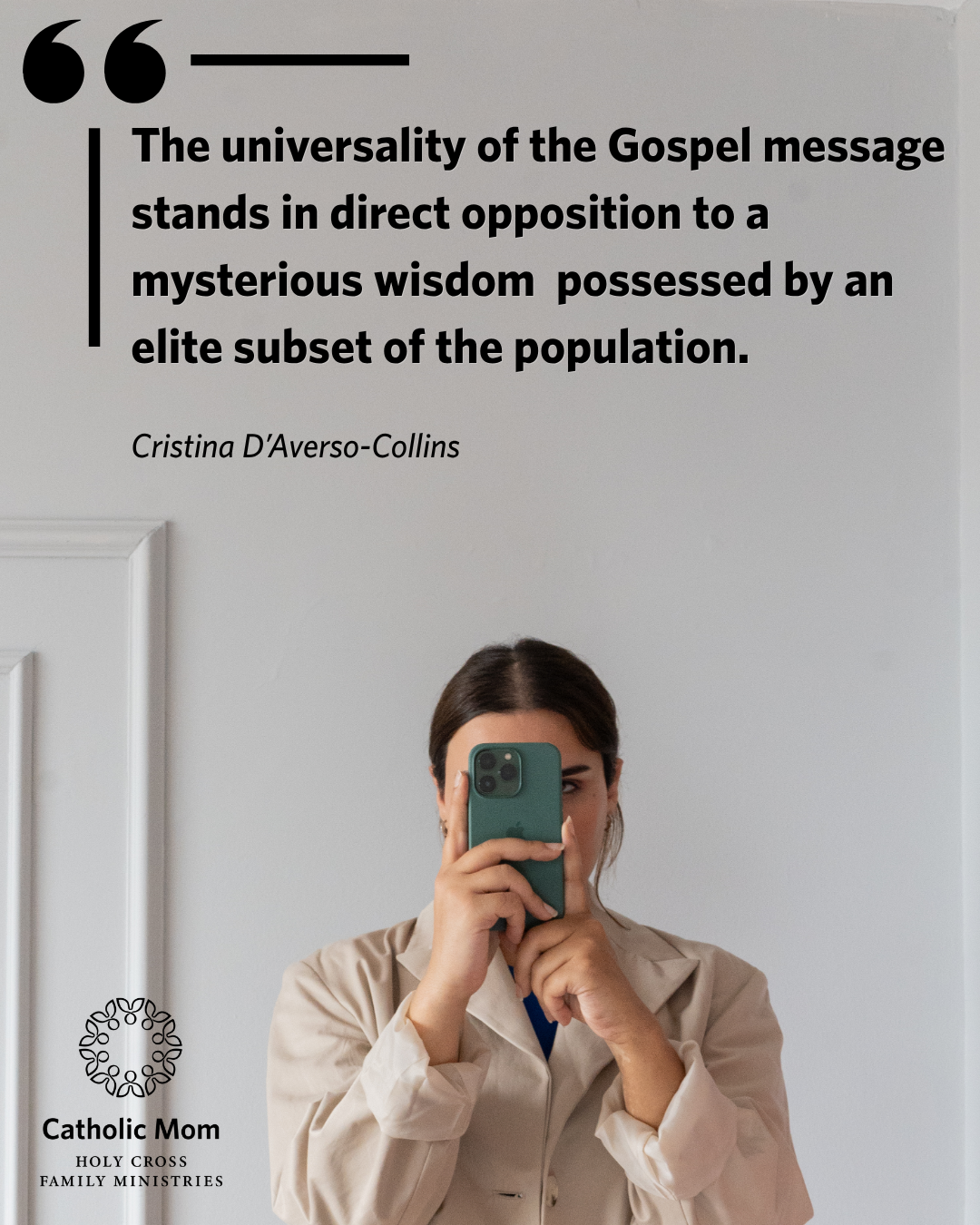
This disembodiment stands in direct opposition to a sacramental worldview in which body and spirit exist in harmony with one another and faith and works must be united in order for salvation to be attained. Furthermore, knowledge revealed through the person of Jesus Christ is accessible to all rather than a select few, for Jesus calls Himself “the way, the truth and the life” and commissions His followers to “make disciples of all nations” (John 14:6; Matthew 28:19). The universality of the Gospel message stands in direct opposition to a mysterious wisdom possessed by an elite subset of the population. This elitism, however, is exactly what most, if not all, of influencer culture is predicated upon.
Influencer Culture and the Temptation to Elitism
On the one hand, all seemingly have access to the realm of social media. On the other hand, one has to sift through such a volume of content that the onus is on influencers themselves to prove that they are the ones worth listening to. To achieve this, they have to set themselves apart from others by offering something unique that cannot be received elsewhere. Herein lies a great danger to both content creators and consumers alike.
In the race to the top, individuals with monetized content must “cull” the online “herd.” We often see this in the form of petty altercations among content creators, even those who seemingly espouse similar beliefs. This is even (and perhaps most regrettably) evident within faith-based circles where conflicts and viciousness resulting from different theological camps abound.
Many followers uncritically imbibe this content with unwavering devotion to their influencer of choice while the desire to remain “in the know” only grows stronger. This insatiable appetite only reveals the seductive quality of the enterprise as a whole, where a supposed quest for truth often becomes entirely disembodied from reality.
Influencers and the Temptation to Duplicity
We once again observe the underlying specter of Gnostic dualism insofar as the path to knowledge often implies a requisite disconnection from the wisdom found within one’s everyday circle and instead a reliance upon individuals whom one will likely never meet. Of course, online content creators are masterfully adept at creating smokescreens, for the online world easily facilitates deception.
A quick perusal of news headlines will uncover countless stories of influencers who have met their downfalls after living shocking double lives. The reason this is possible is that followers cannot possibly vouch for the daily lives or virtues of influencers. Surely, sin and duplicity have historically always existed, but individuals once had a better chance of discerning virtue and vice from the fruits of daily living and thereby choosing whose opinions were worthy of consideration. Indulging in the online realm of pure idea, without such connection, leaves one easy fodder for fraud.
In the next installment of this series, we will take a closer look at certain societal forces which have led to the explosion of online content in recent years. In the meantime, suffice it to say that we must take the time to unpack this together thoughtfully for fear that we will be led into further disconnection and polarization. If our ultimate goal is a thriving culture where Gospel values are lived, we must gain clarity on threats to such a culture and cannot simply become swept away in the tide of trend.
Share your thoughts with the Catholic Mom community! You'll find the comment box below the author's bio and list of recommended articles.
Copyright 2026 Cristina D'Averso-Collins
Images: Canva


About the Author


.png?width=1806&height=731&name=CatholicMom_hcfm_logo1_pos_871c_2728c%20(002).png "CatholicMom_hcfm_logo1_pos_871c_2728c (002)")


Comments